

What a Repaint Can Hide: Checking Paint History Before Bidding
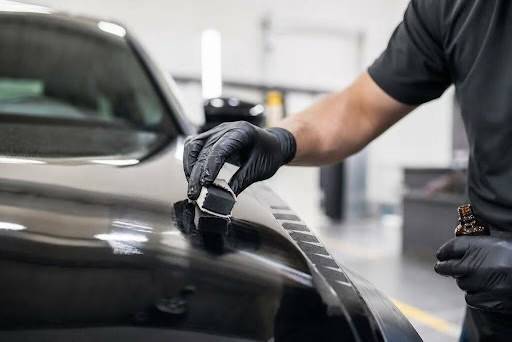
Auction photos flatten everything into two dimensions, and a fresh coat of paint can mask more than buyers expect. Two checks catch most of what photos miss — how the car actually gets shipped home, and whether that paint job matches the car’s original factory finish. Skip either one, and the surprises tend to surface at the worst possible moment: after the bid wins, after the wire transfer clears, once the car is already crated and halfway across the ocean with no way to back out.
Why shipping service quality changes the outcome
Working with a reliable auction car shipping service changes the entire buying experience, since logistics quality varies wildly between providers. Some operators handle everything from tow truck pickup at the auction yard through port loading and customs paperwork, while others leave buyers coordinating each leg separately, which adds stress and often adds cost too. A service that consolidates the whole chain tends to catch problems earlier — a title discrepancy, a missing key, a mismatched VIN on the bill of lading — before they turn into delays at the port. A provider familiar with Copart and IAAI workflows already knows the paperwork auction yards require, which cuts down on the back-and-forth that stalls pickup for days. Communication during the ocean leg matters too — buyers who get regular tracking updates catch problems early, while those left in the dark often find out about a delay only once the ship has already missed its window.
Why paint history matters before bidding closes
Paint tells its own story, and it’s one worth reading before bidding closes. Checking paint code by vin against the vehicle’s build sheet reveals whether the current color actually matches what left the factory, and a mismatch is one of the clearest signs of prior bodywork. Auction listings rarely mention repaints unless damage is obvious in photos, so a factory paint code check often surfaces work that would otherwise stay hidden until the buyer sees the car in person — by which point it’s already been shipped home. Every factory-built car carries a paint code somewhere on the VIN plate or door jamb sticker, and that code should match the color on the vehicle exactly.
What a mismatch actually signals
When the paint code doesn’t match, the most common explanation is prior collision repair, though sometimes it’s simply an owner’s aftermarket respray done for cosmetic reasons rather than damage. Either way, a mismatch is worth investigating further before bidding, since it often correlates with other undisclosed work on the car. Buyers who skip this check are relying entirely on auction photos catching a repaint, and photos taken at odd angles or in bad lighting miss more than people assume. Cost differences between shipping providers are real too, but a cheaper quote that adds two weeks of uncertainty rarely ends up cheaper overall once delays are factored in.
Bottom line
Shipping quality and paint history rarely get equal attention, yet both shape the real outcome of an auction purchase. A dependable shipping service prevents costly delays, while a paint code check flags bodywork that photos alone won’t reveal. Running both before the bid closes turns a guessing game into a far more informed decision, and that’s worth the few extra minutes every time. None of this requires special access or paid software — it just requires treating the pre-bid stage as seriously as the bid itself, since that’s the only point in the process where a bad decision is still cheap to avoid rather than expensive to undo.