
From Sim Racing to Real Motorsport: Can Video Games Create Better Drivers?
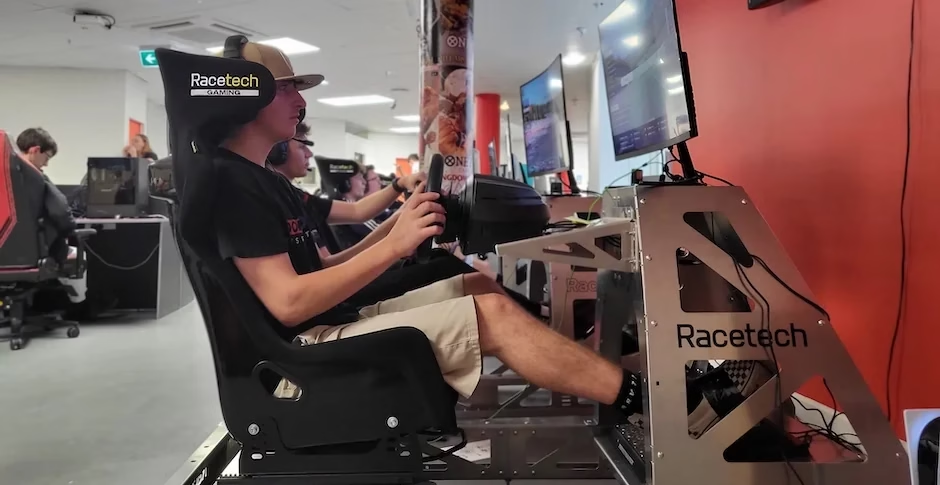
A racing simulator can put a driver behind the wheel of a GT3 car at Spa-Francorchamps, a Formula car at Silverstone, or a rally car on a narrow gravel stage. The experience takes place on a screen, but the skills involved go beyond entertainment. Competitive sim racing demands concentration, precise inputs, strategic thinking, and the ability to learn from mistakes.
Professional motorsport has increasingly recognised the value of virtual racing. Teams use simulators to study circuits, test setups, and prepare drivers for demanding situations. However, an important question remains: can time spent in a virtual cockpit genuinely make someone better behind the wheel of a real car?
What Sim Racing Teaches Gamers and Drivers
Racing games have developed far beyond simple arcade experiences. Modern simulators reproduce vehicle behaviour, tyre wear, braking distances, track layouts, and changing grip with varying degrees of accuracy. Serious competitors use steering wheels, pedals, and specialised rigs to create a more realistic driving environment. Regular practice can help develop several useful abilities:
- Track knowledge: Drivers learn corner sequences, braking zones, racing lines, and overtaking opportunities before visiting a circuit.
- Precision: Consistent lap times require controlled steering, smooth acceleration, and careful braking.
- Race awareness: Multiplayer sessions teach competitors to anticipate other drivers, defend positions, and identify safe opportunities to overtake.
- Strategic thinking: Longer races require attention to tyre wear, fuel consumption, pit stops, and changing race conditions.
- Mental endurance: Maintaining concentration over repeated laps helps drivers recognise mistakes and respond without losing focus.
Sim racing also makes practice more accessible. Renting a real circuit, preparing a car, and paying for fuel can cost a substantial amount. A home simulator offers repeated sessions without those expenses, although quality equipment and competitive online subscriptions also require investment.
For fans who enjoy gaming alongside motorsport, online entertainment offers plenty of ways to fill the time between races. Some adult players also explore casino platforms and a bonus at VIP Hermes. Casino promotions come with terms and financial risks, so anyone who chooses to play should check the conditions at Casinos Analyzer and set a strict spending limit.
How Virtual Racing Builds Racecraft
Fast lap times alone do not make a successful racing driver. Competitors also need to understand traffic, manage pressure, and make decisions when another car occupies the space they intended to use.
Online races provide a practical environment for developing these habits. A driver can practise defending the inside line, choosing an overtaking point, or recovering after a poor start. Repeating these situations helps competitors recognise patterns and consider the consequences of different decisions. A productive simulator session follows a clear routine:
- Learn the circuit. Study the layout and identify braking points before trying to set a competitive lap.
- Build consistency. Aim for repeatable lap times instead of chasing one unusually fast result.
- Review mistakes. Use replay footage and telemetry to identify missed apexes, late braking, and unnecessary steering corrections.
- Practise race situations. Run sessions with other drivers to develop awareness of traffic and overtaking opportunities.
- Measure progress. Compare lap times and driving inputs over several sessions to identify genuine improvements.
This approach turns gaming into structured practice. Random races can still be enjoyable, but deliberate training makes it easier to identify weaknesses and work on specific skills.
Where Simulators Reach Their Limits
Virtual racing cannot reproduce every challenge of driving a real vehicle. A simulator may reproduce steering resistance and vibration, but it cannot fully recreate the physical forces, changing balance, heat, noise, and bodily fatigue experienced on a circuit.
Real drivers also need to develop practical skills that depend on direct physical feedback. They must understand how the car responds under heavy braking, how grip changes as tyres warm up, and how to react when the vehicle moves unexpectedly.
Real-world driving introduces physical forces that standard home equipment cannot fully reproduce. Tyres, suspension, and road surfaces provide feedback that even advanced simulator hardware cannot completely replicate. Drivers must also account for weather, visibility, mechanical behaviour, and physical fatigue. A mistake in a game usually costs time or virtual positions, while an error on a real circuit can damage equipment or injure competitors.
These limitations explain why virtual practice works best as one part of driver development. It can help a competitor arrive at a circuit with stronger preparation, but it cannot replace supervised driving experience.
Can Sim Racing Lead to a Professional Career?
Virtual competition has created new opportunities for aspiring drivers. Esports championships allow competitors to demonstrate pace, racecraft, and consistency without first paying for a full season of real racing. Some programmes also connect successful sim racers with teams, sponsors, and real-world testing opportunities.
New Zealand provides a useful example of this growing connection. In 2024, Toyota Gazoo Racing New Zealand supported the New Zealand Esports Racing Series, with the winner earning a factory-supported test in a Toyota 86 Trophy car at Hampton Downs. The initiative showed how virtual competition can help identify talent and provide a pathway towards real motorsport.
Read more about the programme in Toyota Gazoo Racing New Zealand’s coverage of its esports initiative.
Still, a strong esports result does not guarantee success on a physical circuit, just as playing demo versions of pokies does not fully prepare you for a real-money experience. Real-world progression also depends on fitness, coaching, funding, technical knowledge, and performance under physical pressure. A promising sim racer needs to prove that virtual skills transfer to a real vehicle.
A Useful Tool, Not a Replacement
Sim racing can help drivers develop track familiarity, consistency, racecraft, and decision-making. It also gives talented competitors a more accessible way to demonstrate their abilities and connect with the motorsport community.
However, virtual speed tells only part of the story. Real racing demands physical control, mechanical understanding, fitness, and respect for the risks involved. Drivers who combine simulator practice with proper instruction and real-world experience gain a more complete foundation for competition.
The strongest value of sim racing lies in preparation. It gives drivers a place to practise, analyse mistakes, and refine decisions before they face the demands of an actual circuit.