

How Do Race Teams Ship Fuel and Batteries Under Hazmat Rules
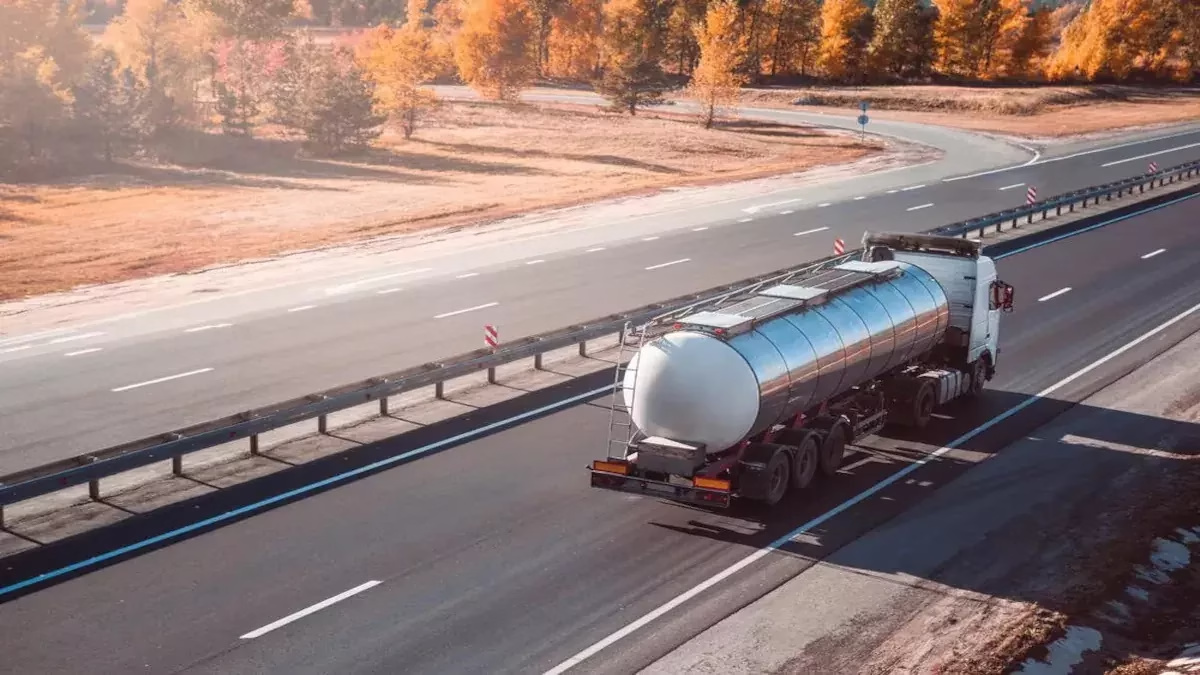
When a professional race team packs up after a Sunday grand prix, the paddock converts into a high-stakes freight operation. Tents come down, race cars are torn down to their monocoques, and tons of gear are stowed into transport haulers bound for the next track.
Yet much of what goes on that truck is regulated: race fuel, lithium batteries for hybrid systems and fire-suppression canisters all fall under hazardous goods transport rules, the same standards any chemical shipper has to meet.
Management of these high-performance parts involves compliance with hazmat regulations, UN packaging requirements, and proper transportation planning.
Beyond the eye-catching hospitality trailers, the racing business is run like a travelling chemistry lab. Fuel mixture drums, battery packs, compressed gases, and cleaning agents all have to flow effortlessly between states and across international borders. Compliance with dangerous goods transport laws is not only a matter of paperwork, but rather a crucial protection against the possibility of fires, leaks, and traffic hold-ups that could ruin a team’s entire race weekend.
Hazardous Goods Transport: Classifying Racing Cargo Under Hazmat Rules
Under standard transport regulations, motorsport supplies belong to specific hazard classes, each carrying precise rules for packing, marking, and shipping papers:
- Class 3 Flammable Liquids: Race fuels require rigorous handling. Even motorsport’s greenest pivot doesn’t take fuel off the hazmat manifest: as Formula 1 explains in its guide to the 2026 regulations, the cars now run on advanced sustainable fuels made from sources like captured carbon, municipal waste and non-food biomass, yet a drop-in fuel is still a flammable liquid, and every drum bound for the paddock travels under the same rules as conventional gasoline.
- Class 9 Miscellaneous Goods: The hybrid energy storage system makes use of large-capacity lithium-ion battery packs, which because of their risk of thermal runaway require UN approved packing, charge state monitoring, and environmental control during transportation.
- Class 2 Compressed Gases: Pneumatic jack systems and fire extinguisher bottles make use of compressed gases such as nitrogen or fire extinguishing chemicals.
Safe Packaging and Carrier Compliance
Hazardous goods transport requires specialized equipment. Fuel moves in heavy-gauge steel drums with grounding wires attached during loading to stop static sparks. Hybrid battery modules sit in custom insulated boxes engineered to smother fires and absorb shocks.
These loads should have standard hazard warning placards displayed on their vehicles. The drivers need hazmat endorsements for commercial vehicles, and each vehicle will have shipping papers with appropriate UN numbers, hazardous classes, emergency phone numbers, and weights of the load.
| Component | Hazard Class / UN | Primary Shipping Requirement |
|---|---|---|
| Race & Sustainable Fuel | Class 3 (UN 1203 / UN 1993) | Flame-arrestor steel drums, grounding, Class 3 placards |
| Hybrid Lithium Batteries | Class 9 (UN 3480) | Insulated UN-rated boxes, state-of-charge audits |
| Compressed Gas Tanks | Class 2.1 / Class 2.2 | Protective valve shrouds, floor tie-down tracks |
Keeping Paddock Freight Moving Safely
Race schedules leave zero room for error; a haul held up at a weigh station or border checkpoint means empty pit garages. Logistics managers carefully map routes around restricted city tunnels, structural bridge limits, and hazard-prohibited bypasses. By coordinating certified dangerous goods carriers, dedicated team transports, and expedited shipping services, race teams keep volatile fuels and sensitive electronics moving safely and legally, guaranteeing everything arrives ready for green-flag practice.