

How Racing Drivers Recover Between Races
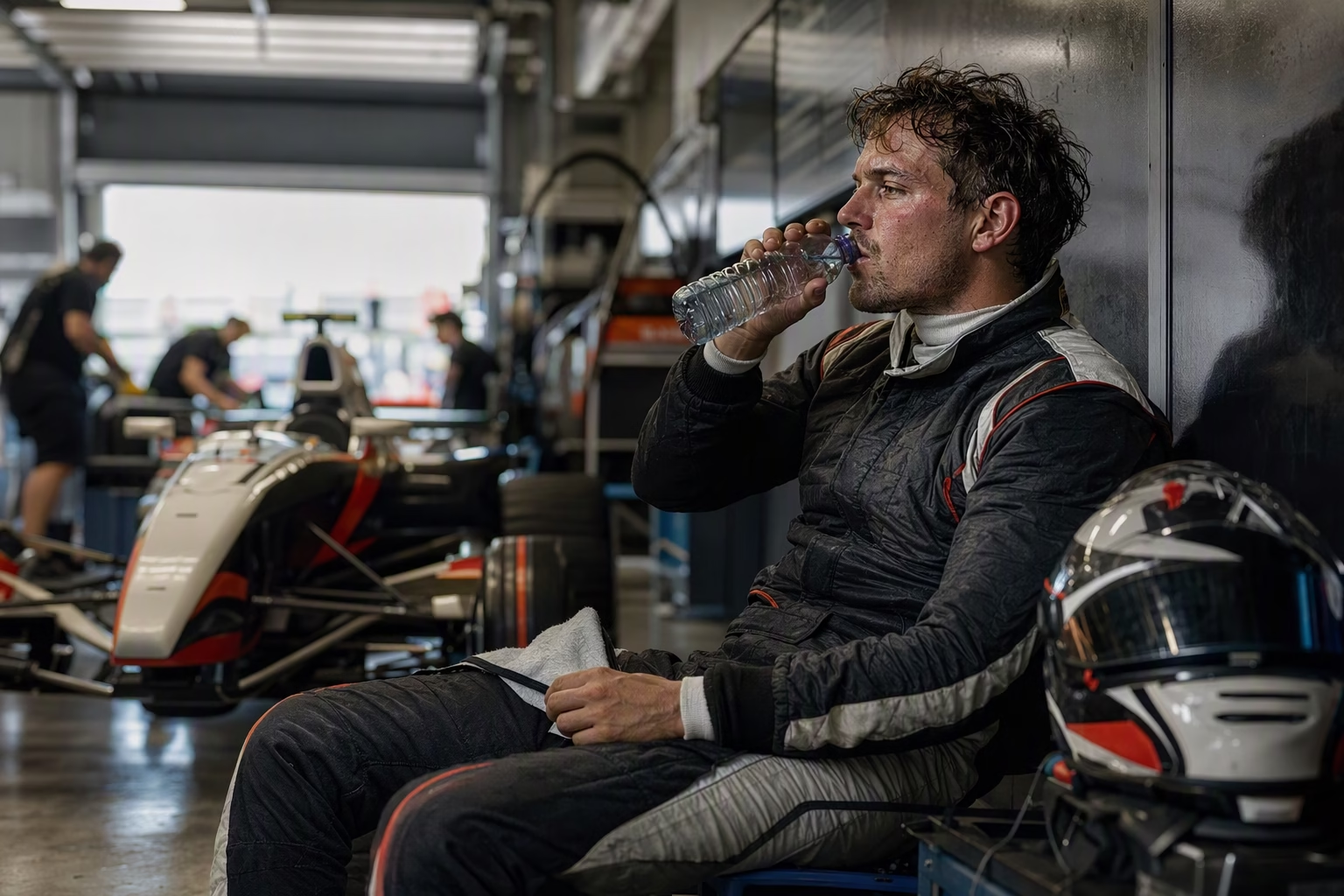
A racing driver can spend an entire weekend pushing a car to its limits, but the work does not end when the chequered flag falls.
Modern motorsport demands an unusual combination of physical strength, endurance, concentration and precision. Drivers have to deal with high temperatures, heavy braking, sustained lateral forces and hours of intense mental focus before climbing back into the car for another session.
That makes recovery an important part of professional racing. What a driver does between sessions can have a major impact on how prepared they are when they return to the cockpit.
Why Recovery Matters in Motorsport
It is easy to underestimate the physical demands of racing when watching from outside the car. A driver may be seated for much of a race, but that does not mean the body is relaxed.
Braking zones put substantial loads through the legs, while steering a racing car requires continuous work from the arms, shoulders and upper body. The neck is particularly important in high-downforce cars, where repeated cornering forces place considerable strain on the muscles supporting the head.
Heat adds another challenge. Cockpits can become extremely hot, particularly in closed cars and during races held in warm conditions. Sweating leads to fluid loss, while dehydration can make it harder to maintain concentration and physical performance.
There is also the mental side of racing. A driver must constantly process information, react to changing conditions and make decisions at high speed while maintaining concentration throughout the session.
Recovery therefore starts as soon as the driver gets out of the car.
Hydration Comes First
One of the simplest parts of post-race recovery is also one of the most important: replacing lost fluids.
A driver who has spent a race in a hot cockpit can lose a considerable amount of water through sweating. Replacing fluids after the session helps restore hydration, while electrolytes can be useful when significant amounts of sodium and other minerals have been lost through sweat.
Hydration becomes particularly important during a busy race weekend. A driver may have practice, qualifying and one or more races spread across several days, leaving relatively little time to recover completely between sessions.
The goal is not simply to drink as much water as possible. Drivers and their teams need to consider the conditions, duration of the session, individual sweat rates and the demands of the next stint.
Nutrition Between Sessions
Food is another important part of recovery.
After a hard session, the body needs energy and nutrients to recover. A balanced diet containing carbohydrates, protein, fluids and appropriate amounts of fat can help replenish energy stores and support normal muscle recovery.
Timing also matters.
A driver who has another session later in the day cannot necessarily treat the post-race meal as a traditional dinner. Food needs to provide enough energy without leaving the driver feeling uncomfortable or sluggish when they return to the car.
This becomes particularly important during endurance events, where drivers alternate between driving stints and periods of rest.
The careers of endurance specialists provide plenty of examples of how long drivers can remain competitive in demanding machinery. Tom Kristensen, for example, competed in 18 editions of the 24 Hours of Le Mans and won the race nine times.
Sleep Is One of the Best Recovery Tools
No recovery routine can compensate completely for poor sleep.
Professional drivers frequently travel across countries and time zones, while race weekends can involve early starts, late finishes and demanding schedules. Endurance racing introduces an additional challenge, with drivers sometimes competing through the night.
Quality sleep gives the body an opportunity to recover physically while also helping maintain concentration and reaction time.
For a racing driver, that can be just as important as physical conditioning. Racing requires extremely precise inputs, and fatigue can make it harder to maintain concentration over a long session.
This is one reason professional teams pay increasing attention to sleep schedules and recovery routines rather than treating fitness as something that happens only in the gym.
Training the Body for Recovery
Recovery actually begins before the race.
Professional racing drivers spend considerable time preparing their bodies to withstand the demands of competition. Neck, shoulder and core strength are particularly important, while cardiovascular conditioning helps drivers cope with heat and prolonged physical effort.
A well-conditioned driver is better prepared for the physical stresses of repeated sessions, while maintaining good fitness can also make the recovery process between those sessions easier to manage.
Different categories require different approaches. A Formula car driver dealing with high aerodynamic loads has different physical demands from a touring-car driver, while endurance racers have to prepare for repeated stints and long periods of competition.
The common factor is that physical preparation and recovery are closely connected.
Motorsport history also provides some interesting examples of drivers who maintained demanding fitness routines throughout long careers. Bob Wollek remained active in sportscar racing into his fifties and was known for cycling as part of his fitness routine.
Mental Recovery Matters Too
Physical fatigue is only part of the equation.
A racing driver may spend an entire session making countless decisions while monitoring the car, competitors, tyres, weather and race strategy. Maintaining that level of concentration is mentally demanding.
Between sessions, drivers therefore need time away from the cockpit and from the constant pressure of competition.
Some may review data and onboard footage immediately after a session. Others may need a period of quiet before beginning the technical debrief with engineers.
The objective is not simply to stop thinking about racing. It is to arrive at the next session mentally prepared enough to process information and make decisions quickly.
Recovery During Endurance Races
Endurance racing takes recovery to another level.
In events lasting six, 12 or even 24 hours, several drivers share the same car. Each driver completes a stint before handing the car to a teammate, then has to recover as quickly as possible before driving again.
That can involve eating, drinking, cooling down, changing clothes and trying to sleep in an environment that is far from ideal.
The ability to recover during these short breaks can become an important part of the race strategy. A driver may have only a limited amount of time before being called back into the car.
Jann Mardenborough is one example of a driver whose career has included several forms of endurance racing, including the 24 Hours of Le Mans and 24 Hours of Spa.
Endurance racing demonstrates particularly clearly that driver performance is not simply about what happens while the helmet is on.
What About Recovery Products and CBD?
The growing interest in sports recovery has also created a large market for supplements and other recovery products, including products containing cannabinoids.
Some athletes explore these products as part of their personal recovery routines, but competitive drivers need to be particularly careful about what they consume. Products can vary considerably in their ingredients and concentrations, and drivers should always check the regulations that apply to their championship.
For example, the Delta 9 THC gummies collection represents one category of cannabis products available to consumers, although THC-containing products are very different from conventional sports-recovery products and can raise specific issues for athletes subject to anti-doping regulations.
The FIA anti-doping programme is particularly relevant to racing drivers. The FIA describes anti-doping in motorsport as a safety issue as well as a matter of sporting fairness because substances that can alter judgement or reactions can potentially put drivers and others at risk.
The FIA also directs competitors to consult the current World Anti-Doping Agency (WADA) Prohibited List. The list is updated annually, and the FIA makes clear that competitors are responsible for checking the rules that apply to them.
CBD and THC should not simply be treated as interchangeable terms. Under the WADA framework, cannabidiol (CBD) is not prohibited, while THC remains a prohibited cannabinoid in competition. However, products containing cannabinoids can contain multiple compounds, so drivers subject to anti-doping rules need to pay attention to the actual ingredients rather than relying only on a product’s marketing description.
For professional competitors, this is one area where the source and composition of a product matter. A driver should never assume that a product labelled as a recovery or wellness supplement is automatically suitable for use in competition.
More importantly, supplements should not be viewed as a replacement for the fundamentals of recovery. Adequate sleep, proper nutrition, hydration, physical conditioning and appropriate medical care remain central to an athlete’s preparation.
Recovery Is Part of the Job
The image of a racing driver is often defined by what happens during the race: the overtakes, qualifying laps, crashes and celebrations on the podium.
Behind those moments is a much less visible routine.
Professional drivers train their bodies to handle the physical demands of racing, carefully manage hydration and nutrition, protect their sleep and work with their teams to recover between sessions.
In a championship where races can be decided by fractions of a second, being prepared for the next session is not a luxury. It is part of the job.
The next time you watch a driver climb out of a racing car after a demanding stint, remember that the race may be over for the spectators. For the driver, the next phase has already begun: recovery, preparation and getting ready to do it all again.