
What Racing Statistics Reveal About Driver Performance
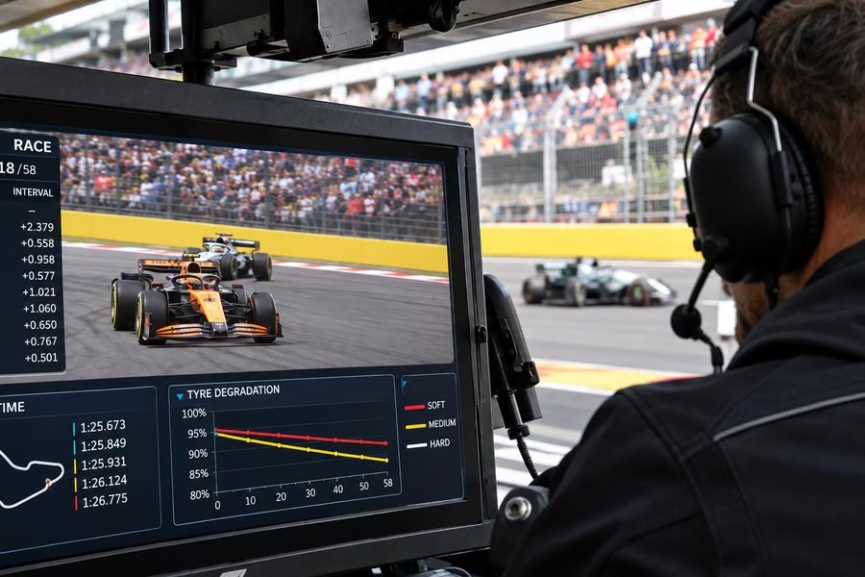
A race result gives you the order at the finish, not the full measure of the driving. A driver can finish sixth after spending half the afternoon in traffic, while a teammate places fourth with a cleaner run and fewer interruptions. To judge what happened on track, you need to look at pace, consistency and the conditions under which those numbers were recorded.
Finishing position needs context
Results are a starting point, not a verdict. In Formula 1, the car has an enormous influence on where a driver can realistically finish. A fifth-place result in the quickest car may be disappointing. The same position in a midfield car could be exceptional.
Comparisons between teammates can be useful because they operate broadly similar machinery. Even then, check whether both drivers had clean pit stops, comparable tire strategies and uninterrupted races. A safety car that arrives just after one driver stops can change the result without changing anyone’s ability.
Lap times reveal consistency, not just speed
A single fast lap can demonstrate a driver’s potential, but maintaining competitive pace throughout a race requires greater control. Drivers must manage tire wear, changing fuel loads and traffic while keeping their lap times as consistent as possible.
Consider two drivers completing a ten-lap stint. The first maintains lap times between 1:32.2 and 1:32.6, while the second records an impressive 1:31.8 before slowing to 1:33.6 on several laps. Although the second driver achieves a faster individual lap, the first demonstrates greater consistency, which can make a significant difference over a full race distance.
This approach to evaluating performance extends beyond motorsport. In sports such as basketball and football, analysts often examine statistics from multiple games to identify patterns that individual results might conceal. Sports analysis resources, including Doc’s Sports, can provide additional context for comparing performance trends across different competitions. Racing follows a similar principle, where consistent lap times often reveal more about a driver’s performance than one exceptional result.
However, lap times must be interpreted alongside racing conditions. A driver running in clean air may have an advantage over someone following another car closely. Fuel consumption, tire degradation and changing track temperatures can also affect performance. Considering these factors allows you to make more meaningful comparisons between drivers rather than relying on raw timing data alone.
Qualifying tests a different skill
A strong qualifying lap asks a driver to bring the tires into their working range and commit to the braking points with little margin for error. A difference of two-tenths of a second might cover several grid places on a short circuit.
But the setup that feels sharp over one lap may be harder on tires during a long run. A driver who qualifies ahead of a teammate on Saturday can still struggle to match that teammate’s pace on Sunday. That’s why SnapLap’s guide to the shift from practice to race day is a useful companion to qualifying results: the demands change across the weekend.
For a fair comparison, look at the gap between teammates over several qualifying sessions, not just one. An unusually windy lap or a yellow flag can distort a single Saturday result.
Tire degradation reveals race management
A driver can gain time early in a stint by braking later and applying power sooner, then pay for it when the tires lose grip. The damage may show up gradually: first a tenth per lap, then several tenths once the rear tires begin sliding on corner exit.
That makes stint shape more informative than one isolated lap. Compare drivers on similar compounds with similar tire ages, then look for the point where their pace begins to fall away. Pirelli’s explanation of Formula 1 tire selection describes how surface abrasiveness, temperature and circuit layout affect compound choices. Those factors help explain why one driver’s gentle style works well at one venue but offers less advantage at another.
Overtaking totals can mislead
Ten overtakes sound impressive until you learn that most involved faster machinery passing cars on older tires. One carefully prepared move against an evenly matched rival may demand more skill.
Watch what happens before the pass. A driver might sacrifice the entry to one corner to get a better exit onto the next straight. Another may spend several laps forcing a rival to defend the inside line, making that rival’s exit slower. Defensive driving deserves the same scrutiny. Holding position for five laps is valuable only if the battle doesn’t ruin the defender’s tires or compromise the overall race. Sometimes staying within reach and choosing a better moment is the stronger decision.
Track conditions change the meaning of the numbers
A wet circuit rewards sensitivity to grip, but even that description is incomplete. The racing line can be slippery because of rubber deposits, while a damp patch off line offers more traction. Two laps only minutes apart may not be directly comparable.
Meanwhile, a circuit that gains grip throughout a weekend may produce faster laps even when drivers aren’t pushing harder.
Look for performance repeated across similar situations. If a driver keeps producing stable laps through multiple long runs, that is stronger evidence than one exceptional time set on a rapidly improving track.
The useful question after every race
When you review the timing sheet, don’t begin by asking who set the quickest lap. Ask which driver consistently extracted a competitive pace from the car and conditions available. That’s the comparison most likely to reveal driving quality hidden by the final order.