

Why Reliable Lifting Equipment Matters in Automotive and Motorsport Workshops
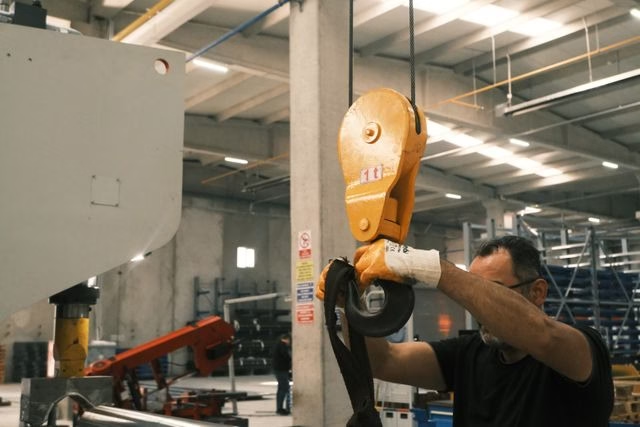
Motorsport is often associated with speed, precision, and cutting-edge engineering. On race day, attention naturally falls on the drivers, cars, pit crews, and split-second decisions that can determine the outcome of an event. Yet behind every successful racing program is a much less visible side of the operation: the workshop. Cars must be inspected, repaired, prepared, transported, and maintained between sessions, and many of these tasks require equipment capable of safely positioning heavy components and vehicles. Reliable lifting equipment is therefore an important part of professional automotive maintenance, whether the setting is a race shop, dealership, restoration facility, or general workshop.
The demands placed on automotive workshops can be substantial. A modern performance car contains numerous systems that require regular inspection, from suspension and braking components to exhaust systems, wheels, transmissions, and underbody components. Motorsport vehicles can face even greater demands because they are frequently subjected to intense operating conditions and repeated servicing. When technicians need access to areas that cannot be reached from ground level, lifting equipment can make the work faster, more practical, and safer when it is correctly selected and maintained.
For businesses responsible for maintaining access equipment, construction machinery, or workshop infrastructure, sourcing dependable replacement components is equally important. This is where JLG Lift Parts can be relevant for operators looking to maintain compatible lifting equipment and keep essential machinery functioning as intended. Although lifting equipment may not have the glamour of a racing car, it can play a practical role in the wider automotive and industrial environment that supports motorsport.
The Workshop Is Part of the Racing Operation
A racing team does not begin and end its work when a car reaches the circuit. Preparation starts well before a vehicle enters a pit lane. Engineers and mechanics inspect components, make adjustments, replace worn parts, analyze data, and prepare vehicles for the next session. After a race, the process begins again.
This continuous cycle means that workshop efficiency matters. A vehicle that is difficult to access can take longer to inspect or repair, while inadequate equipment can create unnecessary risks for technicians. Professional workshops therefore depend on tools and machinery that are appropriate for the work being performed.
Lifting equipment is particularly useful when technicians need to work at height or access elevated areas around a facility. In larger operations, it can also assist with moving materials, components, tools, and equipment. The right machine can reduce the amount of manual handling required and help workers reach areas that would otherwise be difficult to access.
Safety Should Come Before Speed
Motorsport rewards efficiency, but workshop safety should never be treated as a race against the clock. Lifting equipment involves significant loads and mechanical forces, meaning improper operation or neglected maintenance can have serious consequences.
Operators should follow the manufacturer’s instructions and applicable workplace safety requirements. Equipment should be inspected regularly, and damaged or excessively worn components should be addressed before the machine is returned to normal service. Replacement parts should also be appropriate for the specific equipment rather than selected solely because they appear similar.
This is particularly important for equipment that operates frequently. Repeated use can contribute to wear in mechanical and hydraulic systems, while exposure to demanding working environments can accelerate deterioration. A structured maintenance program allows problems to be identified before they become larger operational issues.
Why Replacement Parts Matter
Even high-quality equipment eventually requires maintenance. Components can wear out, seals can deteriorate, electrical systems can develop faults, and mechanical parts may eventually need replacement. Preventive maintenance is designed to address these issues before they result in unexpected downtime.
For a busy workshop, downtime can be expensive. If a piece of lifting equipment becomes unavailable, technicians may have to reorganize work or find another method of completing a task. In a motorsport environment, where preparation schedules can already be tightly compressed, unnecessary delays can affect the entire workflow.
Using appropriate replacement components can help preserve the intended operation of equipment. However, part selection should always take into account the machine’s model, specifications, operating environment, and manufacturer’s requirements. A component that looks compatible is not necessarily suitable for a particular machine.
Lifting Equipment Beyond the Race Track
The connection between lifting equipment and motorsport extends beyond the actual race workshop. Racing organizations often operate facilities containing offices, garages, storage areas, fabrication spaces, transport equipment, and maintenance zones. Events themselves may also require temporary infrastructure and equipment for setup and teardown.
This broader environment demonstrates how motorsport depends on an extensive support network. The racing car may be the most visible part of the operation, but dozens of practical processes