

MotoGP Updates Manufacturer Concession Rules Ahead of 2026 Technical Cycle
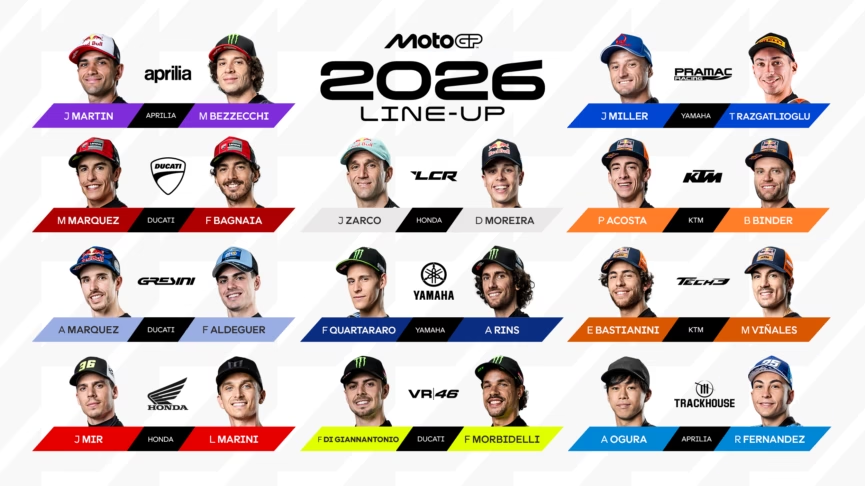
MotoGP has introduced revised manufacturer concession regulations for the upcoming 2026 technical cycle, implementing changes designed to balance competition while preserving incentives for struggling manufacturers to accelerate development.
The updated framework, confirmed through MotoGP.com and analyzed by The Race, adjusts how concessions are awarded and maintained, directly influencing testing freedom, engine development, and aerodynamic updates.
Concession System Remains Central to Competitive Balance
The concession structure was originally introduced to help manufacturers recover performance deficits by granting additional technical flexibility. Teams operating under concession status may receive benefits such as expanded testing opportunities, additional wildcard entries, and fewer restrictions on engine homologation.
The latest revisions refine the performance thresholds required to gain or lose concession status, with the championship aiming to create a more responsive system that better reflects competitive reality.
Tracks such as Circuit of the Americas and Mugello, where engine performance and aerodynamic efficiency play major roles, are expected to highlight the practical effects of these changes.
Technical Development Freedom Expanded
The revised rules place greater emphasis on allowing underperforming manufacturers to develop more aggressively during the season. This includes increased opportunities for testing and more flexibility in refining engine specifications.
According to reporting from Crash.net, the championship believes the adjustments will help prevent prolonged competitive imbalance while preserving the technical diversity that defines MotoGP.
Manufacturers such as Honda and Yamaha—both of whom have faced performance challenges in recent seasons—could benefit significantly from the revised structure.
Impact on Riders and Teams
The updated concession framework may alter development trajectories across the grid, potentially accelerating the recovery of manufacturers currently operating behind Ducati and KTM in overall competitiveness.
Riders such as Marc Márquez have previously emphasized the importance of continuous technical evolution in maintaining MotoGP’s competitive intensity.
Why This Matters for MotoGP’s Future
The concession system has become one of MotoGP’s most important governance tools, balancing the need for close racing with the realities of manufacturer-driven technical competition.
Without effective concessions, struggling manufacturers risk falling into long-term performance deficits that can discourage investment and reduce grid diversity.
What Happens Next
The revised regulations are expected to influence development programs immediately as manufacturers prepare for the next phase of technical evolution ahead of the 2026 season.
As MotoGP continues refining its competitive framework, the effectiveness of these concession changes will play a crucial role in shaping the championship’s long-term balance and manufacturer participation.