



Circuits
Croft Circuit – BTCC, Rallycross and RAF Airfield Guide
Croft Circuit is a racing circuit in the north-east England, venue of the British Touring Car Championship and British Rallycross Championship races.
Originally published June 2016. Last updated September 2026: added labelled current-layout circuit map (Wikimedia Commons, with attribution in caption)
Croft Circuit is a 3.423-kilometre permanent race track near Dalton-on-Tees in North Yorkshire and one of the British Touring Car Championship’s regular north-east England stops. Racing began on the runways of former RAF Croft after the Second World War; rallycross kept the venue alive when circuit racing stopped in 1981, and the modern layout opened in 1997.
The circuit matters because it shows how British club motorsport adapts. Croft has been an airfield course, a rallycross stronghold, a British Formula 3 host, and a BTCC specialist’s exam. Colin Turkington’s Croft record and Sergio Pérez’s 2008 F3 lap remain touchstones for touring-car fans and single-seater historians alike.
Croft sits in the same national cluster as Donington Park, Brands Hatch, and Thruxton — but only Croft combines RAF heritage with winter rallycross folklore and a noise dispute that still shapes its calendar.
Contents
- Croft Circuit facts
- Racing on the RAF Croft airfield
- Bruce Ropner and the 1964 circuit
- Rallycross identity
- Circuit racing ends in 1981
- The modern layout opens
- BTCC at Croft
- What makes the layout challenging?
- Colin Turkington at Croft
- Sergio Pérez and the lap record
- Superbikes and other championships
- The noise dispute
- Croft Circuit today
- Frequently asked questions
Croft Circuit facts
| Location | Dalton-on-Tees, North Yorkshire, England (north-east England) |
|---|---|
| Circuit type | Permanent road course (former RAF airfield site) |
| Opened (current layout) | 1997 |
| Length | 2.127 miles (3.423 km) |
| First post-war racing | 1948 (airfield layouts) |
| Permanent circuit | August 1964 (earlier triangular course) |
| Main events | BTCC; British Superbikes (historically); club racing, testing, track days |
| Notable corners | Clervaux; Hawthorn Chicane; Jim Clark Esses; Complex; Hairpin |
| Outright race-lap record | 1:13.656 — Sergio Pérez (British F3, 2008) |
Lap record note: BTCC, superbike, and club sessions use different tyres and regulations. Compare lap times only within the same category and layout.
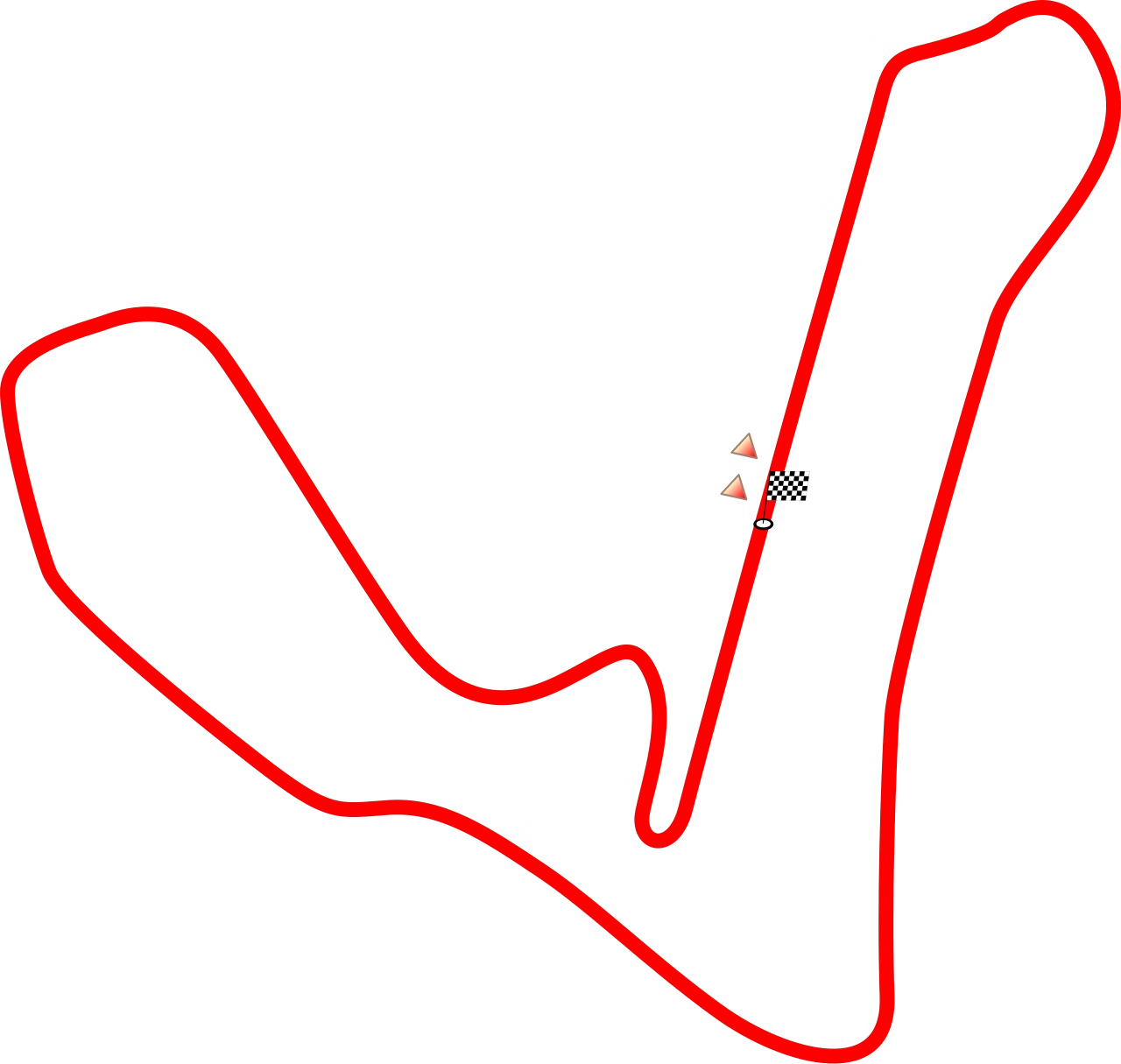
Croft Circuit — current layout (3.423 km) — Map: Readro / CC BY-SA 3.0 via Wikimedia Commons

Racing at Croft Circuit in 2005 — Photo: Mattbuck / CC BY-SA 3.0 via Wikimedia Commons
Racing began on the former RAF Croft airfield
The site developed during the Second World War as RAF Croft, opening in 1941 with Wellingtons, Halifaxes, and Lancasters before flying ceased in 1946. Wide runways and perimeter roads made the airfield attractive to club racers at a time when Britain had few purpose-built circuits.
Members of the Darlington & District Motor Club organised activities from 1948, using combinations of runways and service roads. Royal Automobile Club recognition helped Croft grow into a regular northern venue for sports cars, saloons, and motorcycles.
The same post-war pattern gave motorsport a second life at venues such as Thruxton. At Croft, experimentation with different airfield sections continued until a permanent course became necessary.
Bruce Ropner helped create a permanent circuit
Bruce Ropner and fellow enthusiasts bought the northern part of the airfield in 1962 and opened a dedicated triangular circuit in August 1964, roughly 1.7 miles long. Northern competitors finally had a permanent home while much of national racing remained concentrated in the south.
The British Saloon Car Championship visited between 1968 and 1971, with wins for Frank Gardner and Roy Pierpoint. Croft’s compact lap mixed fast sections with braking zones that encouraged close racing — traits that survived every later redevelopment.
Rallycross became part of Croft’s identity
Croft held its first rallycross meeting in December 1967, when the discipline still combined asphalt and loose-surface sections in short, television-friendly races. The venue proved ideal: circuit racing in summer, rallycross in winter.
ITV’s World of Sport coverage helped rallycross reach a mass audience. The discipline would later save the circuit when paved racing paused.
Circuit racing stopped in 1981
By the early 1980s the original surface needed a full resurfacing the circuit could not afford. Conventional circuit racing ended in 1981, but rallycross did not require restoring the entire paved course.
Farmer George Shield and the Darlington & District Motor Club rebuilt a rallycross-focused layout that opened in 1982. Croft hosted the FIA Inter-Nations Cup in 1987 and 1990 and the British round of the European Rallycross Championship in 1994, maintaining national visibility through the circuit-racing gap.
The modern Croft Circuit opened in 1997
Rallycross success encouraged a return to full circuit racing. The layout used today measures 2.127 miles (3.423 km), retaining more than half of the earlier course while adding a new infield, start-finish straight, pit complex, garages, and control tower.
Spectators still watch much of the action from raised banks rather than vast grandstands, preserving the accessible club-racing atmosphere. A modern paddock let Croft host professional championships without losing its regional character.
The BTCC arrived during the Super Touring era
Croft joined the BTCC calendar in 1997, the same year the new layout opened. Alain Menu won both races that weekend in a Renault Laguna en route to the Super Touring title.
Long acceleration zones, slower corners, and quick direction changes reward balanced cars. Croft stayed relevant through NGTC regulations and hybrid experiments because it punishes one-dimensional set-ups.
What makes the Croft layout challenging?
At 3.423 km Croft is not Britain’s longest track, but each lap mixes distinct sectors. Clervaux and Hawthorn lead into the Chicane; cars then sweep toward Tower, the Jim Clark Esses, and Barcroft before Sunny In, Sunny Out, the Complex, and the Hairpin.
Momentum lost in the fast middle sector carries through several corners. The Complex and Hairpin then reward late braking but punish a compromised exit.

The opening section of Croft Circuit — Photo: Mattbuck / CC BY-SA 3.0 via Wikimedia Commons
Colin Turkington became Croft’s leading BTCC specialist
Matt Neal, Jason Plato, Gordon Shedden, Yvan Muller, and Andrew Jordan have all won at Croft, but Colin Turkington is the driver most closely linked with the circuit. His smooth style and rear-wheel-drive BMW experience matched Croft’s traction demands during four BTCC title campaigns with West Surrey Racing.
Sergio Pérez still holds the outright race-lap record
During the 2008 British Formula 3 meeting, Sergio Pérez lapped in 1:13.656 in a T-Sport Dallara F308-Honda. British F3 did not return after 2008, so the time has stood as the official race-lap benchmark on the current layout.
That grid also included Brendon Hartley, Takuma Sato, Anthony Davidson, and Álvaro Parente — future international stars who learned their craft on national circuits such as Croft and Oulton Park.
British Superbikes and other championships at Croft
British GT and British Formula 3 visited after 1997; British Superbikes became a headline event from 2004 until 2011. One-make series, historics, and club meetings still fill the calendar between major weekends.

The Complex during a British Superbike meeting in 2009 — Photo: DS Pugh / Geograph via Wikimedia Commons
The Croft noise dispute changed how the circuit operates
Residents sued over noise after testing and track-day use expanded beyond traditional race meetings. A Court of Appeal judgment in January 2009 limited the venue to 40 higher-noise days per year, with lower-noise activities allowed outside that cap.
Major championships remained, but Croft had to balance neighbour relations with club demand — another example of the venue adapting rather than closing.
Croft Circuit in 2026
Croft remains active in 2026. The BTCC typically visits in early September as the title fight tightens, alongside club racing, testing, and driving experiences. Confirm dates and noise-category rules on the official site before booking.
Frequently asked questions about Croft Circuit
Where is Croft Circuit?
Croft Circuit is at West Lane, Dalton-on-Tees, North Yorkshire, DL2 2PL, in north-east England. The venue sits on the site of the former RAF Croft bomber station, roughly midway between Darlington and Northallerton.
How long is Croft Circuit?
The current permanent layout measures 2.127 miles (3.423 km). It opened in 1997 and combines sections of the earlier course with a new infield, pit complex, and control tower.
What is Croft Circuit famous for?
Croft is best known as a British Touring Car Championship venue and for its post-war history as both a circuit-racing track and a leading rallycross site. The BTCC has raced at Croft regularly since the modern layout opened in 1997.
When did racing start at Croft?
Club racing on the former RAF runways began in 1948. Bruce Ropner and partners opened a permanent triangular circuit in August 1964, and the present 3.423 km course was completed in 1997.
Why did circuit racing stop at Croft in 1981?
The original asphalt needed a full resurfacing that the circuit could not fund. Conventional circuit racing ended in 1981, but rallycross continued on a rebuilt course and kept the venue alive until the 1997 redevelopment.
Who holds the lap record at Croft Circuit?
Sergio Pérez set the outright official race-lap record of 1:13.656 during the 2008 British Formula 3 meeting in a T-Sport Dallara F308-Honda. BTCC and club sessions use different tyres and regulations, so compare times only within the same category.
Which BTCC driver is most successful at Croft?
Colin Turkington is the driver most closely associated with Croft success, with multiple wins for West Surrey Racing during his four BTCC title campaigns.
Does Croft still host rallycross?
Rallycross was central to Croft’s survival after 1981, including FIA European Rallycross rounds in the 1990s. The discipline is no longer the dominant winter programme it once was, but mixed-surface rallying has returned at points in recent seasons.
What is the Croft noise restriction?
A 2009 Court of Appeal judgment limited the circuit to 40 higher-noise days per year after a dispute with nearby residents. Lower-noise track days and activities can continue outside that allocation under the operating rules.
How do you visit Croft Circuit?
Race tickets, track days, and driving experiences are listed on the official Croft Circuit website. The BTCC typically visits in early September; confirm dates each season before booking travel.
A circuit that repeatedly found a new future
Croft began on RAF concrete, gained a permanent course in 1964, survived through rallycross, and returned with a modern layout in 1997. Few British venues reflect post-war motorsport development so clearly.
Related reading
- Donington Park — first UK permanent circuit and Wheatcroft museum
- Brands Hatch — Kent dual-layout national icon
- Knockhill Racing Circuit — Scotland’s BTCC stop
- Thruxton Circuit — Britain’s fastest circuit
Address: Croft Circuit, West Lane, Dalton-on-Tees, North Yorkshire, DL2 2PL, United Kingdom
Official website: croftcircuit.co.uk