

Formula E Expands Fast-Charging Plans Ahead of Gen4 Technical Regulations
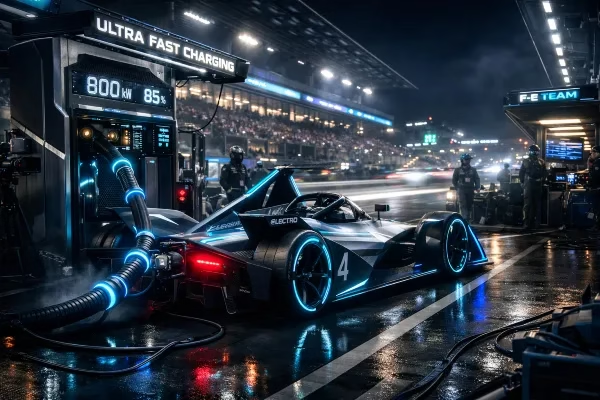
Formula E has confirmed further development of its fast-charging race infrastructure as part of preparations for the upcoming Gen4 era, reinforcing the championship’s focus on positioning electric motorsport as a platform for advanced battery and charging technologies.
The initiative, outlined through Formula E and analyzed by The Race, expands on previous charging concepts introduced under the Pit Boost system and aims to integrate higher-capacity rapid charging into future race formats.
Fast-Charging Technology Becomes Central to Gen4 Vision
The Gen4 regulations are expected to significantly increase both power output and energy recovery capabilities. As a result, Formula E is developing charging systems capable of delivering extremely high energy transfer rates during short pit stop windows.
This marks an important evolution in the championship’s technical philosophy. Rather than focusing solely on battery efficiency and regeneration, Formula E is increasingly positioning rapid charging as a competitive and strategic component of racing.
Street circuits such as Monaco E-Prix and Diriyah, where energy management is already critical, could become key showcases for the technology once Gen4 cars are introduced.
Strategic Implications for Manufacturers
The expansion of fast-charging capabilities has major implications for manufacturers involved in Formula E. Battery management, thermal efficiency, and charging durability are expected to become increasingly important development areas.
Manufacturers will need to balance outright performance with the ability to maximize charging efficiency under race conditions—an engineering challenge closely aligned with road-car EV development.
According to Autosport, the technology could also influence how future race formats are structured, potentially introducing more varied pit stop strategies.
Why This Matters Beyond Formula E
Formula E has long promoted itself as a research and development platform for electric mobility, and the emphasis on rapid charging reflects broader trends across the automotive industry.
As charging infrastructure and battery performance remain major barriers to widespread EV adoption, motorsport-based innovation could play a role in accelerating technological progress.
Drivers such as Jake Dennis may eventually compete in races where charging strategy becomes as important as energy conservation and tire management.
Potential Impact on Race Format
The integration of high-speed charging systems could fundamentally reshape Formula E race strategy. Teams may gain new opportunities to optimize pit windows, attack phases, and energy deployment depending on charging performance.
This could help differentiate Formula E further from traditional single-seater categories by making energy replenishment an active strategic variable during races.
What Happens Next
Formula E and the FIA are expected to continue testing charging systems ahead of the Gen4 introduction, with manufacturers closely involved in evaluating reliability and operational feasibility.
As electric motorsport technology evolves, the success of these fast-charging initiatives may become one of the defining factors of Formula E’s long-term identity.