

GT World Challenge Moves to Strengthen GT3 Validation and Homologation Procedures
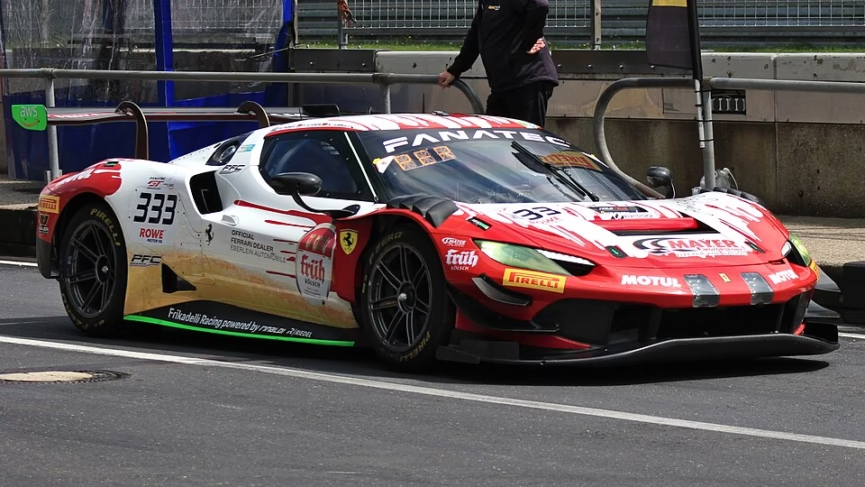
SRO Motorsports Group is advancing new GT3 validation and homologation monitoring procedures, continuing efforts to improve technical transparency and reinforce confidence in one of motorsport’s most important global racing formulas.
The latest developments, discussed through GT World Challenge Europe and specialist GT racing media, focus on improving how manufacturers demonstrate compliance with homologation requirements and how technical data is used to support Balance of Performance decisions.
GT3’s Global Importance Continues to Grow
Few racing categories have become as influential as GT3. The platform now serves as the foundation for championships across Europe, North America, Asia, Australia, and major endurance events worldwide.
As manufacturer participation continues to expand, ensuring consistent homologation standards has become increasingly important. Technical disputes or questions surrounding compliance can quickly affect confidence in the competitive framework.
Events such as the 24 Hours of Spa and races at Spa-Francorchamps showcase the diversity of GT3 machinery competing under a common technical rule set.
Data Validation Becoming More Sophisticated
The revised procedures reportedly place greater emphasis on data validation, aerodynamic verification, and performance monitoring throughout a car’s homologation lifecycle.
Rather than relying solely on initial homologation submissions, officials are evaluating ways to improve ongoing oversight and ensure technical specifications remain aligned with approved configurations.
This approach mirrors broader trends throughout international motorsport, where governing bodies increasingly use advanced telemetry and digital measurement tools to support regulatory compliance.
Why This Matters for Balance of Performance
Balance of Performance remains one of the defining features of GT3 racing. The system allows vastly different vehicle architectures to compete on relatively equal terms while preserving manufacturer identity.
Accurate homologation data forms the foundation of any successful BoP process. If baseline technical information is inconsistent, confidence in performance balancing can quickly erode.
Manufacturers such as Mercedes-AMG, Porsche, Ferrari, BMW, Lamborghini, and Aston Martin all rely on a stable and trusted regulatory environment when developing GT3 programs.
Long-Term Benefits for Teams and Manufacturers
The enhanced validation framework is expected to provide greater transparency for teams while reducing the likelihood of technical disputes. For manufacturers, a stronger homologation process can help protect long-term investment by ensuring that regulatory decisions are based on robust technical evidence.
Drivers competing in GT3 machinery across multiple championships could ultimately benefit from a more consistent and predictable technical environment.
What Happens Next
SRO is expected to continue refining its technical oversight procedures in collaboration with manufacturers and technical working groups throughout the season.
As GT3 racing continues to expand globally, maintaining confidence in homologation and Balance of Performance systems will remain essential to the category’s long-term success and manufacturer appeal.