

NASCAR Expands Wet-Weather Short-Track Testing Program
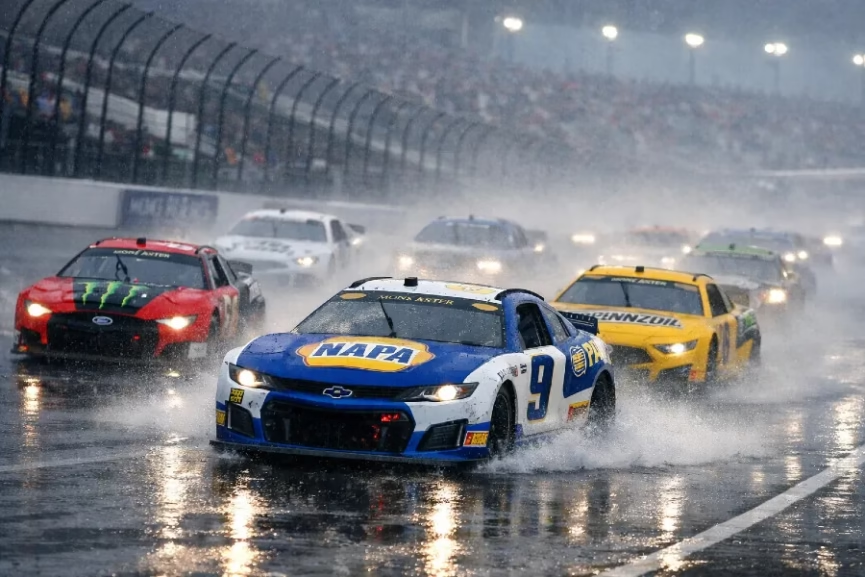
NASCAR has expanded development of its wet-weather short-track package, continuing efforts to improve rain-racing capability on oval circuits and reduce schedule disruptions caused by changing weather conditions.
The initiative, detailed through NASCAR and further analyzed by Fox Sports NASCAR, focuses on refining tire compounds, visibility solutions, and race control procedures for damp or partially wet short-track conditions.
Short-Track Rain Racing Remains a Major Technical Challenge
While NASCAR has already introduced wet-weather racing on road courses, adapting the concept for short ovals presents significantly greater challenges. Reduced visibility, standing water, and tighter racing conditions create additional safety concerns compared to road racing environments.
Tracks such as Martinsville Speedway and Bristol Motor Speedway are considered particularly complex environments for wet-weather implementation due to heavy braking zones and close-quarters racing.
The latest testing phase reportedly includes revised tire construction and enhanced spray mitigation measures designed to improve driver visibility under wet conditions.
Operational Flexibility a Key Objective
One of NASCAR’s primary goals is reducing race postponements and schedule disruptions caused by weather delays. Expanding wet-weather capability could provide greater flexibility for broadcasters, teams, and event organizers while minimizing logistical complications.
According to Motorsport.com, officials are also evaluating procedural adjustments involving caution periods, track drying thresholds, and race start criteria.
Potential Impact on Teams and Drivers
For teams, the introduction of wet-weather oval racing would require significant setup adjustments, particularly regarding brake cooling, suspension compliance, and tire management. Teams may also need to develop new strategic models for changing track conditions.
Drivers such as Kyle Larson, who possess strong adaptability across multiple racing disciplines, could benefit from a more variable racing environment.
Why This Matters for NASCAR’s Future
The expansion of wet-weather capability reflects NASCAR’s broader modernization efforts as the series seeks to improve operational efficiency and adapt to evolving audience expectations.
Successfully introducing rain-capable short-track racing would represent one of the most significant procedural evolutions in modern stock car racing, potentially changing how race weekends are scheduled and managed.
What Happens Next
NASCAR is expected to continue controlled testing throughout the season before determining whether broader implementation is viable. Additional evaluations will likely focus on safety thresholds and race control protocols under varying weather conditions.
As development progresses, wet-weather short-track racing could become a defining technical innovation for the next era of NASCAR competition.