

3 Best TMS Software Solutions for Carriers to Streamline Operations in 2026
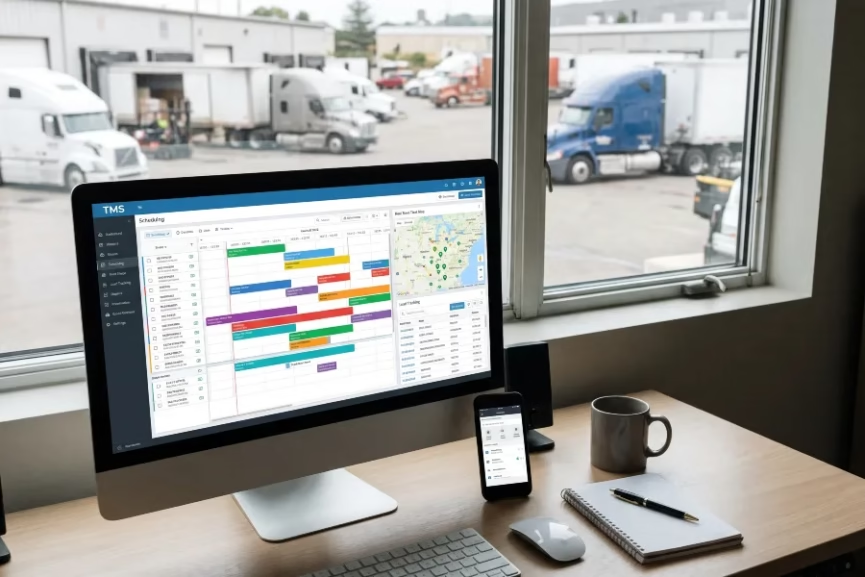
Managing freight loads, coordinating drivers, tracking deliveries, and handling paperwork can become increasingly complicated as trucking companies grow. When these processes rely on spreadsheets, phone calls, and disconnected software, dispatchers spend valuable time on administrative tasks instead of keeping freight operations moving. Transportation management system (TMS) software helps carriers bring these activities together, improve shipment visibility, and manage their daily operations more efficiently.
The best TMS software for carriers goes beyond basic load tracking. It connects dispatching, driver communication, document management, invoicing, settlements, and reporting in one platform. These capabilities help trucking companies reduce repetitive work, maintain better control over their fleets, and make more informed business decisions.
Whether a carrier operates a few trucks or manages a growing fleet, choosing the right system can make a significant difference. Below are three TMS software solutions worth considering in 2026, each offering different capabilities for transportation and freight management.
What to Look for in TMS Software for Carriers
Choosing TMS software requires understanding how a trucking company handles its daily operations. Carriers need tools that support the entire transportation process, from receiving a load and assigning a driver to tracking delivery and processing payment.
Several capabilities deserve particular attention when comparing providers. Load management and dispatching help teams organize shipments, assign drivers, and monitor delivery progress. Driver management tools simplify communication and make important documents accessible while drivers are on the road.
Financial features are equally important. Automated invoicing and driver settlements reduce manual calculations and help businesses process payments more consistently. Integrations with accounting platforms, electronic logging devices (ELDs), and other transportation systems also help prevent duplicate data entry.
Finally, carriers should consider ease of use, pricing, customer support, and scalability. A system should fit the company’s current fleet size and operational requirements without making everyday tasks unnecessarily complicated.
The following three platforms offer different approaches to transportation management, with features suited to small carriers, growing trucking businesses, and more complex freight operations.
1. TenTrucks
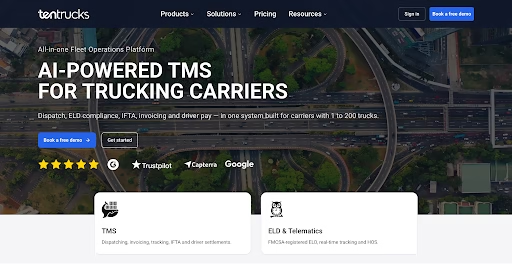
TenTrucks is a transportation management platform designed for trucking carriers, owner-operators, and small-to-mid-sized fleets. As transportation management software with AI, it helps businesses streamline dispatching, load management, driver coordination, financial operations, and fleet administration through one centralized system.
The platform covers the entire load lifecycle, allowing dispatchers to organize available shipments, assign trucks and drivers, monitor delivery progress, and manage the documents associated with each load. Its dispatch board provides a centralized view of transportation activities, while the driver mobile app allows drivers to access assigned loads, update shipment statuses, and upload documents such as bills of lading (BOLs) and proof of delivery (POD).
One of TenTrucks’ main advantages is its combination of operational and financial tools. The system supports customer invoicing, driver settlements, expense tracking, and profitability reporting. Driver payments can be calculated using different methods, including mileage-based, percentage-based, and flat-rate arrangements. Completed loads can also be used to generate invoices, reducing the need to enter the same information into separate systems.
TenTrucks offers integrations with accounting platforms such as QuickBooks and ELD providers including Motive and Samsara. It also supports IFTA reporting, fleet maintenance tracking, compliance document management, and real-time GPS tracking.
Pricing is structured around fleet size, with publicly listed plans starting at $145 per month for fleets of up to five trucks. Higher-capacity plans are available for larger operations, while enterprise pricing is customized.
For smaller carriers, having dispatch, driver settlements, invoicing, compliance, and tracking available in one place can help reduce administrative overhead. TenTrucks is particularly worth considering for businesses that want a dedicated trucking TMS without adopting several separate tools to manage their operations.
2. Truckbase
Truckbase is a cloud-based trucking TMS designed for small and growing carriers looking to simplify dispatching and back-office operations. The platform focuses on automating repetitive workflows and connecting dispatchers, drivers, and administrative teams through a centralized system.
One of its key features is automated load creation. Truckbase offers an AI-powered load importer that helps carriers extract shipment information from documents, reducing manual data entry when creating loads. Dispatchers can organize transportation activities through a centralized calendar, assign loads, and send dispatch details to drivers through text messages or email.
The platform also includes a mobile-friendly driver experience. Drivers can access their schedules, receive shipment information, and upload BOLs and other documents directly from their phones. This helps reduce the need for repeated phone calls and makes important delivery information easier to access.
Truckbase places particular emphasis on back-office automation. Its invoicing functionality helps carriers generate invoices and monitor unpaid or overdue payments. Driver settlements are also integrated into the system, with automatic data collection from dispatched loads. Carriers can account for different payment arrangements, including additional stop pay, reimbursements, bonuses, and deductions.
Another important capability is real-time truck and load tracking. Truckbase integrates with more than 30 ELD providers, allowing dispatchers to monitor shipment progress and receive automated notifications. QuickBooks synchronization and EDI capabilities further help connect transportation workflows with accounting and customer systems.
Truckbase offers flexible pricing arrangements, including per-truck, per-driver, per-load, and flat annual pricing. Its published pricing information lists a minimum starting price of $290 per month when billed annually, with customized proposals depending on the carrier’s requirements.
Overall, Truckbase is a practical option for growing trucking companies that want to automate load creation, dispatching, invoicing, and driver settlements. Its emphasis on reducing manual data entry makes it particularly relevant for carriers that have outgrown spreadsheets and need more structured operational workflows.
3. Rose Rocket
Rose Rocket is a transportation management software provider offering solutions for carriers, brokers, and third-party logistics companies. Its platform is designed to centralize transportation workflows, connect different stakeholders, and provide greater visibility across freight operations.
For carriers, Rose Rocket provides tools for order management, planning, dispatching, equipment management, invoicing, and reporting. Dispatchers can organize transportation orders, plan trips, assign resources, and monitor shipment progress through the platform. This helps teams coordinate multiple shipments without relying on separate communication channels and disconnected records.
The driver mobile app is another important part of the system. Drivers can view assigned trips, receive real-time updates from dispatchers, communicate through in-app messaging, and submit shipment documentation. They can also capture electronic signatures and upload photographs of paperwork, making it easier for office staff to access delivery information without waiting for physical documents.
Rose Rocket also provides customer and partner portals that support communication between carriers and their business partners. Customers can access shipment information, request quotes, and receive status updates, while partner carriers can manage tender offers and provide shipment updates. These features can be useful for transportation companies working with multiple customers and external partners.
The platform includes document management, invoicing, analytics, and workflow automation capabilities. Its configurable workflows help businesses standardize processes, while reporting tools provide operational information that managers can use to monitor performance and identify areas for improvement.
Unlike solutions focused primarily on smaller trucking fleets, Rose Rocket offers a broader transportation management environment that can support more complex operations and multiple business relationships. Its different user roles also allow companies to control access to operational, financial, and administrative information.
Rose Rocket is worth considering for carriers that need more than basic dispatch and load tracking, particularly those looking to improve coordination between drivers, office teams, customers, and transportation partners. However, companies should evaluate its available modules and implementation requirements against their specific operational needs before making a decision.
Key Features That Make TMS Software Effective
Although transportation management platforms differ in their features and intended customers, several capabilities are particularly important for trucking carriers.
Load management and dispatching. A good TMS should allow carriers to create, organize, assign, and monitor loads from one centralized interface. Dispatchers need a clear overview of available shipments, assigned drivers, delivery schedules, and current load statuses. Automated load entry and scheduling can further reduce repetitive administrative work.
Driver communication and mobile access. Drivers need convenient access to their assigned loads, delivery instructions, and relevant documents. Mobile applications allow them to receive dispatch updates, communicate with office teams, and submit delivery paperwork without returning to the office. This also helps dispatchers maintain accurate shipment information.
Real-time tracking and visibility. GPS tracking and ELD integrations help carriers monitor truck locations and shipment progress. Real-time updates reduce the need for manual check calls and make it easier to communicate delivery information to customers. Some platforms also offer automated notifications and estimated arrival information.
Invoicing and driver settlements. Financial administration is another area where automation can make a noticeable difference. TMS software can use existing load information to generate customer invoices, calculate driver payments, and organize deductions or additional charges. This reduces duplicate data entry and helps businesses maintain more consistent financial records.
Accounting and third-party integrations. Transportation companies often use several systems to manage different aspects of their operations. Integrations with accounting software, ELD providers, fuel cards, factoring services, and EDI connections help information move between platforms more efficiently.
Reporting and profitability analysis. Operational reports allow carriers to monitor revenue, expenses, fleet performance, and other important business metrics. More detailed profitability information can help managers identify costly routes, evaluate individual loads, and make better decisions about resource allocation.
The importance of each feature depends on the carrier’s business model and fleet size. A small operation may prioritize dispatching, invoicing, and straightforward pricing, while a larger carrier may require advanced integrations, reporting, and more configurable workflows.
Bottom Line
The best TMS software for carriers depends on fleet size, transportation workflows, and the level of automation a business needs. TenTrucks is a strong option for owner-operators and smaller fleets looking for an all-in-one platform that combines dispatching, load management, driver settlements, invoicing, compliance, and tracking.
Truckbase is particularly relevant to growing trucking companies that want to reduce manual data entry and streamline their dispatch-to-invoicing processes. Rose Rocket, meanwhile, offers a broader transportation management environment for carriers that need more advanced coordination between internal teams, customers, and transportation partners.
Before choosing a platform, carriers should identify their biggest operational challenges and compare how each provider addresses them. Testing dispatch workflows, reviewing available integrations, checking pricing structures, and involving dispatchers in product demonstrations can help businesses make a more informed decision.
A well-matched TMS can do more than organize transportation activities. By connecting load management, driver communication, financial administration, and reporting, it can help carriers reduce administrative work, improve operational visibility, and build a more efficient trucking business.