

Driver Monitoring Systems: How Cars Are Learning to Read Human Behavior
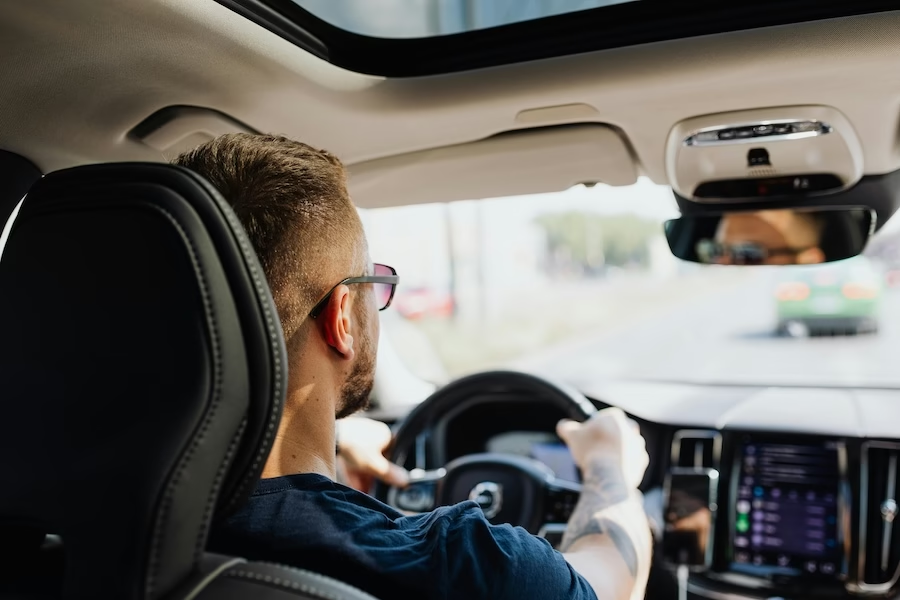
New cars do more than move you from place to place. Many of them now watch the person behind the wheel. These features are called driver monitoring systems. Their main goal is to spot trouble early and help prevent crashes.
Camera Technology
A driver monitoring system usually starts with a small camera. It is often placed on the steering column or on the dashboard. The camera points at the driver’s face. Software studies what it sees in real time. It looks at eye movement, head position, and basic body posture.
Eye tracking is a key part of this technology. The system can see where the driver is looking. It can tell if the eyes stay closed for too long. It can also notice frequent long blinks. These signs may mean the driver is tired or not paying attention to the road.
Fatigue and Distractions
Fatigue detection builds on this eye and face data. The system looks for a mix of warning signs. These may include drooping eyelids, a nodding head, yawning, or slow reactions. Some systems also watch for tiny steering corrections that happen when a driver drifts and then suddenly pulls the wheel back. When enough of these signs appear, the car sends an alert. It may sound a chime, flash a message, or suggest a rest break. Drowsy driving has been shown to be the equivalent of driving with a blood alcohol level of as much as 0.10%, greatly increasing the possibility of a crash.
Attention monitoring focuses on distraction. A driver can be fully awake but still unsafe. Many crashes happen because someone looks at a phone or an in car screen instead of the road. Driver monitoring systems can spot when a person keeps glancing down or to the side. If the driver’s gaze stays away from the road for too long, the system may warn them to look up and refocus.
Making Roads Safer
From big cities to small towns to rural roads, car accidents happen every day. The small city of Fremont, California alone saw almost 800 car accidents in 2023. Technology advancements like driver monitoring systems are working to keep roads safer. These tools are becoming more common. Safety groups and regulators see them as a way to reduce deaths linked to drowsy and distracted driving. In Europe, new rules already encourage or require driver monitoring in many new car models. In the United States, agencies are studying how these systems can support advanced driver assistance features and higher levels of automation.
Privacy
There are still open questions. Privacy is one of the biggest concerns. Some drivers feel uneasy about a camera watching their face. They worry about who sees that data and how it is stored. In response, many car makers and suppliers say that images are processed inside the vehicle and are not kept as clear video. Instead, they are turned into simple data points, such as blink rate or gaze direction.
Driver monitoring systems are not a magic fix. They do not replace sleep, safe choices, or basic driving skills. They do not remove the driver’s responsibility. What they can do is act like a backup set of eyes. The system does not get tired, bored, or distracted. When it works well, it can nudge a driver back to attention and, in some cases, help avoid a serious crash.