

What Makes a Work Truck “Work-Appropriate”?
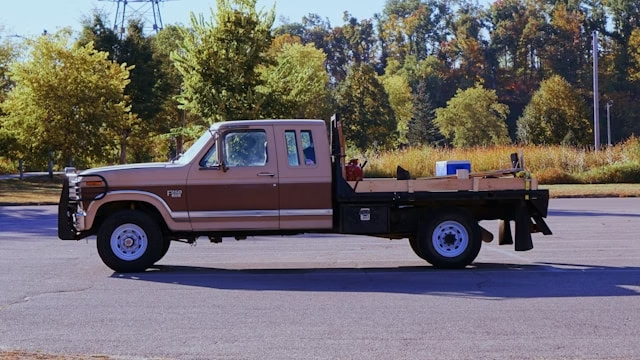
Work trucks can pull other cars and even haul huge planes across state lines. How do they do that? While something like a used Ford Explorer might handle light towing or everyday utility, true work trucks operate on a completely different level. The answer sits under the hood, beneath the chassis, and inside components most drivers never think about.
Understanding what makes one “work-appropriate” starts with breaking down its core anatomy.
Engines Built for Torque, Not Speed
Unlike performance cars that chase horsepower and top speed, work trucks focus on torque. For context, torque is what allows a truck to move heavy loads from a standstill and keep them moving without strain.
Most work trucks use large-displacement diesel engines because they produce higher torque at lower RPMs. That means less effort when towing trailers, hauling equipment, or climbing steep grades. It’s not about going fast—it’s about pulling hard, consistently.
Transmissions Designed to Handle Stress
All that torque would be useless without a transmission built to manage it. Work trucks often feature heavy-duty automatic or manual transmissions with reinforced components. The gear ratios are carefully selected to maximize pulling power. Here, the lower gears provide the force needed to get moving under load, and the higher gears maintain efficiency once the truck is in motion. Some setups also include tow/haul modes that adjust shifting behavior to reduce strain.
Frames That Carry the Real Weight
Another key difference lies in the frame. These trucks rely on ladder-frame construction, built from thick steel rails designed to handle extreme loads without bending. This structure supports everything from the engine to the cargo. It also allows for higher payload and towing capacities. Without a strong frame, even the most powerful engine wouldn’t matter.
Suspension Built for Load, Not Comfort
While standard vehicles prioritize ride comfort, work trucks are tuned for durability. Their suspension systems use heavy-duty springs, reinforced shocks, and sometimes air suspension to manage varying loads. When empty, the ride can feel stiff. But once loaded, the system levels out, keeping the truck stable and predictable. That’s why you will often hear some drivers attest they prefer driving a loaded truck.
Tires That Grip Under Pressure
Their tires are another overlooked factor because they’re built with thicker sidewalls and higher load ratings to support significant weight. Many feature aggressive tread patterns for traction on gravel, mud, or job sites. Proper tires ensure stability, especially when braking or cornering under load. Without them, control becomes a serious concern.
Still in the wheel system comes the braking systems that match the weight. Stopping power matters just as much as moving power. For this reason, work trucks use larger brake components, often paired with exhaust brakes or engine braking systems in diesel models.
These systems reduce wear on traditional brakes and help maintain control when descending hills with heavy loads. This right here is a vital detail that separates capable trucks from unsafe ones.
Why It All Comes Together
A work truck earns its role through a combination of engineering choices. From torque-focused engines to reinforced frames to specialized tires, each element works together to handle demands most vehicles can’t.
Now, to answer the question of what makes a work truck “work appropriate?” It’s not one feature; it’s the entire system built with purpose.