

What Happens to a Race Car After Its Competitive Career Ends?
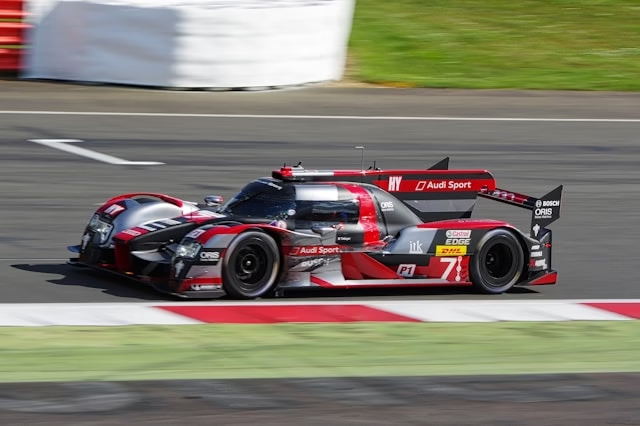
Every race car is built with the purpose of competing, regardless of the type of races it joins. At this stage of a race car career, the value is measured by its performance on the track.
But what happens once a race car is retired?
There are some iconic race cars that earn a place in specialist museums, such as the Silverstone F1, Motor Racing and Motorsport museum in the UK. The museum contains over 20 iconic race cars on display. Additionally, as it is a rotating collection, visitors can come back at any time to see a different display.
But not all race cars end up in a museum. So, what happens to them once they stop running on the tracks?
They Are Bought By Private Collectors
Ultimately, not as many cars end up as permanent museum displays. The most successful race cars get a second life as a collector’s item.
This is especially the case for cars that have won major championships, such as Michael Schumacher’s number 203, which won the Canadian Grand Prix in 2000. Collectors are willing to pay substantial sums for cars with proven racing pedigrees, the same way horse owners would for race-winning animals.
These cars come with a fully documented history, so it’s not just race fans who see the value in preserving significant vehicles. Manufacturers also want to maintain the heritage with the help of private collections that can showcase their most successful eras.
They Find a Second Life in Historic Racing
Not every retired race car is destined for a static display.
Historic motorsport helps create more opportunities for older race cars to stay relevant and do what they were built to do. There are many events featuring touring cars, sports prototypes, vintage racers and even classic Formula cars. While the competition at these events remains friendly, spectators attend to relive the rush and excitement of a race.
Typically, owners invest considerable time and money into restoring these retired race cars to race-ready conditions. That is why most historic races are a lot less aggressive. Some races even consist only of track times, with only one vehicle at a time on the track.
Ultimately, this is the opportunity for enthusiasts to watch classic race cars in action and get a sense of what these iconic vehicles are able to do.
Some Become Donors for Future Restorations
Unfortunately, not every race vehicle remains complete throughout its life. Whether it’s through years of competition or after a tragic crash, some race cars can be too damaged and worn to be used any longer. However, they can still be valuable through auto recycling processes, as their components can be salvageable and find their way into other vehicles.
This can be highly helpful for restoration projects for collectors and museums, as well as for the race car industry too, depending on the age of the retired vehicle.
In conclusion, a race car story doesn’t end when the competition is over. In fact, you’d be surprised to find out that there are way more retired race cars out there than expected!