
How Motorsport Shaped Chevrolet's Performance Legacy
For more than a century, Chevrolet has played a major role in American motorsport, building a racing legacy that continues to influence both competition and production vehicles. From dirt tracks to the world’s most famous road courses, the Chevy brand has always shown off its great engineering and competitive spirit. This isn’t just about winning trophies; it’s about pushing limits and using what they learn from racing to make the cars we drive every day better.
Chevrolet’s Early Motorsport Triumphs
Chevrolet’s racing story began almost as soon as its cars hit the road. Louis Chevrolet, one of the company’s founders, was a racer himself, so that competitive drive was built into the company from the start. This really took off in the 1950s when they introduced the small-block V8 engine, a design so good it still influences engines today. The idea of “Win on Sunday, Sell on Monday” became a powerful way to market their cars.
This time period saw famous teams and cars emerge. The 1957 Chevrolet 150, known as the “Black Widow” because of its simple black-and-white paint job, was a dominant force in NASCAR. These cars were built for racing with factory help, stripped down and designed specifically to show what Chevy’s new engine could do. These early factory-backed racing efforts made Chevrolet a serious competitor and set the stage for many decades of success.
Corvette Racing Dominance
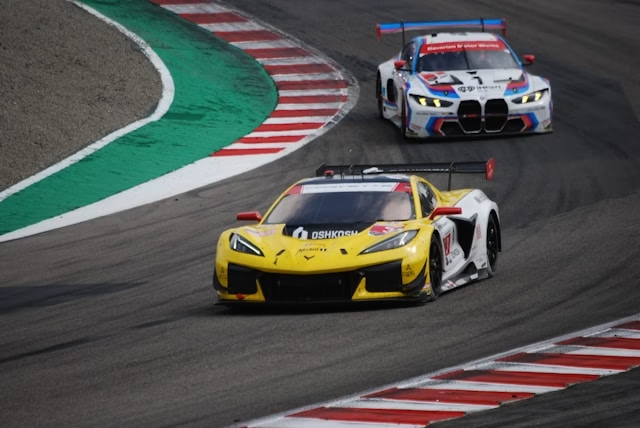
You can’t talk about Chevrolet’s success in racing without bringing up the Corvette. For more than twenty years, Corvette Racing has been a major player in endurance sports car racing. They’ve competed in championships such as the IMSA WeatherTech SportsCar Championship and at the 24 Hours of Le Mans. The team’s bright yellow cars and the “Jake” skull logo have become well-known symbols of American performance around the world.
The Corvette’s success, with many class wins at Le Mans and Daytona, has solidified its reputation as “America’s Sports Car.” That racing pedigree continues to influence the production models available today. For enthusiasts looking to experience that performance heritage firsthand, visiting a Chevy dealership is one way to explore road-going models that draw inspiration from Chevrolet’s motorsport programme. The consistent success of the C5-R, C6.R, C7.R, and now the C8.R reflects the brand’s ongoing commitment to performance and innovation.
The Evolution of Chevy Performance
While the Corvette often gets all the attention, Chevrolet’s performance story is much bigger. The Camaro has its own rich racing history, battling for wins in the Trans-Am series during the “pony car” era of the late 1960s and still competing in various stock car and GT series today.
At the heart of this performance has always been engine innovation. The small-block V8 is legendary, but Chevy’s big-block engines have also powered countless race winners. From drag strips to oval tracks, these engines have been the go-to choice for both professional teams and local racers. This dedication to making versatile, powerful engines has allowed Chevrolet to compete and win in almost every type of American motorsport.
Innovation from Track to Road
The intense world of motorsport acts like a high-speed lab for new technologies. Chevrolet has a long history of taking innovations from its race cars and putting them into its production vehicles. Features that are now common on performance models started as solutions to problems found on the track.
For instance, technologies like Magnetic Ride Control, which adjusts how stiff the suspension is in milliseconds, were refined through racing. Aerodynamic parts like spoilers, splitters, and vents on cars like the Camaro ZL1 and Corvette Z06 are directly inspired by wind tunnel and track testing done for race cars. Even the Performance Data Recorder, available in many Chevy models, lets drivers analyze their own driving on a track day, using technology similar to what race engineers use. This flow of technology from track to street means that what they learn in competition helps everyday drivers.
Electric Racing and Beyond
As the car industry moves towards electric vehicles, so does motorsport. Chevrolet isn’t just watching; it’s actively exploring the future of performance. The company has already created concepts like the eCOPO Camaro, a 700-horsepower electric drag racer, showing the huge performance potential of electric powertrains.
Chevrolet’s role as an engine supplier in the NTT IndyCar Series now includes hybrid technology, marking another step in the evolution of electrified racing. While the sound of a V8 will always be part of Chevy’s heritage, the company is getting ready for a future where the quiet power of electric torque brings the next generation of racetrack victories. This forward-thinking approach ensures the Chevy bow-tie will remain a symbol of performance for years to come.
Chevrolet’s racing history is a story of constant innovation. It’s a journey that began with passionate racers and continues today with advanced engineering, shaping not only the future of motorsport but also the future of the cars in our driveways.
Featured Image Credit: Unsplash