

Hot Car Hazards: What Summer Temperatures Do to Things You Leave Behind
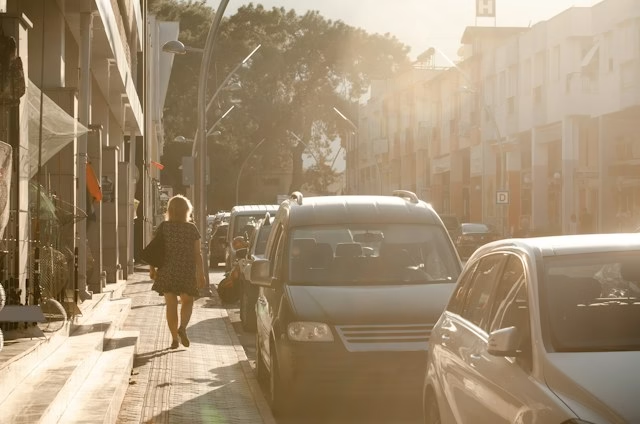
A car’s glass lets sunlight in with ease, and that same feature turns a parked vehicle into a heat trap on a bright day. Sunlight passes through the windscreen and windows, warms the seats and dashboard, and those surfaces then release the heat the glass traps inside.
So the cabin climbs well beyond what a weather app shows. And while drivers check coolant levels and tyre pressures before summer trips, the belongings sitting in door pockets, the glovebox and the boot face a stress test of their own.
Why a Parked Car Heats Up So Quickly
Outside air temperature tells only part of the story, because a closed cabin keeps absorbing solar energy with nowhere to escape. On a 27°C day, a car’s interior can reach around 60°C, and the temperature inside can climb by up to 10°C within the first 10 minutes of parking.
Dark dashboards and leather seats absorb even more energy, so items resting on them in direct sun can become hotter than the cabin air. Opening a window slightly slows the climb, but it does not stop it.
Everyday Items That Suffer in Summer Heat
Heat affects belongings differently: some contain liquids that break down, others hold gas under pressure, and a few rely on batteries with strict temperature limits. Knowing which group an item belongs to makes it easier to decide what stays in the car. With that in mind, these are the items worth taking with you before you lock up.
- Phones, tablets and power banks: Lithium-ion batteries are designed to work within set temperature limits, and a sunlit cabin can push them well beyond that range. So a device left on a seat may shut down with a temperature warning, while repeated heat exposure can shorten battery life and cause damaged cells to swell.
- Aerosol cans: Deodorants, dry shampoo and spray sunscreen hold pressurised gas, which is why their labels warn against temperatures above 50°C. And because a sunlit cabin can pass that point, these cans are safer in your bag once you leave the car.
- Disposable lighters: Butane lighters work on the same principle, so heat raises internal pressure until the casing splits. A glovebox offers little protection, so keep lighters with you or somewhere cool indoors.
- Medicines: The MHRA advises keeping medicines below 25°C and out of hot cars, because heat can break down active ingredients. Insulin and some liquid antibiotics are especially sensitive, and changes in colour, texture or smell can signal heat damage.
- E-liquids: Vape juice bottles contain nicotine and flavourings that oxidise faster in heat and light, so the liquid can darken and lose flavour as expanding air pushes it past the cap. Anyone checking how to store vape juice in summer can follow the same cool, dark, upright approach used for medicines, which also helps preserve a vape juice shelf life of around one to two years. The best way to store e-liquid ordered from an e-liquid distributor is in an indoor cupboard, so storing vape juice on the move simply means taking it with you.
- Glasses and sunglasses: Lens coatings and frames expand at different rates in heat, so coatings can develop fine cracks known as crazing. Direct sun on a dashboard increases the risk, while a hard case kept in the shade protects both lenses and frames.
- Bottled water: Plastic bottles soften in heat, and studies on PET bottles have measured higher release of compounds such as antimony at elevated temperatures. So replace a bottle that spent a hot afternoon in the car with a fresh one.
Habits That Protect What You Leave Behind
A quick sweep of the cabin before locking up takes seconds and catches items that slip into door pockets or under seats. A small cool bag in the boot also earns its place on days out, because it gives drinks, toiletries and medicines a shaded spot when carrying everything isn’t practical.
Parking choices make a difference too. Shade, covered car parks, and a reflective windscreen cover all slow heat build-up, although none make a cabin safe for heat-sensitive items. The same temperatures that damage belongings pose a far greater danger to children and pets, which is why motoring groups warn against leaving them in a parked car, even briefly.
A Car Is Built for Travel, Not for Storage
UK summers now bring spells of intense heat, so hot cabins are no longer a holiday-abroad concern. The storage guidance printed on packaging offers a dependable cue, because any label that names a temperature limit marks an item that belongs outside a closed car.
Treat the car as a way to get somewhere, not as a place to keep things, so belongings arrive at the end of summer in the same condition they started in.
Photo by Viktor Talashuk on Unsplash