

How EV Batteries are Revolutionizing Motorsport
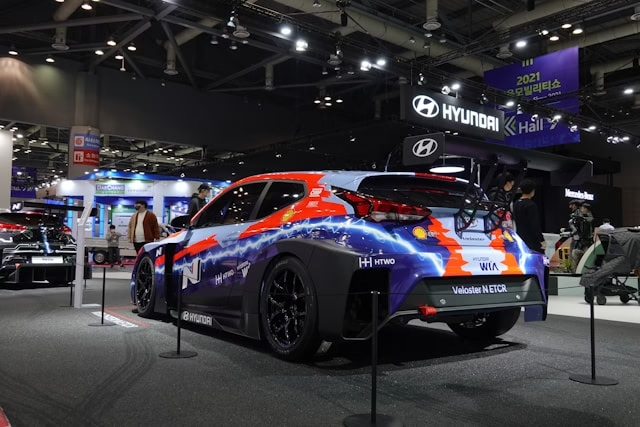
For over a hundred years, the roar of a combustion engine has been the signature sound of motorsport. But now, a quieter revolution is happening on race tracks worldwide. Electric vehicles aren’t just a novelty anymore; they’re changing racing as we know it, bringing instant torque, incredible acceleration, and a constant drive for new ideas. This shift all comes down to one key part: the battery. From Formula E to Extreme E, advanced battery technology isn’t just competing; it’s setting a new standard for future performance.
Powering the Next Generation of Race Cars
The main difference in an electric race car is how it gets its power. Instead of a fuel tank and engine, it uses a battery pack and electric motors. This setup sends power to the wheels right away, giving it blistering acceleration that combustion engines struggle to match. Races like Formula E have shown that electric racing can be incredibly exciting, with close, wheel-to-wheel action on city tracks around the world.
The cars are built with the battery in mind; it’s actually part of the chassis, affecting weight distribution, aerodynamics, and how the car handles overall. Engineers face the challenge of balancing raw power with energy efficiency to make sure the car can last a whole race at competitive speeds.
Battery Tech Advancements on the Track
Motorsport has always been a testing ground for car technology, and EV batteries are no different. Racing pushes battery cells to their absolute limits, demanding maximum power and quick recharging while dealing with extreme heat. What’s learned on the track directly helps develop consumer EVs. Engineers are always trying out new cell chemistries, cooling systems, and battery management software to get every bit of performance.
These developments focus on packing more power into less space (higher energy density) and making them more stable at high temperatures to prevent overheating during intense races. The unique batteries in racing EVs are custom-made for durability and extreme power discharges, far beyond what typical road use requires.
The Supply Chain for High-Performance EVs
The rise of electric motorsport has effects that reach far beyond the race track. Building these complex, high-performance battery packs needs a detailed and strong supply chain. Every step is crucial, from getting raw materials like lithium and cobalt to precisely manufacturing cells and finally assembling the battery pack. The specialized knowledge gained from making race-specific batteries is extremely valuable.
This expertise is attracting big investments in regions that support electric vehicle manufacturers and all the companies that supply them. As a result, areas with strong manufacturing and engineering talent are becoming centers for the next generation of car technology.
Charging Infrastructure in Racing
One of the biggest challenges in electric motorsport logistics is charging. In a race, every second counts, and a long pit stop for recharging isn’t an option. This has led to the creation of ultra-fast charging solutions that can deliver huge amounts of energy in minutes. For example, the Extreme E off-road series uses hydrogen fuel cell generators to provide fast, off-grid charging for its vehicles in remote places.
These innovations are vital for making electric endurance racing possible. The technology being tested today for a 60-second pit-stop charge could one day lead to public charging stations that can recharge a road car’s battery in the time it takes to grab a coffee.
Future of Electric Racing Powertrains
The development of EV batteries is still ongoing. The next big step is expected to come from solid-state battery technology. These batteries promise to be safer, lighter, and to hold more energy than today’s lithium-ion cells.
For motorsport, this could mean cars that are faster, can race longer, and recharge almost instantly. The future of EV batteries also includes research into different materials and chemistries that could reduce the need for rare-earth metals and make things more sustainable.
As battery technology keeps improving quickly, its impact on motorsport will only grow. The silent revolution is getting louder every season, proving that the future of speed is electric.
Featured Image credit: Unsplash