

How LED Technology Is Driving the Next Generation of Automotive Innovation
The automotive industry has entered an era where technology defines customer expectations as much as engine performance or exterior styling. Modern vehicles are expected to provide intelligent features, premium interiors, energy-efficient systems, and personalized driving experiences. Among these advancements, lighting has become one of the fastest-evolving aspects of vehicle design.
From luxury sedans and electric vehicles to commercial vans and recreational vehicles, LED strip lighting is now integrated into both functional and decorative applications. It improves visibility, enhances aesthetics, and contributes to a more comfortable driving environment.
As automotive manufacturers and aftermarket brands continue to develop new lighting solutions, partnering with an experienced LED Strip manufacturer has become an essential step in creating reliable products that meet the industry’s demanding standards.
Lighting Has Become Part of the Driving Experience
Vehicle lighting is no longer limited to headlights and taillights.
Today’s drivers expect carefully designed lighting throughout the vehicle, including:
- Dashboard illumination
- Door panel accents
- Center console lighting
- Footwell lighting
- Cup holder illumination
- Cargo compartment lighting
- Grille accents
- Trunk lighting
These features serve both practical and aesthetic purposes.
Soft ambient lighting can make nighttime driving more comfortable, while functional lighting improves visibility when loading cargo or locating personal items inside the cabin.
For automakers, lighting has become an important part of vehicle identity and user experience.
Customization Is Reshaping the Aftermarket
Automotive customization continues to expand worldwide.
Many vehicle owners want lighting systems that reflect their personal style without permanently modifying the vehicle.
Popular upgrades include:
- Multi-color ambient lighting
- Dynamic welcome effects
- Music-synchronized lighting
- Smartphone-controlled lighting
- Interior accent illumination
This growing demand has created significant opportunities for automotive accessory companies.
Instead of offering generic products, many brands now collaborate with an experienced LED Strip manufacturer to develop customized lighting solutions tailored to specific vehicle models or market segments.
OEM and private-label manufacturing also allow brands to differentiate themselves in an increasingly competitive marketplace.
RGBW Technology Brings Greater Versatility
Traditional RGB lighting has long been popular for automotive customization.
However, RGB lighting alone is not always ideal for everyday driving because mixed colors cannot always produce natural-looking white light.
Modern RGBW LED strip technology solves this challenge by combining RGB color channels with a dedicated warm white LED.
This allows drivers to enjoy two completely different lighting experiences using a single system.
During daily commuting, warm white lighting creates a refined and comfortable cabin atmosphere.
For exhibitions, promotional events, or enthusiast gatherings, the same lighting system can instantly switch to vibrant RGB effects that showcase the vehicle’s personality.
Some RGBW automotive lighting solutions also operate on 24V DC, making them particularly suitable for commercial vehicles, camper vans, buses, and specialty transport applications where longer lighting runs require stable electrical performance.
Voltage Stability Supports Reliable Performance
Automotive electrical systems operate under constantly changing conditions.
Engine start-up, battery charging, and accessory usage all influence available voltage.
Lighting systems must therefore deliver consistent performance without noticeable brightness fluctuations.
For larger vehicles that require extended interior lighting, 24V systems help reduce voltage drop over long installations.
This results in more uniform illumination while reducing the need for additional wiring or multiple power injection points.
From an engineering perspective, stable voltage also simplifies installation and contributes to more predictable system performance.
Durability Is Critical on the Road
Unlike residential lighting, automotive lighting operates in demanding environments.
Vehicles experience continuous exposure to:
- Road vibration
- Dust
- Moisture
- Temperature changes
- UV radiation
- Frequent movement
Lighting products must therefore be engineered for long-term durability.
Exterior decorative applications—including truck body accents, running boards, trailer outlines, and grille lighting—often require IP65 waterproof protection to withstand rain and road spray during everyday driving.
Reliable environmental protection helps extend product life while reducing maintenance requirements for both vehicle owners and fleet operators.
Manufacturing Quality Directly Affects Product Reputation
Automotive customers expect accessories to perform reliably for years.
Failures caused by inconsistent manufacturing can damage both product reputation and brand credibility.
Professional manufacturers pay close attention to factors such as:
- PCB quality
- Copper thickness
- Solder consistency
- Thermal management
- Material selection
- Production testing
Consistent manufacturing helps ensure that every production batch delivers the same brightness, color accuracy, and electrical performance.
For automotive brands, dependable production reduces warranty claims while improving customer satisfaction.
Supporting Commercial Vehicle Applications
Although passenger vehicles receive much of the attention, commercial transportation also represents an important market for LED strip lighting.
Applications include:
- Delivery vans
- Emergency vehicles
- Mobile workshops
- Recreational vehicles
- Luxury coaches
- Fleet service vehicles
LED strips improve visibility inside cargo compartments while also enhancing the appearance of customized commercial interiors.
For businesses managing large fleets, efficient LED lighting can contribute to safer loading operations and better working conditions during nighttime service.
The flexibility of modern LED strip systems allows installers to adapt lighting layouts to vehicles with different dimensions and interior configurations.
Looking Toward Smarter Automotive Lighting
The future of vehicle lighting extends well beyond decorative illumination.
Automotive manufacturers are increasingly integrating lighting with intelligent vehicle systems.
Future applications may include:
- Adaptive ambient lighting based on driving mode
- Voice-controlled interior illumination
- Navigation-guided lighting effects
- Driver alert notifications
- Smart energy management
- Personalized lighting profiles linked to user accounts
As connected vehicles become more sophisticated, lighting will function as both an aesthetic feature and a communication interface between the vehicle and its occupants.
Manufacturers capable of combining dependable hardware with innovative lighting technology will play an increasingly important role in this evolution.
Illuminating the Road Ahead
Automotive lighting has become far more than a styling feature. It now contributes to safety, comfort, personalization, and the overall driving experience. From premium passenger vehicles to commercial transport fleets, LED strip technology continues to open new possibilities for vehicle designers and aftermarket brands alike.
Working with an experienced LED Strip manufacturer enables automotive companies to access reliable products, consistent manufacturing, and flexible customization that support long-term product development. As the automotive industry continues to embrace smarter and more connected technologies, high-quality LED strip lighting will remain an important part of creating vehicles that are both functional and memorable.
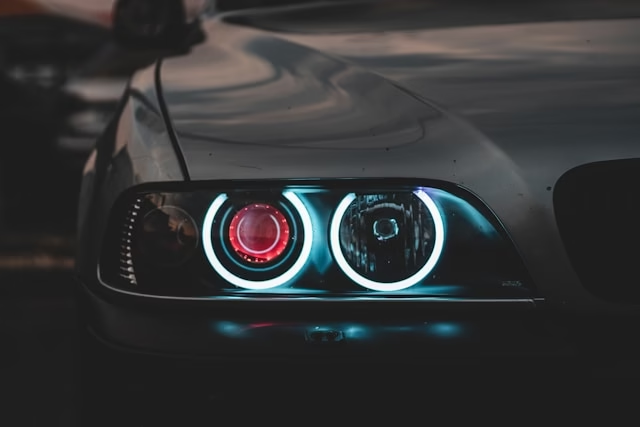
Featured Photo by Richard Biros on Unsplash