

How Wheel Spacers Change Your 4x4's Performance and Safety
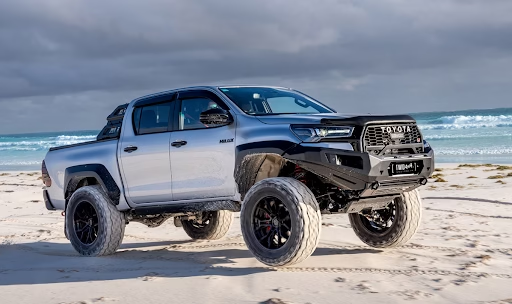
Need a wider stance on muddy green lanes? Or more stability on technical trails? Consider the benefits wheel spacers provide. These simple additions push the wheels on your 4×4 further out, improving traction on loose surfaces and providing the space for common off-roading mods, from larger mud tyres to dedicated wheel fenders.
As aftermarket add-ons, properly sized wheel spacers bring multiple benefits to pure off-roaders, whether this is a modified Land Rover or a run-of-the-mill Ranger. Both body styles see tangible performance and safety benefits, with more clearance and predictable handling, provided the vehicles are fitted with hub-centric spacers in machined metals and bolt patterns that ensure a clean fit. Tighten these to recommended torque settings, and start tackling trails with more confidence.
What Spacers Are
Spacers are disc-like components that fit between the hubs and wheels. They push wheels outwards, creating extra space between the inner wheel and your 4×4’s chassis. This changes the stance and positioning of the wheels, affecting both appearance and handling. Depending on the setup, these wheel accessories can improve stability, create the clearance needed for larger tyres, and adjust overall wheel fitment.
Why Have Them on Your 4×4?
Wheel spacers provide multiple advantages for off-road vehicles:
- Clearance for larger, off-roading tyres: Tyres in larger diameters raise 4x4s off the ground, creating more clearance to drive over logs, rocks and trail obstacles. Upsizing also helps with traction, with more tyre-to-surface contact, enhanced by off-road treads. The only issue here is that larger tyres can rub against the arches or suspension. Spacers are the easy fix, providing more space without changing the factory handling with complex suspension mods.
- Wider track: Pushing the wheels outward increases the distance between left and right wheels. The wider track reduces body roll in high-speed cornering and improves stability when approaching descents and inclines from an angle.
- Space for specialised off-roading components: Modifying factory 4x4s for serious off-roading also means extensive upgrades, ranging from lift kits and upgraded shocks, to big-brake kits. These sharpen the handling over tough terrain, deal with added weight on modded 4WDs, and provide improved braking with faster heat dissipation. Spacers provide the needed space for these bulky components to work.
- Maintained hub-centric support: Quality, hub-centric spacers centre the wheels precisely against the hubs, providing even weight distribution and eliminating wheel vibrations at higher speeds. Lug nuts and studs clamp wheels tightly against the spacer surface, preventing metal fatigue that can cause snapped studs or loose wheels.
- Aggressive looks: Spacers are some of the more cost-effective ways to get a 4×4 with a wider, more aggressive stance, and not having to spend huge sums on complex suspension upgrades like longer control arms or lift kits. They’re also easier and quicker to get on or off for everyday driving tasks, provided they come with matching mounting hardware.
- Value: At a fraction of the cost of full lift kits and matching control arms, full wheel spacer kits are the most affordable way to increase clearance for pure off-roading. Savings here can be put to better use, including fitting your 4×4 with mudding tyres, winches, recovery kits, or beefier bumpers.
Any Downsides to Consider?
Problems can arise with incorrect spacer sizing, using spacers made of subpar materials and studs that are not torqued to correct specifications. Safe thickness ranges are between 0.4″ and 1.5″ (10mm to 38mm), providing just enough offset for most off-roading mods without the risks of premature wheel bearing and ball joint wear. Oversized (2″/ 50mm or more) wheel spacers compromise handling in unmodded vehicles, with wheels scrubbing against fenders, changed steering feel, and the possibility of failing spacer studs under the added stress.
To rule out durability, handling and safety issues, choose variants in premium alloy builds. Popular options are spacers in aircraft-grade 6061-T6 aluminum alloys in anodized coatings, ensuring high corrosion resistance, superior strength-to-weight ratios and units that remain intact under high temperatures generated in heavy braking or demanding off-road use. Correct torqueing ensures spacers have adequate clamping force to handle all off-roading tasks and prevent loosening, vibrations, pronounced metal fatigue and braking issues.
Are Wheel Spacers Legal in the UK?
Wheel spacers are legal in the UK, provided they are fitted correctly and the vehicle remains roadworthy. Key considerations here are:
- Keeping tyres and wheels from protruding past the outer edge of the wheel arches or bodywork when viewed from above.
- Spacers are fitted with the correct hardware, with stud lengths proportional to spacer thickness.
- Vehicles must meet MOT requirements for wheel security, condition and matching fittings
- They’re declared to insurance companies to validate policies and make claims in the event of accidents.
Choosing the Right Spacers for Your Off-Roader
Hub-Centric vs Lug Centric
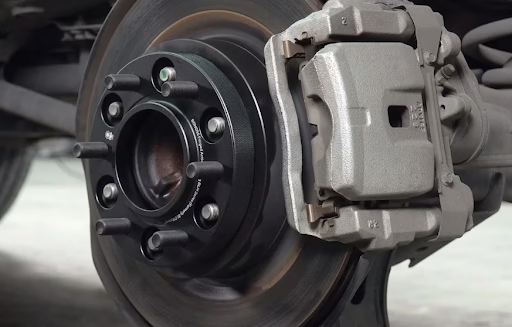
There are two basic wheel spacer designs based on how the spacer aligns and balances against the wheels and hubs. Hub-centric designs feature centre bore rings that align perfectly to wheel hub lips. The hub carries the vehicle’s weight, which prevents high-speed vibrations and minimises stress on wheel bearings.
Lug-centric lips miss out on protruding bore rings or lips, instead relying on the tapered seals of lug nuts to centre and align wheels as they are tightened. These are compatible with a broader selection of wheel hubs, but are also prone to vibrations and increased shear stress if not torqued correctly.
Bolt Patterns or PCD
Choose spacers with a pitch circle diameter (PCD) or bolt pattern that precisely matches the wheel hubs. Common PCD patterns are 6×139.7mm (or 6×5,5″) in pickups like the Ranger, Hilux and D-Max; 5×139.7mm in traditional off-roaders like the Ford Bronco and older Suzuki Jimnys, and 5x120mm in current 4WDs and SUVs, including the Range Rover, Discovery and BMW X5.
Materials and Build Quality
Premium spacers are made of high-grade aluminum alloys. Choose alloy spacers in 7075-T6 aerospace aluminum for superior tensile strength and high fatigue resistance in extreme off-roading and fully-loaded vehicles riding on larger, thick-tread off-road tires. Or opt for lower purchase costs without the added weight or strength penalties when choosing 6061-T6 aluminum spacers. These provide ample durability in daily driving and standard off-road use. Both are CNC-machined and anodized to offer extreme precision in fitment and superior corrosion resistance.
Lastly, consider stud materials. Choose studs in 12.9-grade steel for maximum strength and hardness in high-speed trail runs, rock-crawling and technical trials, or industry-standard 10.9 steel with good shear and tensile resistance in daily use.