

Industrial Guide to the 1500-Pound Portable Motorcycle and ATV Scissor Lift for Racing Maintenance
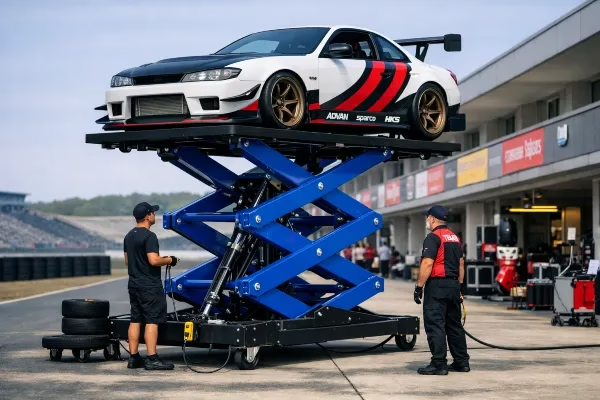
Motorsports and powersports activities are widespread across Canada, with road racing, motocross, and all-terrain vehicle recreation popular in Ontario, Quebec, and British Columbia. The Canadian powersports market continues to grow, creating demand for efficient workshop equipment. A portable scissor lift rated at 1500 pounds provides essential support for race day maintenance and workshop repairs. For racing team mechanics and motorcycle service professionals, a reliable lift reduces physical strain and improves access to undercarriage components during tire changes, suspension adjustments, and engine work.
Technical Overview and Common Applications
A scissor lift uses a crisscrossing steel frame mechanism powered by a hydraulic cylinder. The portable design includes wheels for mobility and locking casters for stability during use. Side extensions increase the platform width to accommodate wider all-terrain vehicles and side-by-side utility vehicles.
Key specifications:
- Load capacity: 1500 pounds
- Lifting mechanism: Hydraulic scissor frame
- Platform width: Standard with removable side extensions
- Mobility: Wheels and locking casters
Common applications include motorcycle tire changes, suspension servicing, engine and transmission repairs, cleaning and detailing, and pre-race inspection of all-terrain vehicles and side-by-side vehicles.
Efficiency, Safety and Productivity
A proper lift elevates vehicles to a comfortable working height, eliminating the need for technicians to kneel or bend repeatedly. This reduces fatigue during long race weekends and workshop shifts. The 1500-pound capacity handles most motorcycles, all-terrain vehicles, and smaller side-by-side vehicles. Safety features include locking pins that secure the lift at height, preventing accidental descent. Key safety rules: never exceed the rated load capacity, engage the mechanical lock before working under any vehicle, and position the vehicle for balanced weight distribution.
Technical Capabilities and Performance Factors
The hydraulic scissor mechanism provides smooth lifting action with controlled descent. Side extensions increase platform width from a standard motorcycle width to accommodate wider vehicles. The portable design with wheels allows one person to reposition the lift within the workshop or transport it to race events. Performance factors include proper maintenance of hydraulic fluid levels, inspection of pivot points for wear, and verification of locking pin engagement before any maintenance work begins.
Factors Influencing Performance and Safety
- Load distribution: Unevenly loaded vehicles can cause instability even within the 1500-pound capacity
- Floor surface: Lifts require level, solid concrete surfaces; uneven or soft surfaces reduce stability
- Hydraulic fluid condition: Low or contaminated fluid reduces lifting speed and maximum height
- Side extension installation: Extensions must be fully seated and locked before vehicle placement
Safety Considerations and Best Practices
Pre-operation inspection must include checking hydraulic fluid level and inspecting for leaks, verifying that locking pins move freely and engage fully, ensuring all wheels are locked when positioned, and confirming side extensions are properly attached. Operational best practices:
- Position the vehicle with the centre of gravity over the lift midpoint
- Raise the lift to desired height before engaging mechanical locks
- Never rely solely on hydraulic pressure to hold the lift; always use mechanical locks
- Lower the lift slowly using the release valve; avoid sudden drops
- Store the lift in the lowered position to protect hydraulic seals
Equipment Types and Compatible Attachments
Motorcycle lifts are available in scissor and table configurations. Scissor lifts like the portable 1500-pound model offer lower profile when lowered, making vehicle access easier. Table lifts provide a solid flat surface but are heavier and less portable. Attachments include:
- Side extensions for wider vehicles
- Front wheel chocks or vises to secure motorcycles upright
- Removable rear ramp for driving vehicles onto the platform
- Locking caster sets for mobility and positioning
Advantages and Limitations
Advantages: Portable design with wheels allows transport to race events and repositioning within workshops. 1500-pound capacity covers most powersports vehicles. Side extensions accommodate wider all-terrain vehicles and side-by-side vehicles. Hydraulic operation provides smooth lifting and controlled descent. Mechanical locking pins ensure worker safety during extended maintenance sessions.
Limitations: Not suitable for heavy side-by-side vehicles exceeding 1500 pounds. Requires level concrete floor for stable operation. Hydraulic system requires periodic maintenance. Portable models generally have lower lift height than fixed installation lifts. Side extensions, when fitted, reduce overall weight capacity slightly.
Real-World Example
A motorcycle race team operating in Ontario uses a 1500-pound portable scissor lift for weekend race events. The lift transports easily in the team trailer and sets up on pit lane concrete surfaces. During a recent race weekend, mechanics used the lift to perform rapid rear tire changes between practice sessions. The side extensions allowed the team to also service an all-terrain vehicle support vehicle. The mechanical locking pins kept vehicles secure during suspension adjustments, and the portability allowed the lift to be stored under the trailer workbench between races.
Conclusion and Future Industry Trends
The 1500-pound portable motorcycle and all-terrain vehicle scissor lift with side extensions provides racing teams and workshop professionals with a versatile service platform. Its combination of portability, adequate load capacity, and safety features supports efficient maintenance operations. Future trends include battery-powered hydraulic units for remote pit area operation without external power, integrated scales for vehicle weight measurement during technical inspection, and quick-release side extension designs for faster configuration changes. Selecting a lift with mechanical safety locks and durable hydraulic components ensures reliable service through years of race weekend and workshop use.