

Is Full Car PPF Worth the Cost, or Should You Just Get Partial PPF?
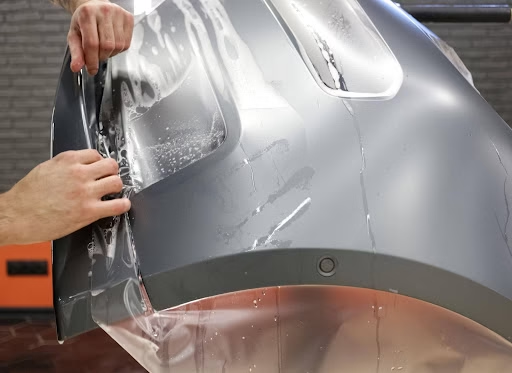
If you are deciding between full car PPF vs. partial PPF, the right choice ultimately depends on your budget, how you drive, and the value of your vehicle. Full car PPF covers every painted panel of your vehicle, offering maximum protection from scratches and rock chips for $4,000 to $7,000. Partial PPF covers only the highest-impact areas—like the front bumper, hood, and side mirrors—usually costing between $1,000 and $2,500. For drivers considering a PPF wrap Orange County service, a professional installation can help ensure precise coverage, clean edges, and long-lasting performance. Whether you choose full or partial coverage, high-quality paint protection film can help preserve your vehicle’s factory finish and maintain its appearance through daily driving, road debris, and changing weather conditions.
Choose full PPF if you own a high-end luxury vehicle, want total peace of mind, or plan to keep the car for decades. Choose partial PPF if you are on a budget, use the car as a daily commuter, and primarily want to prevent highway rock chips.
Full PPF vs. Partial PPF: The Quick Comparison
| Feature | Full Car PPF | Partial PPF (Clear Bra) |
|---|---|---|
| Coverage Area | Every painted exterior surface | Front bumper, partial/full hood, mirrors, fenders |
| Average Cost | $4,000 – $7,000+ | $1,000 – $2,500 |
| Installation Time | 3 to 7 days | 1 to 2 days |
| Protection Level | Maximum (360-degree protection) | Targeted (front-impact protection) |
| Visual Appearance | 100% uniform gloss or matte finish | Minor dirt buildup possible at film edges |
| Best For | Exotics, luxury cars, matte paint, collectors | Daily drivers, leased vehicles, budget-conscious buyers |
In-Depth Analysis: Full Car PPF
Full paint protection film (often made from self-healing thermoplastic polyurethane, or TPU) wraps every single painted inch of your vehicle.
Pros
- Complete Peace of Mind: Whether it is a runaway shopping cart in a parking lot, a door ding, or highway debris, your factory paint is protected.
- Uniform Appearance: Because the entire car is wrapped, there are no visible seam lines. The paint will age and fade at the exact same rate.
- Finish Customization: You can apply a “stealth” or matte PPF over a gloss car to completely change its look while protecting it.
- Maximum Resale Value: Keeping the factory paint flawless preserves the highest possible trade-in or private sale value.
Cons
- High Cost: Outfitting an entire SUV or large truck can easily exceed $6,000 depending on your market.
- Long Installation: Expect your car to be in the shop for up to a week.
Best Use Cases
Full vehicle coverage is best for high-dollar exotic cars (Porsche, Ferrari, McLaren), vehicles with notoriously soft factory paint (like many modern Teslas or Subarus), and cars with factory matte paint, which cannot be polished if scratched.
In-Depth Analysis: Partial PPF (Clear Bra)
Often referred to as a “Track Pack” or “Clear Bra,” partial PPF focuses exclusively on the strike zones that take the most abuse on the road. A standard package covers the front bumper, the front third of the hood and fenders, and the side view mirrors.
Pros
- Highly Cost-Effective: You get 80% of the practical protection for about 30% of the cost of a full wrap.
- Targeted Defense: Rock chips almost exclusively happen on the front end of the car. Partial PPF solves the biggest problem directly.
- Faster Turnaround: A skilled shop can usually prep and install a front-end package in a single day.
Cons
- Visible Lines: If you get a “partial hood” package, there will be a faint line where the film ends across your hood. Over time, wax and dirt can build up on this edge. (Pro tip: Opt for a “Full Front” package that covers the entire hood to avoid this line).
- Vulnerable Panels: Your doors, roof, and rear quarter panels remain completely exposed to keys, shopping carts, and door dings.
Best Use Cases
Partial PPF is the smart financial choice for daily commuters, family SUVs, leased vehicles you intend to buy out, and track-day cars where front-end debris is the main concern.
4 Crucial Buying Considerations
Before handing over your keys to an installer, evaluate these four factors:
- Your Budget vs. Car Value: As a general rule of thumb in the detailing industry, you shouldn’t spend more than 10% of a car’s total value on paint protection. If you drive a $30,000 sedan, a $6,000 full PPF wrap doesn’t make financial sense.
- Driving Environment: Do you commute on gravel roads or highways heavily populated with semi-trucks? If yes, a full front package is mandatory.
- Parking Situation: If you park in tight public garages where side-swipes and door dings are a daily threat, full PPF offers side-panel protection that a partial front clip won’t.
- Installer Quality: The film is only as good as the installer. A cheap film installed poorly will peel, blister, and yellow. Always look for certified installers of reputable brands like Xpel, SunTek, or 3M.
Common Mistakes to Avoid
- Choosing cheap, unbranded film: Budget films lack self-healing topcoats and are prone to yellowing under UV exposure within a year.
- Not wrapping the edges: Ensure your installer “wraps and tucks” the edges of the film behind the body panels. Pre-cut kits that stop exactly at the panel edge leave a visible seam that collects dirt and is prone to peeling.
- Skipping paint correction: PPF is highly transparent. If you have swirl marks or scratches on your paint before the film goes on, they will be locked under the film permanently. Always have the paint polished first.
Frequently Asked Questions (FAQs)
How long does PPF last?
High-quality TPU films from brands like Xpel or SunTek typically last 7 to 10 years. Most premium films come with a manufacturer warranty covering yellowing, bubbling, and cracking for a decade.
Does partial PPF leave a visible line?
If you opt for a package that only covers the front third of the hood and fenders, yes, there will be a faint, visible seam line. To avoid this, request a “Full Front” package, which covers the entire hood and fenders up to the windshield.
Can I ceramic coat over PPF?
Yes, and it is highly recommended. While PPF stops rock chips and scratches, ceramic coatings make the film hydrophobic, incredibly easy to wash, and resistant to chemical stains from bird droppings or bug guts.
Will PPF damage my factory paint when removed?
No. As long as the film is applied to original factory paint (OEM) and removed properly using steam and heat by a professional, it will not pull the clear coat or damage the paint.
Can I take a PPF-coated car through an automatic car wash?
You should avoid automated car washes that use spinning brushes, as the aggressive bristles can dull the film’s topcoat or catch the edges and cause peeling. Touchless car washes or two-bucket hand washes are perfectly safe.
Final Verdict
If you want the absolute best protection money can buy and are driving a high-value enthusiast vehicle, Full Car PPF is a worthy investment that preserves your car’s pristine condition from every angle. To maximize its benefits, it is also important to understand how to care for ceramic coating and PPF, including using pH-neutral cleaning products, avoiding harsh chemicals, and following a consistent washing routine. Proper maintenance helps preserve the film’s appearance, coating performance, and long-term durability.
However, for 90% of drivers, Partial PPF (specifically a Full Front package) is the clear winner. By wrapping the front bumper, entire hood, front fenders, and mirrors, you eliminate the risk of rock chips and road debris—the most common causes of paint damage—without overcapitalizing on an expensive full-body wrap. Combine a partial PPF package with a whole-car ceramic coating, and you will have a perfectly protected, easy-to-clean daily driver.