

Circuits
Jerez Circuit – MotoGP & Spanish Grand Prix Guide
Originally published October 2016. Last updated October 2026: expanded Tier B circuit guide, facts table, table of contents, internal links, FAQ schema, and editorial refresh while preserving legacy images and story.
Circuito de Jerez is a permanent race track near Jerez de la Frontera in Andalucía, Spain, best known today as a MotoGP cathedral that once hosted seven Formula One world championship rounds. Opened in 1985, it replaced dangerous street races with a 4.2 km clockwise layout. Ayrton Senna’s 0.014-second win over Nigel Mansell in 1986 remains the closest F1 finish for decades, while Valentino Rossi’s seven MotoGP victories define the modern identity.
Jerez matters because motorcycle crowds filled grandstands when F1 struggled with remote location and poor attendance. Layout changes in 1992 and 1994, air-fence innovation, and winter testing in mild southern Spain keep the circuit central to two-wheel racing long after Max Mosley ruled out further F1 dates.
Contents
Jerez Circuit facts
| Location | Jerez de la Frontera, Cádiz, Andalucía, Spain |
|---|---|
| Circuit type | Permanent road course (clockwise) |
| Opened | December 1985 (first STCC race); F1 April 1986 |
| Layout length | About 4.428 km (F1 with Senna chicane); ~4.423 km (1992+ bike layout) |
| Formula One | Spanish GP 1986–1990; European GP 1994, 1997 (seven rounds total) |
| Main events today | MotoGP; WorldSBK; GT and Formula 3 support; winter testing |
| MotoGP wins record | Valentino Rossi — seven premier-class wins |

Motorcycle Grand Prix action at Jerez
Street racing origins
From the mid-1950s Jerez organised street races that attracted top riders. Different city routes hosted competition until the final street season in 1981, when mayor Pedro Pacheco Herrera backed a modern permanent facility.
1985 permanent circuit
Spanish engineers completed Circuito Permanente de Jerez in 1985. In December 1985 an unfinished track still hosted a Spanish Touring Car Championship round. The opening layout measured 4.218 km with 16 turns, run clockwise.
In April 1986 Jerez replaced Circuito del Jarama on the Formula One calendar for the Spanish Grand Prix.

Senna and Mansell at the 1986 Spanish Grand Prix finish
Formula One Spanish Grand Prix
1986: Ayrton Senna (Lotus) beat Nigel Mansell (Williams) by 0.014 s — then the closest championship finish on record.
1987: Mansell won by 22 s from Alain Prost. 1988–1990: Prost, Senna (again for McLaren), and Prost for Ferrari won successive Spanish GPs. The 1990 weekend was overshadowed by Martin Donnelly’s practice crash, which ended his F1 career.
From 1991 the Spanish Grand Prix moved to Barcelona-Catalunya. F1 liked the track surface but not Jerez’s remote location and empty grandstands compared with motorcycle events.

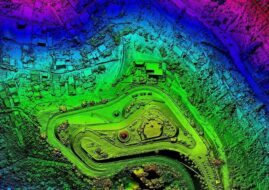
Aerial view of Circuito de Jerez
MotoGP and motorcycle history
Jerez joined the motorcycle Grand Prix calendar in 1987 and has hosted the Spanish motorcycle GP regularly since 1989. Wayne Gardner won the first premier-class race and the 1987 500 cc title.
Later winners include Eddie Lawson, Michael Doohan, and Kevin Schwantz. Valentino Rossi leads with seven MotoGP wins; Alex Criville, Dani Pedrosa, and Jorge Lorenzo added multiple Spanish home successes. Weekend crowds often exceed 200,000 spectators.

Map: Jerez Circuit layouts
1992 and 1994 layout changes
1992: Length grew to about 4,423 m when a chicane was removed and the Sito Pons parabolic turn added, matching the start-finish straight at roughly 600 m. Jerez pioneered air fences instead of straw bales for bikes and built an infield motocross track for world championship off-road events.
1994: The Senna chicane replaced Turn 11 for the European Grand Prix car layout, adding about five metres. Motorcycles typically use the faster configuration without it.

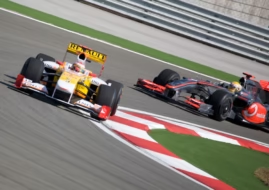
1997 European Grand Prix podium
1994 and 1997 European Grands Prix
1994: Michael Schumacher (Benetton) won on the way to his first world title.
1997: Mika Häkkinen took his maiden F1 win; Jacques Villeneuve clinched the championship after contact with Schumacher. Post-race ceremony disputes led FIA president Max Mosley to state that no further F1 championship rounds would be held at Jerez.

Circuito de Jerez
Facilities and testing
Early-2000s upgrades brought new pit garages, medical and media centres, and VIP areas. A revised pit exit arrived in 2004; resurfacing and escape-area work followed in 2008.
Car series such as International GT Open, Formula 3, World Series by Renault, Ferrari Challenge, and Formula V8 3.5 have visited, but MotoGP and WorldSBK remain the headline draws alongside winter testing in mild Andalusian weather.
Visiting Jerez
MotoGP weekend tickets sell fast. Seville and Jerez airports serve the region; plan transport early for rural access on race Sundays.
Related reading
Address: Circuito de Jerez, Carretera de Arcos km 10, 11408 Jerez de la Frontera, Spain
Phone: +34 956 151100
Official website: circuitodejerez.com
Photo credits: circuitodejerez.com; cadizturismo.com; motogp.com
Frequently asked questions
Where is Jerez Circuit?
Circuito de Jerez (Circuito Permanente de Jerez) lies near Jerez de la Frontera in Andalucía, southern Spain, on Carretera de Arcos km 10.
How long is the Jerez race track?
The F1 car layout with the Senna chicane measures about 4.428 km. Motorcycle races often use a variant without that chicane. The 1985 opening layout was 4.218 km with 16 turns, driven clockwise.
Did Formula 1 race at Jerez?
Yes. Jerez hosted the Spanish Grand Prix five times (1986–1990) and the European Grand Prix in 1994 and 1997. FIA president Max Mosley said no further F1 rounds would return after the controversial 1997 weekend.
What was the closest Formula 1 finish at Jerez?
At the 1986 Spanish Grand Prix, Ayrton Senna beat Nigel Mansell by 0.014 seconds — at the time the closest finish in world championship history.
Is MotoGP still held at Jerez?
Yes. Jerez has hosted motorcycle Grands Prix since 1987 and remains a core MotoGP and WorldSBK venue, often drawing six-figure crowds compared with smaller F1 attendance in the 1980s and 1990s.
Who has the most MotoGP wins at Jerez?
Valentino Rossi holds the premier-class record with seven victories at Jerez. Spanish riders such as Dani Pedrosa and Jorge Lorenzo also won multiple times.
What is the Senna chicane at Jerez?
Built for the 1994 European Grand Prix, the chicane at Turn 11 was named after Ayrton Senna. Cars use it; motorcycles typically run the faster layout without it.
What happened at the 1997 European Grand Prix?
Mika Häkkinen won his first F1 race; Jacques Villeneuve clinched the title after a collision with Michael Schumacher. Ceremony controversies helped end Jerez’s F1 era.
Why do teams test at Jerez in winter?
Mild Andalusian winters and long straights make Jerez a popular pre-season test venue for MotoGP, Formula 3, GT, and single-seater teams alongside race weekends for International GT Open and Ferrari Challenge.