

Mastering Tight Corners and Daily Commutes: What Makes a Great City Driver
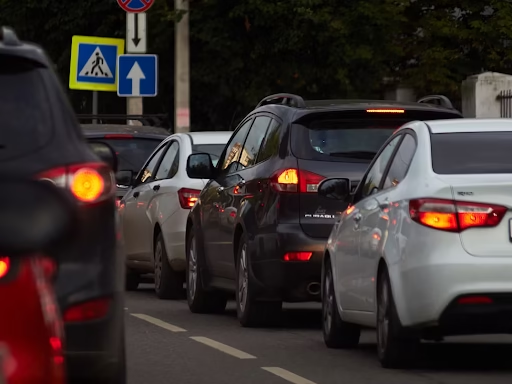
Driving in a busy city is a whole different ballgame compared to cruising down an open highway. It’s a constant dance of stop-and-go traffic, sudden lane changes, and keeping an eye out for pedestrians, cyclists, and delivery trucks. Getting good at urban driving isn’t just about reaching your destination; it’s about doing it safely, efficiently, and without losing your cool. To become a great city driver, you need the right mindset, sharp skills, and sometimes, the perfect car for the job.
Situational Awareness is Your Superpower
In a dense city, what’s happening 50 feet in front of you matters just as much as the car right in front. Great city drivers are masters of knowing what’s going on around them. This means constantly scanning your surroundings, not just staring at the bumper ahead. Check your mirrors often, watch for cyclists weaving through traffic, and always expect pedestrians to step off the curb without warning.
A good habit is to look past the car in front of you to see two or three cars ahead. This gives you more time to react to sudden braking and helps you understand how traffic is moving before you’re stuck in it.
Choosing the Right Vehicle for Urban Life
The car you drive can really change your city driving experience. A big SUV might feel powerful on the highway, but it can be a nightmare in tight underground parking lots or on narrow one-way streets. Smaller, more nimble vehicles often have a clear advantage. They’re easier to maneuver through traffic, have a tighter turning radius for sharp corners, and make the endless search for parking much less stressful.
If you’re looking for a car that shines in these conditions, a specialized dealership like a MINI dealer Kitchener can show you options built specifically for agile city handling and performance. The right car feels like a partner in tackling the urban landscape, not a hindrance.
Navigating Tight Spaces and Tricky Turns
City streets are famous for their narrow lanes and sharp, often blind, corners. Handling these well takes precision and a good sense of your car’s size. When you’re approaching a tight turn, slow down before you enter it, not while you’re in it. Look as far through the corner as you can to see what’s on the other side.
Professional drivers learn specific ways to handle tight corners, and many of those ideas apply to everyday driving. Use your mirrors to watch your rear wheels and make sure you’re not cutting the corner too sharply or swinging too wide into another lane. A smooth, controlled approach is always safer and works better than a rushed, jerky one.
The Art of Defensive Driving and Patience
If there’s one quality every city driver needs, it’s patience. Driving aggressively, tailgating, honking too much, or weaving between lanes rarely saves you more than a few seconds and greatly increases your chance of an accident. Defensive driving is key. This means leaving plenty of space between you and the car ahead, giving way even when you technically have the right, and assuming other drivers might make mistakes.
The huge challenges of driving a big rig in the city highlight the need for extreme awareness and planning, skills that help every driver. Staying calm and focused lets you react thoughtfully instead of emotionally, which is vital when navigating unpredictable traffic.
Mastering the Urban Parking Puzzle
Finding a parking spot often feels like the final boss of any city trip. Parallel parking, especially, scares many drivers but is crucial for city life. The trick is to practice until you do it without thinking. Use your mirrors well to judge distance and how you’re lined up. Many modern cars come with backup cameras and sensors that make this much easier. In parking garages, remember to turn slowly and watch for concrete pillars and other vehicles. A little extra care when parking not only prevents dings and scratches but also makes leaving much smoother.
Becoming a confident and capable city driver is a skill you build over time. By staying aware, choosing the right tools for the environment, and developing a patient mindset, you can turn a stressful commute into a smooth, controlled part of your day.
Image credit Unsplash