

Red Bull on the Back Foot at the Start of F1’s 2026 Era
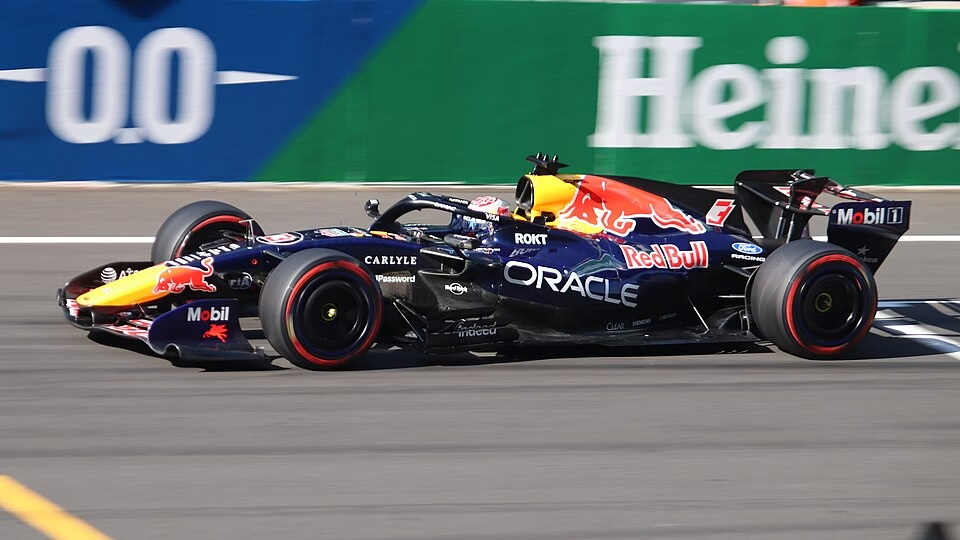
There are early warning signs from Milton Keynes – and they’re hard to ignore.
The dawn of Formula 1’s 2026 era was always going to reshuffle the deck, but few expected Red Bull Racing to look this vulnerable this soon. Initial paddock reports suggest the reigning benchmark team is currently around one second off the leading pace – a staggering deficit in modern Formula 1.
A One-Second Gap That Changes Everything
For a team that defined an era through aerodynamic excellence and operational precision, this is more than a slow start – it’s a structural concern.
A one-second deficit in Formula 1 is not just a setup issue or a missed upgrade window. It points toward deeper problems – concept limitations, correlation mismatches, or struggles in extracting performance from the new power unit regulations.
And that’s exactly where 2026 has hit hardest.
Why the 2026 Regulations Hurt Red Bull
The new ruleset has shifted the balance significantly:
- Greater reliance on electrical power deployment
- Revised aerodynamic philosophy
- Increased complexity in energy management
These changes appear to have disrupted the very foundation of Red Bull’s previous dominance.
While rivals seem to have adapted more cleanly to this new formula, Red Bull is still searching for its operating window – something that rarely happened in previous seasons.
Can Red Bull Recover?
There is, of course, an important caveat.
Teams led by figures like Christian Horner don’t stay down for long. Red Bull’s recent history shows an ability to out-develop and out-execute even from compromised positions.
But this situation feels different.
A one-second gap is not closed with minor upgrades. It requires a deeper understanding – and potentially a shift in direction.
Opportunity for the Rest of the Grid
For the chasing pack, this is the window they’ve been waiting for.
The 2026 reset was designed to compress the field and break long-standing dominance. If early indications hold, it has done exactly that.
For Red Bull, it’s unfamiliar territory.
For Formula 1, it might be exactly what it needed.