

Sachsenring – MotoGP & ADAC GT Circuit Guide
Originally published April 2016. Last updated September 2026: replaced legacy Hostinger images (404) with Wikimedia Commons circuit photos (attribution in captions)
Sachsenring is a 3.7-kilometre permanent race track near Chemnitz in Saxony — Germany’s spiritual home of motorcycle Grand Prix racing after decades on dangerous public-road loops through the Ore Mountains. Motorcycle racing began in 1927; the name Sachsenring arrived in 1937; and after reunification ADAC rebuilt a modern anti-clockwise circuit that now anchors the MotoGP calendar and ADAC GT Masters.
The circuit matters because it survived East German isolation, iron-curtain entry lists, and post-1990 safety crises before Hermann Tilke’s 2001 revision. Compare Saxony’s hillside venue with Lausitzring, Norisring, and Hockenheimring.
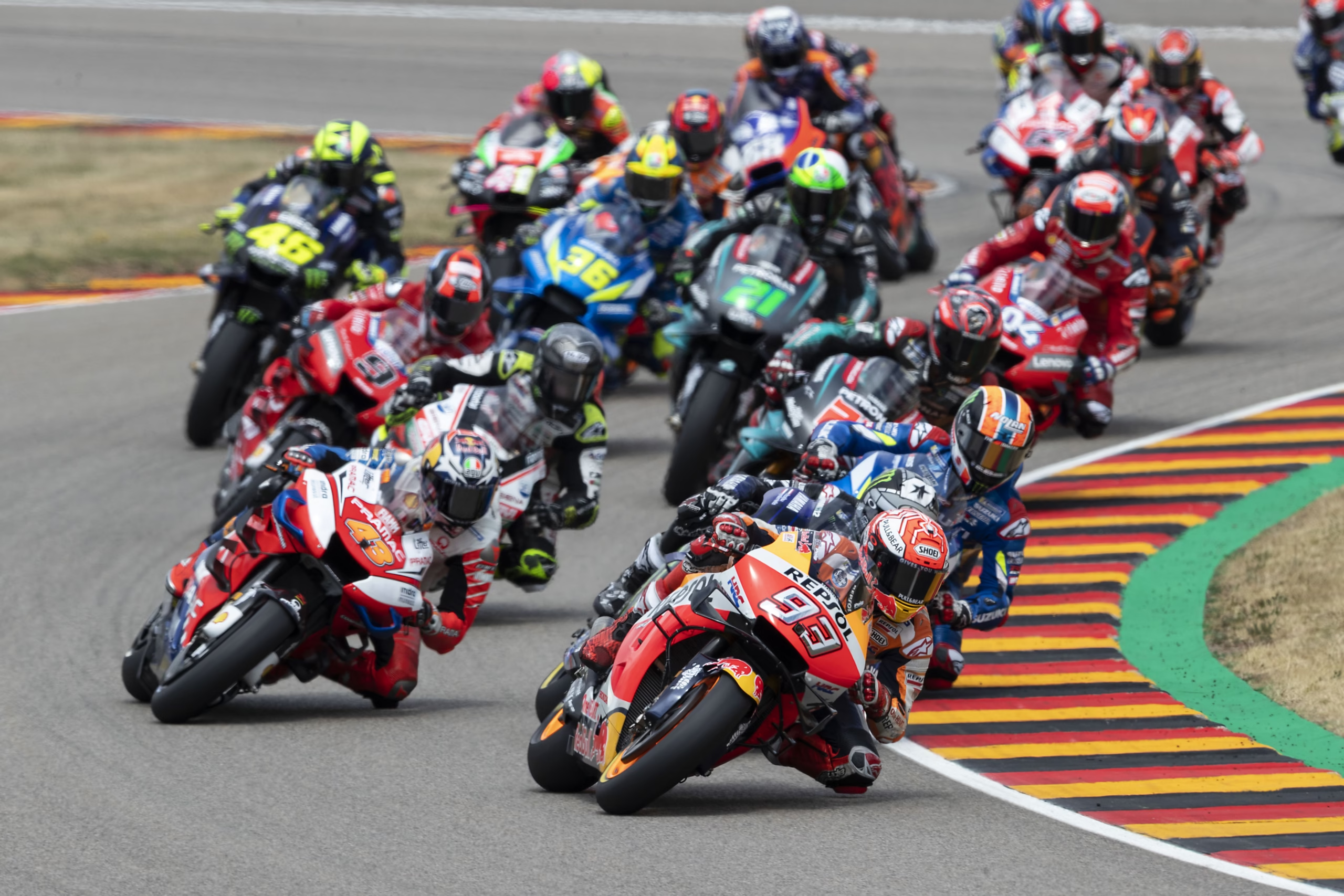
Marc Márquez leads the field at the 2019 German Grand Prix — Photo: Box Repsol / CC BY 2.0
Contents
Sachsenring facts
| Location | Oberlungwitz / Hohenstein-Ernstthal, Saxony, Germany (near Chemnitz) |
|---|---|
| Circuit type | Permanent road course (anti-clockwise) |
| First race | 1927 (motorcycles on public roads) |
| Name adopted | 1937 (Sachsenring) |
| Current Grand Prix layout (Circuit A) | 3.7 km, 14 turns |
| Shorter layouts | Circuit B Omega 2.1 km; Circuit C 1.7 km |
| Direction | Anti-clockwise |
| Main events | MotoGP German Grand Prix; ADAC GT Masters; national ADAC championships |
| Designer (modern) | Hermann Tilke (2001 revisions) |
| Operator | ADAC Sachsen (since mid-1990s) |
Lap record note: MotoGP, GT3, and club sessions use different tyres and track limits. Compare lap times only within the same series and layout.
Early days at the circuit were especially dangerous
The first motorcycle race was held in 1927 on the public road running through the nearby village. That track was 8.618 km long and ten years later the venue was named Sachsenring. In 1934, the German Moto GP was held there for the first time and that race remains the headline event at this circuit every year.
The following year’s race attracted almost 150,000 spectators who saw turbulent competition with more than 40 accidents on the track. The ambulance was overloaded and local authorities decided to abandon racing through the countryside.
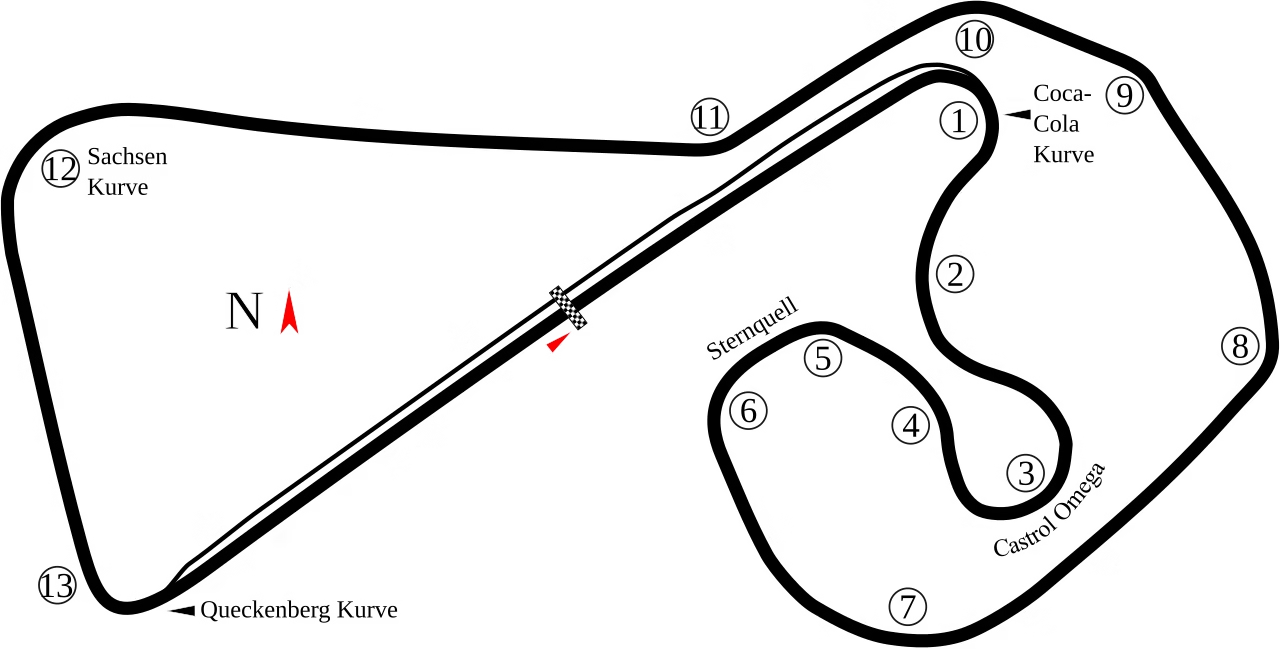
Sachsenring Circuit A Grand Prix layout (3.7 km) — Map: Will Pittenger / CC BY-SA 2.0
First German Grand Prix was held in 1934
Racing fans had to wait until 1934 when the inaugural Grand Prix of Germany was held as part of the European Motorcycle Championship. Sadly, tragedies happened very often and many riders were killed, including champions Gunnar Kalen and Pol Demeuter. The circuit officially was named Sachsenring for the 1937 German Grand Prix during which winner of two previous races Jimmie Guthrie was killed.
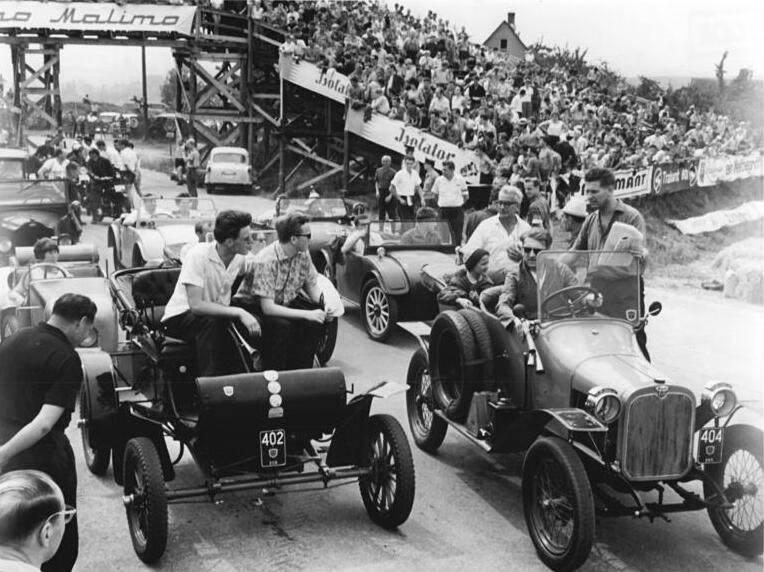
International veteran motorcycle rally on the Sachsenring course, July 1967 — Photo: Bundesarchiv, Liebers, Peter / CC BY-SA 3.0 DE
Racing at Sachsenring wasn’t for everyone
World War II stopped the races at Sachsenring until 1949. The German Motorcycle Championship in the following year attracted almost half a million spectators and despite being in the DDR, the circuit had an active life, also hosting international events through the years. Motorcycle races still were more often and more popular than car races, with a World Championship event as the highlight, but when local motorcycles became less competitive against the ones from the West, authorities decided to allow entries, for both cars and motorcycles, only for competitors from countries behind the iron curtain.
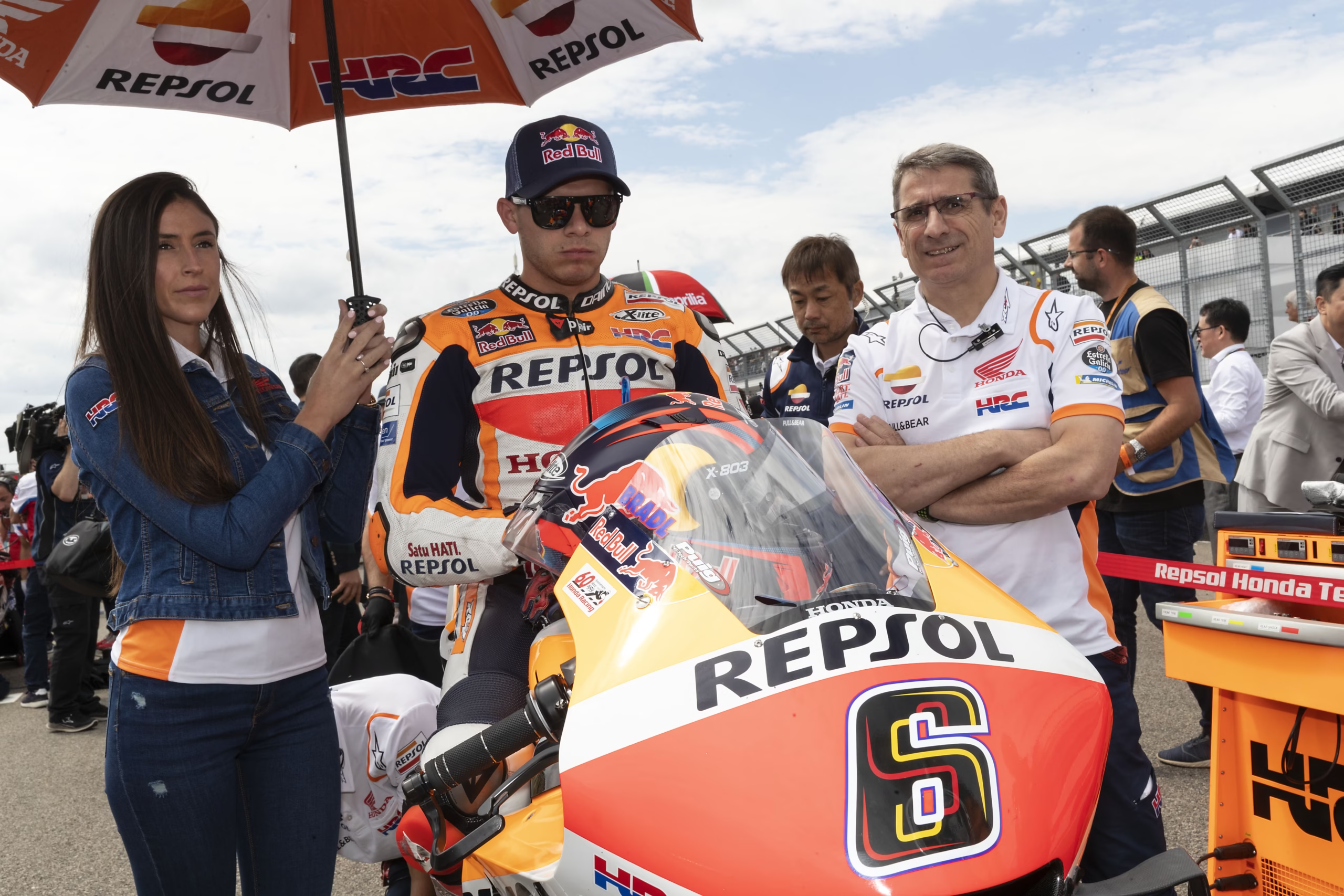
Stefan Bradl at the 2019 German Grand Prix weekend at Sachsenring — Photo: Box Repsol / CC BY 2.0
Iron curtain entries and reunification
When the iron curtain fell, the future looked slightly better for this venue. Early years for unified Germany weren’t easy for Sachsenring. The venue still had only a few wooden stands and safety was at a very low level which led to fatal accidents.
ADAC took control in the mid-1990s
In the mid-1990s, ADAC took control and in 1995 a new facility was built south of the original track. Through the years, the track went through many modifications to earn the highest FIM certification so a World Championship event could return to Sachsenring. Fans were delighted when almost 150,000 people attended the race in 1998.
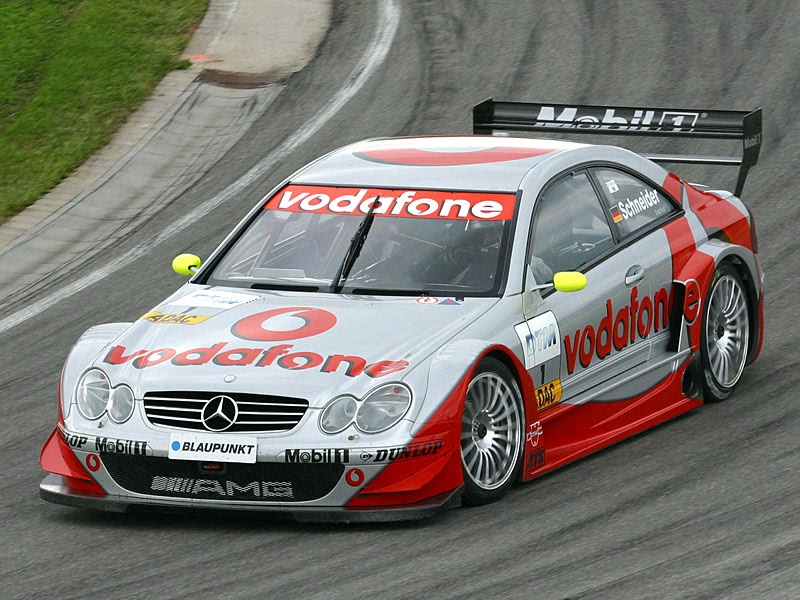
Bernd Schneider in the Mercedes CLK DTM at Sachsenring, 2002 — Photo: Thomas Kraft (ThKraft) / CC BY-SA 2.5
Sachsenring is now a modern venue
After more changes made in 2000, the track became better suited for car racing while in 2001 architect Hermann Tilke gave a final touch to the layout. Sachsenring is now a modern racing circuit which still hosts motorcycle races but also is a regular host of an ADAC GT Masters round. The FIA GT1 World Championship also visited Sachsenring, as did DTM before the series switched to another venue in former East Germany — the new Lausitzring.
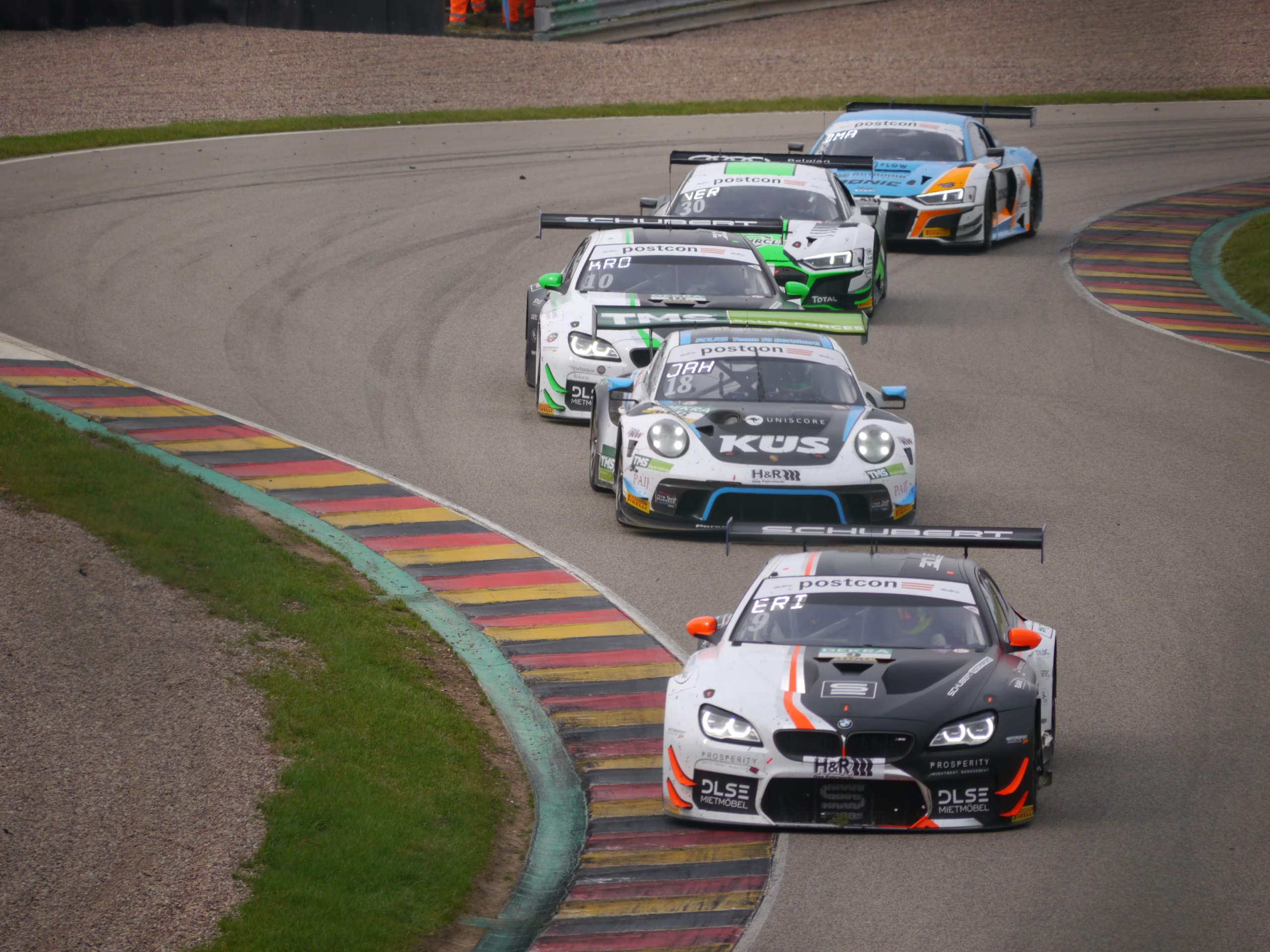
ADAC GT Masters at the modern Sachsenring layout, 2020 — Photo: Der Alf / CC BY-SA 2.0
Circuit A, B, and C configurations
Sachsenring’s Circuit A Grand Prix is 3.7 km long with 14 turns and is an anti-clockwise track. Circuit B Omega is 2.1 km long. The shortest layout is Circuit C at 1.7 km.
Getting to Sachsenring
Getting there is relatively easy. Airports at Dresden, Leipzig, and Erfurt are roughly 100–150 km from Sachsenring. Trains run from Berlin; the nearest station is Hohenstein-Ernstthal, about a ten-minute walk from the track.
Address: Am Sachsenring, 09353 Oberlungwitz, Germany
Phone: +49 351 4433190
Official website: sachsenring-circuit.com
Frequently asked questions about Sachsenring
Where is Sachsenring?
Sachsenring is at Am Sachsenring, 09353 Oberlungwitz in Saxony, Germany, between Chemnitz and Hohenstein-Ernstthal in the Ore Mountains region.
How long is Sachsenring?
The main Circuit A Grand Prix layout is 3.7 km with 14 turns, run anti-clockwise. Shorter Circuit B Omega (2.1 km) and Circuit C (1.7 km) configurations are also available.
When did motorcycle racing start at Sachsenring?
The first motorcycle race on the public-road course was in 1927. The name Sachsenring was adopted in 1937; the first German motorcycle Grand Prix at the venue was in 1934.
Does MotoGP race at Sachsenring?
Yes. After ADAC rebuilt the circuit and earned FIM certification, the MotoGP German Grand Prix returned in the late 1990s. The event remains one of the calendar’s biggest motorcycle weekends, often drawing well over 100,000 fans.
Who designed the modern Sachsenring layout?
Hermann Tilke completed the final major revision in 2001, improving car suitability while keeping the hillside character of the post-1995 ADAC circuit south of the original road loop.
What car races happen at Sachsenring?
ADAC GT Masters is the headline car series. The circuit has also hosted DTM, FIA GT1, and national ADAC championships on the full Grand Prix layout.
How is Sachsenring related to Lausitzring?
Both are major circuits in former East Germany. DTM later favoured the newer Lausitzring tri-oval complex, while Sachsenring kept motorcycle Grand Prix status and GT racing.
Why was the old Sachsenring road circuit abandoned?
After a 1935 race with more than 40 accidents and an overloaded ambulance service, authorities stopped using the long 8.6 km countryside loop. Racing continued on other configurations before the modern ADAC facility opened in 1995.
Is Sachsenring clockwise or anti-clockwise?
The current Grand Prix circuit runs anti-clockwise, unlike many European permanent tracks such as the Nürburgring GP layout.