

Snaefell Mountain Course – Isle of Man TT Road Racing Guide
Originally published December 2016. Last updated September 2026: expanded Tier B circuit guide, facts table, table of contents, internal links, FAQ schema, and editorial refresh while preserving legacy narrative and images.
Snaefell Mountain Course is the 37.73-mile (60.7 km) public-road loop on the Isle of Man that hosts the Isle of Man TT and Manx Grand Prix motorcycle races. More than 200 bends climb from Douglas through mountain sections and coastal roads — a course where average speeds exceed 130 mph on closed public highways and where fatalities remain part of the event’s documented history.
The track matters because it survived as a world championship venue from 1949 to 1976 and still defines road-racing culture for riders worldwide. Compare closed permanent circuits at Brands Hatch or Nürburgring Nordschleife; for ranked danger context see Top 10 World’s Most Dangerous Race Tracks.
Contents
- Snaefell Mountain Course facts
- 1904 Gordon Bennett Trial and early layouts
- 1911 move to the Mountain Course
- Fatalities and risk on public roads
- Clockwise layout and named corners
- FIM world championship era
- Lap records and top speeds
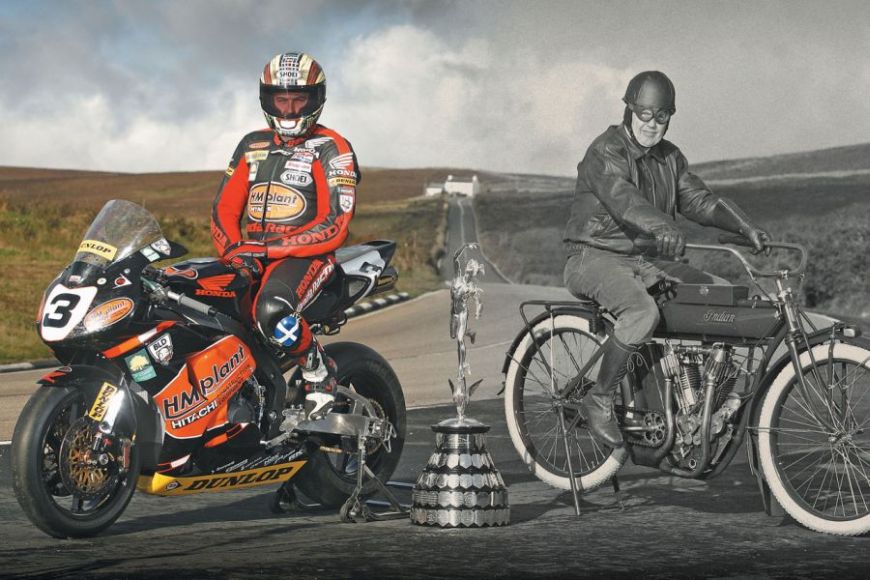
- Joey and Michael Dunlop at the TT
- Car laps and British Empire Trophy
- Spectating and visiting the Isle of Man
- Frequently asked questions
Snaefell Mountain Course facts
| Location | Isle of Man, British Crown Dependency (public roads closed for race weeks) |
|---|---|
| Circuit type | Public-road course (not a permanent closed circuit) |
| Current length | 37.73 miles (60.72 km) |
| Direction | Clockwise from TT Grandstand, Douglas |
| Main events | Isle of Man TT (since 1911 on this course); Manx Grand Prix (since 1923) |
| FIM world championship | Isle of Man TT on the championship calendar 1949–1976 |
| Highest point | About 422 m (1,385 ft) at Hailwood Height |
| Official motorcycle lap record | 16:53.929 (133.962 mph / 215.591 km/h) — Michael Dunlop, 2016 Senior TT |
| Organiser | Isle of Man TT Races / Manx Grand Prix (ACU-sanctioned meetings) |
Lap record note: Senior TT, Superbike, lightweight, and sidecar classes use different machinery. Car demonstration laps and rally records are separate categories — compare times only within the same class and course configuration.
1904 Gordon Bennett Trial and shorter courses
Motorsport on the Isle of Man began when UK speed limits pushed organisers offshore. The 1904 Gordon Bennett Trial used a 52.15-mile (83.9 km) Highroads Course for cars; motorcycles joined on a shorter section in 1905.
The first Isle of Man Tourist Trophy ran in May 1907 on the 15-mile St John’s Course. Four years later the meeting moved to the longer mountain route that still defines the TT today.
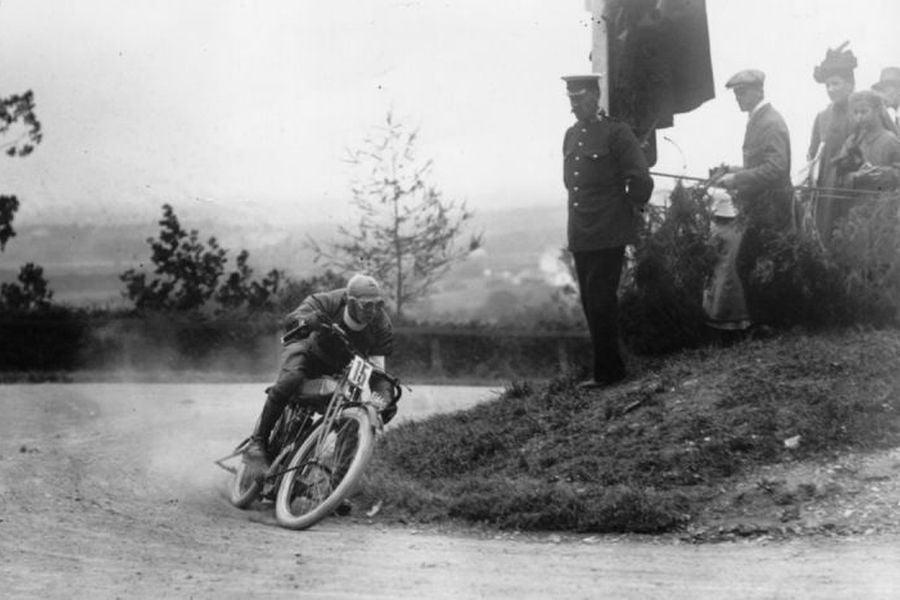
Isle of Man Tourist Trophy is one of the world’s oldest road races
1911 move to Snaefell Mountain Course
Racing transferred to the 37.4-mile Snaefell Mountain Course in 1911. The distance grew slightly over the decades; the 37.73-mile layout used today was set in 1923.
Improvements to barriers, medical cover, and marshal posts continued through the 20th and 21st centuries, but the fundamental challenge — very fast motorcycles on narrow public roads with stone walls and hedges — never disappeared. The first rider killed on the course was Victor Surridge during practice for the 1911 TT.
Fatalities and documented risk
Organisers market the TT as the Greatest Road Race in the World; riders and fans also describe it as the pinnacle of bravery on two wheels. The meeting’s history includes more than 270 recorded fatalities across TT and Manx Grand Prix weeks when counting competitors, officials, and spectators over more than a century.
Almost every modern edition has seen serious incidents. 2005 was especially devastating, with eleven deaths across two separate events. One car driver, James Neilson, died during the 1953 British Empire Trophy race — the only car racer fatality on the island in this context.
SnapLap lists the course on its most dangerous race tracks feature because of that sustained mortality rate, not because danger is the only story. Safety campaigns, limited entry numbers, and training standards evolve each year; the course itself does not become a permanent racetrack with gravel traps.

Map: Snaefell Mountain Course track layout
Clockwise from Douglas: roads and named corners
Riders start from the TT Grandstand area in Douglas, the island capital. That complex is the only ticketed grandstand section; most of the course offers free vantage points along A-roads across the island.
The route uses the A1 toward Peel, the A3 through Castletown toward Ramsey, and the A2 from Ramsey back to Douglas. Famous sections include the Mountain Mile, Sulby Straight, and Ballaugh Bridge. Corners honour competitors — some who died, some who survived. Hailwood’s Rise and Hailwood Height commemorate Mike Hailwood, who won 14 TT races and later raced in Formula One.
FIM world championship years and multiple winners
Between 1949 and 1976 the Isle of Man TT counted toward the FIM Road Racing World Championship. Multiple world champions won here, including John Surtees, Mike Hailwood, and Giacomo Agostini.
Championship status ended when safety debates and logistics favoured permanent circuits, but the TT remained the headline event on the Mountain Course. The Manx Grand Prix offers a parallel meeting for amateur and developing riders on the same roads.
Lap records, race averages, and top speeds
The official lap record stands at 16 minutes 53.929 seconds, an average of 133.962 mph (215.591 km/h), set by Michael Dunlop in the 2016 Senior TT. Dunlop also holds the six-lap race average reference above 210 km/h from that year.
During 2006 practice, New Zealander Bruce Anstey was timed at about 206 mph (332 km/h) at the end of Sulby Straight on a 1000 cc Suzuki — an unofficial top-speed marker, not a race lap.
Michael Dunlop’s record-setting lap (video)
Joey Dunlop and the TT win list
Michael Dunlop has collected 13 TT race wins across classes, including three Superbike TT victories, plus four Manx Grand Prix wins on the same course.
His uncle Joey Dunlop remains the most successful TT rider by total wins, with 26 Tourist Trophy victories between 1976 and 2000. John McGuinness follows with 23 wins; sidecar specialist Dave Molyneux holds 17 sidecar TT victories.
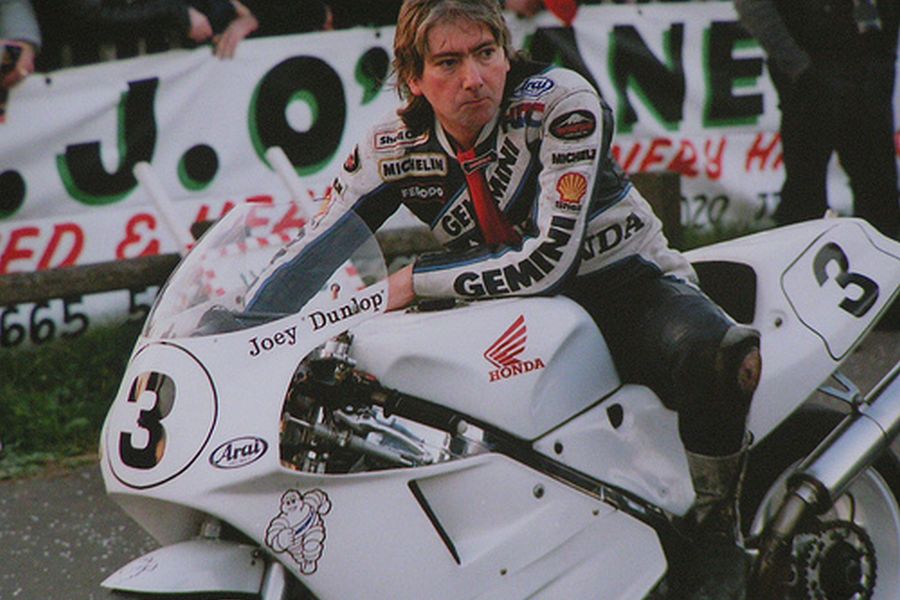
Joey Dunlop — 26 Isle of Man TT wins
Car laps: Mark Higgins and the British Empire Trophy
There is no regular car world championship race on the Mountain Course, but closed-road car laps attract huge attention. British rally driver Mark Higgins has lowered the car lap reference several times in a Prodrive Subaru Impreza WRX STI, including 17 minutes 49.75 seconds in June 2016.
Historic car meetings included the British Empire Trophy, which shared the island’s road-racing heritage before modern focus returned to motorcycles.
Spectating and visiting the Isle of Man
Plan travel for late May and early June for the TT, or August for the Manx Grand Prix. Ferries and flights serve the island from the British mainland and Ireland; Douglas hotels fill months ahead of race week.
Respect road closures: during practice and races the Mountain Course is a live race track with limited access. Follow marshal instructions at all vantage points.
Frequently asked questions about Snaefell Mountain Course
Where is Snaefell Mountain Course?
Snaefell Mountain Course is a closed public-road loop on the Isle of Man, a British Crown Dependency in the Irish Sea. Racing starts from the TT Grandstand area in Douglas and runs clockwise across the island.
How long is the Isle of Man TT course?
The current Snaefell Mountain Course measures 37.73 miles (60.72 km) with more than 200 bends. The distance was fixed in its modern form in 1923.
When did the TT move to Snaefell Mountain Course?
The Isle of Man Tourist Trophy used shorter courses in 1907–1910. The race moved to the Snaefell Mountain Course in 1911, where it has remained the TT route ever since.
Why is Snaefell Mountain Course considered dangerous?
It is a very fast public-road course with walls, hedges, and limited run-off. More than 270 fatalities have been recorded across TT and Manx Grand Prix history. Organisers improve safety each year, but the layout cannot be converted into a permanent gravel-trap circuit.
Was the Isle of Man TT a world championship race?
Yes. The TT counted toward the FIM Road Racing World Championship from 1949 to 1976. It left the calendar over safety and logistics concerns but remains the premier motorcycle road race on the Mountain Course.
Who holds the lap record at the Isle of Man TT?
Michael Dunlop set the official lap record of 16:53.929 at an average of 133.962 mph (215.591 km/h) during the 2016 Senior TT. Different classes publish separate competitive lap times.
Who has the most TT wins at the Isle of Man?
Joey Dunlop holds the record with 26 Tourist Trophy race wins (1976–2000). John McGuinness is second with 23 wins; Mike Hailwood won 14 TT races.
Do cars race on Snaefell Mountain Course?
There is no regular car world championship event today, but closed-road car demonstration laps and historic meetings such as the British Empire Trophy have used the course. Mark Higgins holds recent car lap references in a Subaru WRX STI.
What is the difference between the TT and Manx Grand Prix?
Both use the same Mountain Course. The Isle of Man TT in late May/early June is the professional headline meeting; the Manx Grand Prix in August traditionally emphasises amateur and developing riders, though both are ACU-sanctioned road races.
How do you watch the Isle of Man TT?
Most viewing areas are free along the closed road circuit; only the TT Grandstand in Douglas requires tickets. Book ferries or flights early, follow official road-closure maps, and obey marshal instructions during practice and races.
Related reading
- Top 10 World’s Most Dangerous Race Tracks
- Nürburgring — Germany’s public-road racing icon
- Brands Hatch — British circuit with F1 history
- Goodwood Circuit — British motorsport heritage
Address: MMCC Office, The Grandstand, Glencrutchery Road, Douglas, Isle of Man IM2 6DA
Phone: +44 1624 644649
Official website: iomtt.com
Related Posts