

Sportsland SUGO – Japanese Super GT Circuit Guide

Originally published September 2016. Last updated September 2026: added labelled circuit map (Wikimedia Commons, with attribution in caption)
Sportsland SUGO is a multi-course motorsport complex near Murata in Miyagi Prefecture, north-east Japan, and one of the largest dedicated racing facilities in the country. Opened in 1975 on roughly 2.1 million square metres of hillside, its main road course hosts Super GT, Super Formula, and national motorcycle championships — a national venue rather than a Formula One stop, but central to Japanese tin-top and open-wheel racing.
SUGO matters because Yamaha Motor Company ownership and a 1987 rebuild turned a regional leisure park into a serious track. World Superbike raced here from 1988 until 2003; Super GT’s annual visit still draws the biggest crowds. Compared with Suzuka or Fuji, SUGO is quieter internationally yet busier on domestic calendars.
The complex also runs motocross, trials, and karting on separate courses — unusual breadth for one venue in rural Tohoku, about 90 minutes from Tokyo on the Tohoku Shinkansen to Sendai.
Contents
Sportsland SUGO facts
| Location | Murata, Shibata District, Miyagi Prefecture, Japan (Tohoku region) |
|---|---|
| Circuit type | Permanent road course plus motocross, kart, and trials facilities |
| Opened | May 1975 |
| Owner / operator | Yamaha Motor Company / Sugo Co., Ltd. |
| Road course length | 3.704 km (international car layout); 3.737 km motorcycle layout |
| Turns | 12 (car) / 15 (motorcycle) |
| Main events | Super GT; Super Formula; All Japan Road Race Championship; Super Taikyu; Porsche Carrera Cup Japan |
| Capacity | About 50,000 |
| FIA grade | Grade 2 |
| Notable feature | 704.5 m main straight; ~70 m elevation change per lap |
Lap record note: categories use different layouts and regulations. The official Super Formula race lap record is 1:06.350, set by Nick Cassidy in 2020. Super GT and GT3 times are several seconds slower — compare only within the same series and configuration.
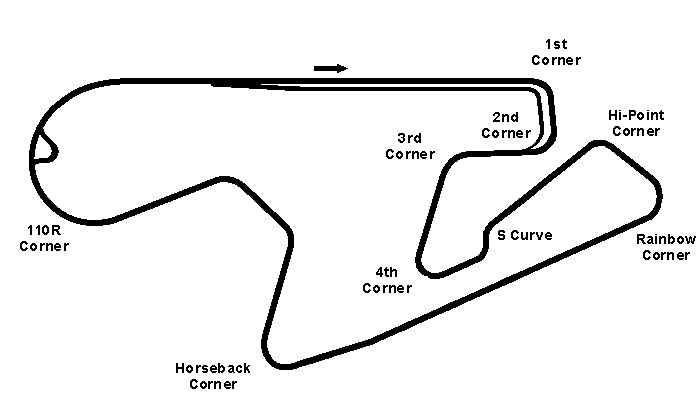
Sportsland SUGO — international road course layout — Map: Chris Ssk / CC BY-SA 3.0 via Wikimedia Commons
Multi-sport complex near Sendai
The circuit lies near Murata in Miyagi Prefecture on Honshu island. When it opened in 1975, SUGO offered a road course, motocross track, go-kart circuit, and trials area across 2.1 million square metres of rural hillside — one of Japan’s largest motorsport footprints.

Sportsland SUGO motocross course
Motorsports became the priority after 2005
Until 2005, Sportsland SUGO was a broader leisure resort with tennis, pools, football pitches, and hotels. Since then Yamaha and Sugo Company Ltd have focused the site on motorsport categories only.

Super Formula race at Sportsland SUGO
Huge reconstruction in 1987
The main road course changed several times. The biggest upgrade came in 1987 when the track was widened and rebuilt, with a new pit lane and garages for 30 cars. That layout underpins today’s international course.
SUGO never hosted Formula One, but it became one of Japan’s best national venues. From 1988 until 2003 the circuit held a round of the World Superbike Championship — the highest-profile international car and bike series to visit regularly.

Pit lane and main straight at Sportsland SUGO
Super GT race is the main event
Today’s car layout measures 3.704 km with 12 turns, a 704.5 m back straight, width of 10–12.5 m, and roughly 70 m of elevation change per lap. Grandstands hold about 50,000 — rarely full except for Super GT, which remains the headline ticket. Super Formula, Super Taikyu, and Porsche Carrera Cup Japan also visit each season.

Super GT pit lane at Sportsland SUGO
Three other courses on site
The West Course kart track is 943.3 m long and supports night racing. The international motocross course spans 1.6 km with 13 jumps — regarded as among the best in Japan and Asia. Trials and off-road layouts can be reconfigured for different national championships.

All Japan Trial Championship at Sportsland SUGO
Getting to Sportsland SUGO and accommodation
Sendai Airport is about 30 minutes by car. The Tohoku Shinkansen reaches Sendai from Tokyo in roughly 90 minutes; buses from Sendai East JR station take about an hour to the circuit. Murata interchange on the Tohoku Expressway is roughly 10 minutes away.

Dunlop Bridge at Sportsland SUGO
There is little on-site lodging; most visitors stay in Sendai, Iwanuma, or Natori. Check the official calendar at sportsland-sugo.co.jp before travelling — Super GT weekend sells out local hotels quickly.
Fast facts about Sportsland SUGO
- Sportsland SUGO opened in May 1975 in Miyagi Prefecture.
- The site covers about 2.1 million square metres.
- Yamaha Motor Company owns the facility.
- The 1987 rebuild created the modern international road course.
- World Superbike raced at SUGO from 1988 to 2003.
- Super GT is the best-attended annual event.
- The main straight is 704.5 metres long.
- Super Formula’s race lap record is 1:06.350 (Nick Cassidy, 2020).
- Separate motocross, kart, and trials courses operate on the same property.
- Sendai Airport is the nearest major air gateway.
Frequently asked questions about Sportsland SUGO
Where is Sportsland SUGO?
Sportsland SUGO is in Murata, Shibata District, Miyagi Prefecture, in north-east Japan (Tohoku). Sendai Airport is about 30 minutes away by road.
How long is the Sportsland SUGO race track?
The international car layout is 3.704 km with 12 turns. The motorcycle configuration is 3.737 km with 15 turns — both use the same facility with slightly different line markings.
What is the main event at Sportsland SUGO?
Super GT draws the largest crowds each year. Super Formula, Super Taikyu, Porsche Carrera Cup Japan, and national motorcycle championships also race on the road course.
Did Formula One ever race at SUGO?
No. Sportsland SUGO has never hosted a Formula One Grand Prix. Japan's F1 home is Suzuka Circuit. SUGO focused on domestic championships and World Superbike from 1988 to 2003.
Who owns Sportsland SUGO?
Yamaha Motor Company owns the facility; Sugo Co., Ltd. operates racing events. Since 2005 the complex has focused on motorsport rather than general leisure amenities.
When was Sportsland SUGO rebuilt?
The major 1987 reconstruction widened and re-profiled the road course and added a new pit lane with garages for 30 cars. That upgrade defines the modern international layout.
What is the Super Formula lap record at SUGO?
1:06.350, set by Nick Cassidy during the 2020 Sugo Super Formula round in a Dallara SF19. Compare lap times only within the same series and car rules.
How do you get to Sportsland SUGO from Tokyo?
Take the Tohoku Shinkansen to Sendai (about 90 minutes), then drive or bus to the circuit (roughly 60 minutes from Sendai East JR station). Murata IC on the Tohoku Expressway is about 10 minutes from the track.
Does Sportsland SUGO have motocross?
Yes. The complex includes a dedicated international motocross course (about 1.6 km with 13 jumps), a kart West Course, and trials areas — not only the paved road circuit.
How big is Sportsland SUGO?
The facility covers about 2.1 million square metres of hillside in rural Miyagi — one of the largest motorsport venues in Japan by land area.
SUGO outlasted its resort-era neighbours
Japan’s international F1 story lives at Suzuka, but domestic tin-top and formula racing still needs a fast, scenic track in Tohoku. SUGO fills that role. For Asian road-course contrast, read Sepang International Circuit; for European heritage, see Spa-Francorchamps or Circuito del Jarama.
Related reading
- Suzuka Circuit — Japanese Grand Prix guide
- Sepang International Circuit — Malaysian Grand Prix guide
- Spa-Francorchamps — Belgian Grand Prix circuit guide
- Circuito del Jarama — Spanish Grand Prix history
- Daytona International Speedway — NASCAR and Rolex 24 guide
- Istanbul Park — Turkish Grand Prix circuit guide