Supercars Continues Refinement of Gen3 Aero Validation and Parity Procedures
The Supercars Championship is continuing work on revised aerodynamic validation and parity procedures for its Gen3 platform, as officials and manufacturers seek to improve competitive balance and strengthen confidence in the category’s technical framework.
The latest developments, discussed through Supercars.com and analyzed by Speedcafe, focus on improving how aerodynamic performance is measured, verified, and equalized between competing manufacturers.
Gen3 Parity Remains a Central Technical Issue
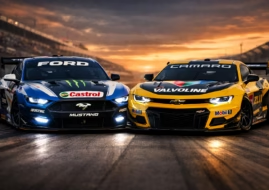
Since the introduction of the Gen3 regulations, parity between the Ford Mustang and Chevrolet Camaro platforms has remained one of the championship’s defining technical debates. Teams and manufacturers have repeatedly pushed for clearer and more transparent validation processes.
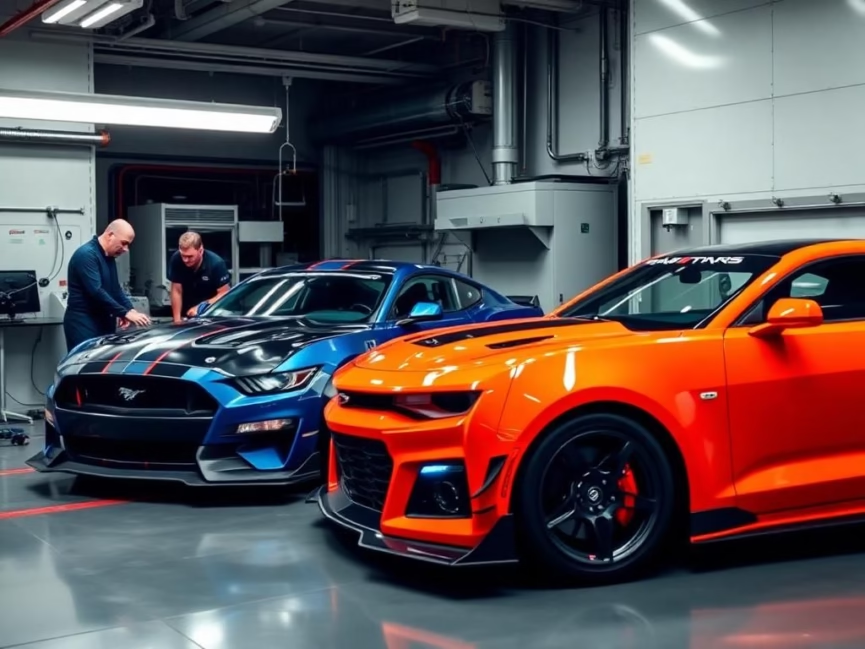
The current review reportedly includes adjustments to wind tunnel correlation procedures, aerodynamic scanning methods, and the interpretation of parity data collected during race weekends.
Circuits such as Mount Panorama and Albert Park, where aerodynamic efficiency significantly affects race pace and tire degradation, have amplified scrutiny surrounding parity performance.
Transparency and Technical Confidence Key Objectives
One of the primary goals of the revised framework is improving confidence among teams and manufacturers regarding how parity decisions are reached. Technical transparency has become increasingly important as the championship attempts to maintain manufacturer commitment and competitive credibility.
According to Motorsport.com, officials are working with teams to ensure that future parity evaluations rely on more standardized and independently verifiable processes.
The series is also evaluating whether additional simulation and CFD correlation tools should become part of the homologation and review structure.
Why This Matters for Supercars’ Future
Competitive parity is fundamental to the Supercars Championship’s identity. Perceived imbalance between manufacturers can quickly affect fan confidence, team investment, and long-term commercial stability.
By refining its technical validation systems, Supercars is attempting to reduce controversy while ensuring that race outcomes are determined more by execution and setup rather than structural aerodynamic advantages.
Drivers such as Will Brown and Brodie Kostecki could ultimately compete under a more stable and trusted technical framework.
Broader Implications for Touring Car Racing
The Supercars parity debate reflects broader challenges facing modern touring car championships, where balancing manufacturer diversity with technical equality has become increasingly complex.
As aerodynamic development tools become more sophisticated, governing bodies are under growing pressure to establish transparent and scientifically robust validation methods.
What Happens Next
Supercars officials are expected to continue working with manufacturers and technical stakeholders throughout the season before introducing any further refinements to the Gen3 parity system.
The effectiveness of these adjustments could play a major role in shaping manufacturer confidence and competitive stability during the next phase of the Gen3 era.