

Completing The Transition To A New Family Car
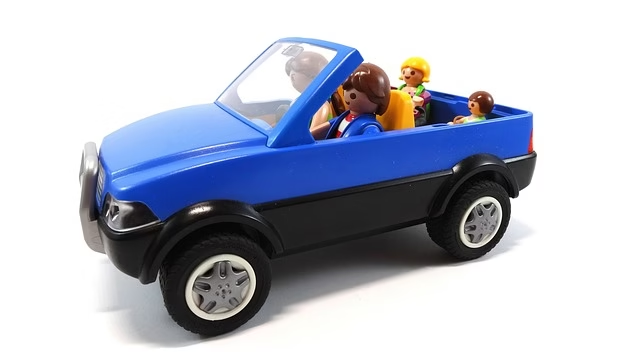
There are many reasons why you may need to transition to a new family car. Maybe the current vehicle has become more hassle than it’s worth due to frequent problems. Or perhaps you need something bigger due to changing family needs.
Either way, this is a significant moment in your life and should be handled with care. Use the following checklist for guidance and you won’t go far wrong.
Step 1: Research Your Options
Before making a purchase, you need to be 100% sure that you’ve found the ideal family car. As well as safety, it must have the size and features to align with your lifestyle. Likewise, it must sit within your budget. Getting yourself into financial trouble due to overspending is never the answer. Not when there are plenty of decent budget-friendly options.
You will need to consider other factors like whether to buy a new or used vehicle. Similarly, you should factor in the costs and hassle of future repairs, even when buying a new car. Once you’ve built a shortlist, be sure to read reviews or ask friends who have had the same model for their honest opinions. Going the extra mile could save you from future headaches.
Step 2: Get The Best Deal
Whether you buy new or used, the deals you see can fluctuate greatly. Therefore, it’s imperative that you use an online auto finder to check the best options across multiple dealerships. You may find the prices vary, especially on used cars when dealers may be looking to clear stock to make space in their forecourts. There may also be free add-ons or complimentary insurance.
It’s important to take the full package into account, which also means thinking about the car loan. Some dealers may offer better borrowing terms like 0% interest. This could mean that the overall costs are less despite another dealer offering the vehicle at a lower price. The combination of the right choice of car model and value for money will serve you well.
Step 3: Take The Test Drive Seriously
Conducting research to confirm that a vehicle is theoretically a good match is one thing. However, confirming that it is the best choice in reality is another. You should never purchase a car without first taking a test drive. Crucially, though, you need to take a proper test drive. A quick two minutes around the forecourt simply won’t suffice.
Within a short time, most drivers can tell if the car feels right for them. Of course, you’ll still make some adjustments once it is yours. Nevertheless, if your gut instinct tells you that it does not align with your driving needs, you must respect this. Conversely, a vehicle that feels like the perfect match won’t just make you a happy driver. It’ll make you a mentally peaceful one too.
Step 4: Sell Your Current Car
If you are looking to upgrade to a better car, the current vehicle is no use to you. But that does not mean it can’t be of use to anyone. It is still a valuable asset that could either be sold privately or used as a part-exchange to reduce the costs of your new purchase. Either way, it leads to a better financial result. And it also removes your responsibilities linked to the old car.
Selling the old car is an important part of the process. Yet, you must take care not to sell it weeks before collecting your new vehicle. Otherwise, life will become very difficult during that transitional period. This could quickly see your feelings towards the new vehicle take a nosedive before you’ve even got behind the wheel of it.
Step 5: Make Personalizations ASAP
Even the best car model will require some small updates to make it truly feel like yours. Sadly, if you fail to do this quickly, it’s likely that you’ll let it go untreated forever. If you have purchased a used vehicle, simple tech upgrades like parking sensors could be ideal. Or a new infotainment system can bring your vehicle into the modern age to enhance your experiences.
Other personal touches could range from in-car DVD players to keep kids entertained to protective films for the bodywork. Similarly, you may find that a personalized registration plate elevates your love of the vehicle. Or, depending on your location, it may be beneficial to change your tires to suit difficult weather conditions.
Step 6: Take A Trip
Getting a new car is very exciting, and the novelty of driving it will fill you with joy in the early weeks. That enthusiasm dies soon, though. Once it does, you want to look back with fond memories of the experiences that you’ve had. The best way to ensure this happens is to take a trip with your loved ones. It’ll help you associate the car with fun and happiness.
Taking road trip will allow you to enjoy the car and the great outdoors. By the end of it, you will certainly feel more comfortable behind the wheel. Your family does not have to travel thousands of miles to get the benefits of time spent enjoying attractions and being together. A vehicle opens the door to adventures, embracing this early can only serve you well.
Step 7: Become Familiar With The Vehicle
Enjoying the car on day one is great. However, true success comes from enjoying it for many years to come. Therefore, you will inevitably need to become comfortable with identifying faults so that they can be fixed ASAP. Reading the manual angetting to know the dashboard warnings are essential parts of the process. Knowing what to look for is vital.
It also makes sense to build a positive relationship with a local mechanic. From regular servicing to quick repairs when necessary, their help is priceless. It’ll protect your finances in the long run. More importantly, it ensures that your ride remains safe and comfortable. For your own sake, as well as your passengers, this is the most valuable step to staying on track. You’ve got this.