

How Motorsport Innovation Continues to Make Everyday Driving Safer
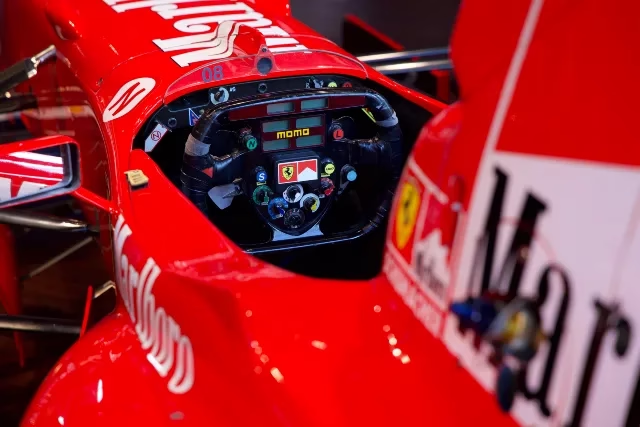
The high-speed, high-stakes world of motorsport isn’t just entertainment; it’s a real-world laboratory for automotive innovation. The intense demands of the racetrack push engineering to its limits, forcing developers to create components that are stronger, faster, and safer. Many safety features we now take for granted in our daily cars were born from professional racing, moving from the track to the street to protect millions of motorists.
From Track to Street: Tech Transfer
Technology transfer from racing to road cars has a long history. Take disc brakes, for example. They were first developed to handle the extreme heat and repeated, forceful stops needed in endurance racing. They performed much better than older drum brakes and are now standard on almost all passenger vehicles.
The monocoque chassis is another example. This design, where the body and frame are a single unit, was perfected in racing to create a rigid, lightweight, and protective shell for the driver. Now, it’s a fundamental part of modern car construction, improving both handling and crash safety. Even advances in tire compounds and aerodynamics came from the need for a competitive edge on the track, leading to better grip and stability for everyone.
Advanced Driver-Assistance Systems
Modern motorsport keeps driving innovation, especially in electronics. Systems like traction control and electronic stability control (ESC) were refined in racing to help drivers manage huge horsepower and stay in control at the limit. These systems use sensors to detect wheel slip or potential loss of control, automatically adjusting engine power or applying brakes to individual wheels to keep the car stable.
Today, this technology has grown into a suite of features known as Advanced Driver-Assistance Systems (ADAS). This includes things like adaptive cruise control, lane-keeping assist, and automatic emergency braking. All of these use cameras, radar, and sensors to watch the vehicle’s surroundings and help the driver prevent collisions.
When Safety Tech Fails
While advanced safety systems are very effective, they aren’t perfect. Relying too much on features like lane-keeping assist or adaptive cruise control can make drivers less attentive. Also, these complex systems can be affected by software glitches, damaged sensors, or even bad weather like heavy rain or snow, which can block camera lenses or interfere with radar signals.
When a safety feature doesn’t work as expected, it can contribute to a collision. In these complex situations, figuring out what caused the accident can be difficult, often requiring an investigation into vehicle data, road conditions, and driver actions. If you’re involved in this type of incident, speaking with a qualified car accident lawyer can help you understand your legal options and determine whether a vehicle defect or another factor may have contributed to the crash.
Impact of Safety Features on Crashes
Despite occasional failures, safety technology has had an overwhelmingly positive impact on road safety. Decades of data show a clear link between using safety features and fewer accidents, injuries, and deaths. For instance, the National Highway Traffic Safety Administration (NHTSA) has stated that electronic stability control cuts the risk of a single-vehicle fatal crash by about 50 percent.
Research on newer advanced driver assistance features supports this trend. Studies from the Insurance Institute for Highway Safety (IIHS) show that cars with forward collision warning and automatic emergency braking have significantly fewer front-to-rear crashes. These systems act like an electronic co-pilot, constantly watching the road and ready to intervene faster than a human driver ever could.
Ensuring Vehicle Reliability
Any safety system, whether it’s a simple seatbelt or a complex ADAS suite, only works if it functions correctly. This means vehicle maintenance is more important than ever. Drivers need to make sure sensors and cameras are kept clean and clear of dirt, ice, or debris.
It’s also crucial to deal with any dashboard warning lights right away. A lit-up light for the ABS, traction control, or airbag system means there’s a problem that could compromise your safety in an emergency. Regular vehicle inspections and following the manufacturer’s recommended service schedule are essential to make sure all safety components are in good working order and ready to perform when you need them most.
Ultimately, technology is a powerful tool, but it works best with an alert and responsible driver. The innovations from motorsport have made our roads safer than ever, and this trend of continuous improvement isn’t slowing down.
Featured Image Credit: Pexels