

What Should You Check Before Choosing a BMW Repair Shop?
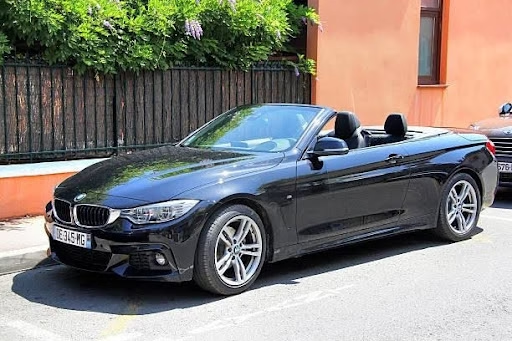
Choose a BMW repair shop by checking certifications, reviews, and parts quality. The right shop protects your BMW’s performance and long-term reliability.
As one of Texas’s largest metropolitan areas, Dallas is home to a large population of commuters, professionals, and automotive enthusiasts. The city serves as a major corporate hub, hosting the headquarters of numerous national and international companies. The region’s high temperatures and extensive daily driving can make proper maintenance particularly important for preserving BMW performance and reliability.
Finding a qualified specialist is essential, especially for owners seeking trusted BMW 4 Series service in Dallas from a shop that truly understands the brand. Here are the things to check before you choose a BMW repair shop.
Check Technician Certifications
Certifications separate qualified BMW specialists from general mechanics. Always confirm who is actually working on your vehicle.
Why BMW-Specific Training Matters
BMW vehicles use proprietary software and precision-engineered components. A general mechanic may misdiagnose faults that a BMW-trained technician catches immediately. Specialized training reduces errors and unnecessary part replacements.
Look at Customer Reviews and Reputation
Reviews reveal what certifications cannot. Check Google, Yelp, and BMW owner forums for honest feedback.
- Look for shops with a high volume of consistent reviews.
- Watch for repeated complaints about surprise charges.
- Positive mentions of transparent estimates are a strong trust signal.
Confirm BMW-Approved Diagnostic Equipment
Generic scanners miss BMW-specific fault codes entirely. The right diagnostic tools make accurate repair possible.
Why Dealer-Level Diagnostics Matter
BMW vehicles require tools like ISTA to read fault codes correctly. Shops investing in this equipment work on BMW models regularly. Always ask what diagnostic system the shop uses before booking.
Ask About Parts Quality
The quality of parts directly affects how long your repair lasts. Never assume every shop uses the same standard.
- OEM parts match factory specifications exactly.
- Quality aftermarket brands like Febi or Meyle work for some components.
- Avoid shops that cannot clearly explain which brand of parts they install.
OEM vs. Aftermarket Parts
Knowing the difference helps you make a smarter repair decision. Not all parts carry the same reliability or fit.
OEM parts match exact factory tolerances and carry manufacturer backing. They are the safest choice for performance-critical components. Quality aftermarket parts are acceptable for non-critical repairs when sourced from reputable brands.
Dealer vs. Independent Repair Shop
Choosing between a dealer and an independent shop is a common decision for BMW owners. Dealers offer factory-trained technicians and guaranteed OEM parts but charge significantly higher labor rates. A qualified independent shop offering BMW 4 Series service in Dallas can deliver the same diagnostic accuracy and parts quality at a more competitive price point.
Independent shops also tend to provide faster turnaround and more personalized service. The key is verifying their certifications, equipment, and parts sourcing before committing. Price alone should never be the deciding factor when servicing a precision vehicle.
Check Repair Warranty
A reliable shop always backs its work in writing. A warranty protects you if the same issue returns after repair.
What a Good Warranty Should Cover
- Parts replaced during the repair.
- Labor completed by the technician.
- A clear return process if the issue reoccurs.
Most reputable independent shops offer at least 12 months or 12,000 miles on parts and labor. Avoid any shop that cannot provide warranty terms in writing. This is a basic standard at every trustworthy repair facility.
Steps to Take Before Booking a BMW Repair Shop
Follow these steps to avoid costly mistakes when selecting a shop.
- Research technician certifications and BMW-specific training before calling.
- Check reviews across multiple platforms for consistent, honest feedback.
- Confirm the shop uses BMW-approved diagnostic tools like ISTA.
- Ask whether OEM or quality aftermarket parts are used for your repair.
- Request a written estimate before authorizing any work.
- Verify the shop offers a written warranty on parts and labor.
Key Takeaways
- Verify technician certifications and BMW-specific training before choosing any shop.
- Customer reviews reveal pricing, honesty, and repair accuracy better than advertising.
- BMW-approved diagnostic tools are essential for identifying faults correctly.
- OEM parts are the safest choice for performance-critical BMW components.
- A written repair warranty of at least 12 months signals a trustworthy shop.
- Specialists in European vehicles understand BMW systems far better than general mechanics.
- Always get a written estimate and confirm parts quality before repairs begin.