

Mental Toughness, Risk Management, and Split-Second Decision-Making in Professional Motorsport
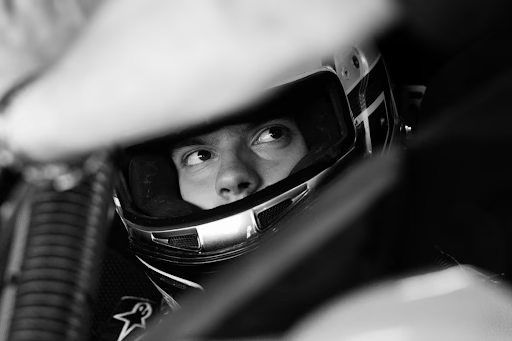
Imagine sitting in a racing car a few minutes before the start. The engines are roaring, the crowd is loud, and your heart is pounding against your chest. Thousands of people are watching.
From the outside, racing looks like a test of speed and machines. Behind the helmet is a person who must stay calm, think clearly, and make smart choices again and again. Mental strength, wise risk-taking, and quick decisions are what often separate great drivers from good ones. The race is won on the track, but it begins in the mind.
Mental Toughness: Staying Strong When Pressure Is High
Mental toughness is the ability to stay focused, calm, and determined when things get hard. In motorsport, the pressures are huge. Drivers face high expectations from teams, sponsors, and fans. They live in the public eye. Seasons are long and tiring, with travel, little rest, and constant demands. And all the while, they know that danger is always close.
So how do drivers stay strong? Many build routines that help them feel steady. Some use slow breathing to calm the body before a race. Others use visualization, which means picturing the track, the turns, and their best lap in great detail. This prepares the mind so that the real thing feels familiar. Drivers also learn to let go of mistakes quickly. A slip in the first lap cannot be changed, but the next turn still can.
Think of a driver who makes an error early in a race and drops several places. The mind may scream, “It’s ruined!” But a tough driver takes a breath, resets, and says, “Focus on the next corner.” That simple choice can turn a bad start into a strong finish.
Understanding Risk: The Fine Line Between Brave and Reckless
Racing always carries danger. The goal for drivers is not to remove fear but to manage it wisely. Fear is useful, because it keeps us alert. The trick is to listen to it without letting it take control. If you would like to learn how to build a calmer, more focused mind in your own daily life, you can explore myoverwell for simple tools that support emotional balance.
Every lap, drivers weigh risk against reward. A bold overtake might win a place, but it might also end in a crash. Pushing the car to its limit might save a second, but it might also damage the tires. Team strategy plays a role too. Engineers and drivers talk about when to attack, when to save fuel, and when to hold position.
Experience helps a lot here. Veteran drivers have seen many situations, so they judge more clearly when to push and when to wait. It is important to understand that smart risk-taking is not the same as blind courage. It is built on preparation, practice, and awareness. A brave driver and a reckless driver may both take a chance, but only one of them has done the homework.
Split-Second Decisions: How the Brain Reacts at Speed

At racing speeds, there is almost no time to think. A decision that takes a normal person several seconds must be made in a fraction of one. So how does the brain manage it?
First, attention narrows. Drivers focus on what matters most, such as the car ahead, the edge of the track, and the feel of the wheel. Everything else fades into the background. Second, reaction time matters. The brain and body must work together quickly, and training makes this link faster and smoother.
Most of all, years of practice turn complex choices into quick instincts. Drivers learn to recognize patterns without stopping to analyze them. For example, they can sense when the car is starting to lose grip through tiny changes in the steering and the seat. This is not magic. It is the brain using stored experience at lightning speed. Great drivers rely on both gut feeling and training. The gut feeling is often the result of thousands of hours of learning, packed into a split second.
Handling Fear, Stress, and the Weight of Mistakes
Even the strongest drivers feel fear, stress, and regret. After a serious crash, getting back into the car can be frightening. Before a big race, nerves can make sleep difficult. And a costly mistake can feel heavy for days.
The best drivers do not pretend these feelings do not exist. They face them. Many work with coaches, sports psychologists, and trusted teammates who help them talk through worries and find calm. They practice staying present, which means focusing on what they can do right now instead of dwelling on the past or fearing the future.
This is an important lesson. Admitting stress and asking for support is not a weakness. It is a strength. A driver who takes care of their mind is better prepared to take care of their car. Just as the machine needs maintenance, so does the person behind the wheel.
What Everyday Life Can Learn From the Racetrack
You may never drive a race car, but the lessons of motorsport can help in ordinary life. Staying calm under pressure helps in a tough meeting or a hard exam. Preparing well makes big events less scary. Managing risk wisely helps when facing life choices, like changing jobs or starting something new. And recovering quickly from setbacks keeps us moving when things go wrong.
Try to see your own challenges as a kind of race. Not every day will be smooth, and some turns will be sharp. But steady focus and a willingness to learn can carry you through.
Speed may thrill the crowd, but it is a strong, clear, and flexible mind that carries a driver across the finish line.