

Realism & Safety: Why Productions Choose Armored Trucks for High-Stakes Scenes
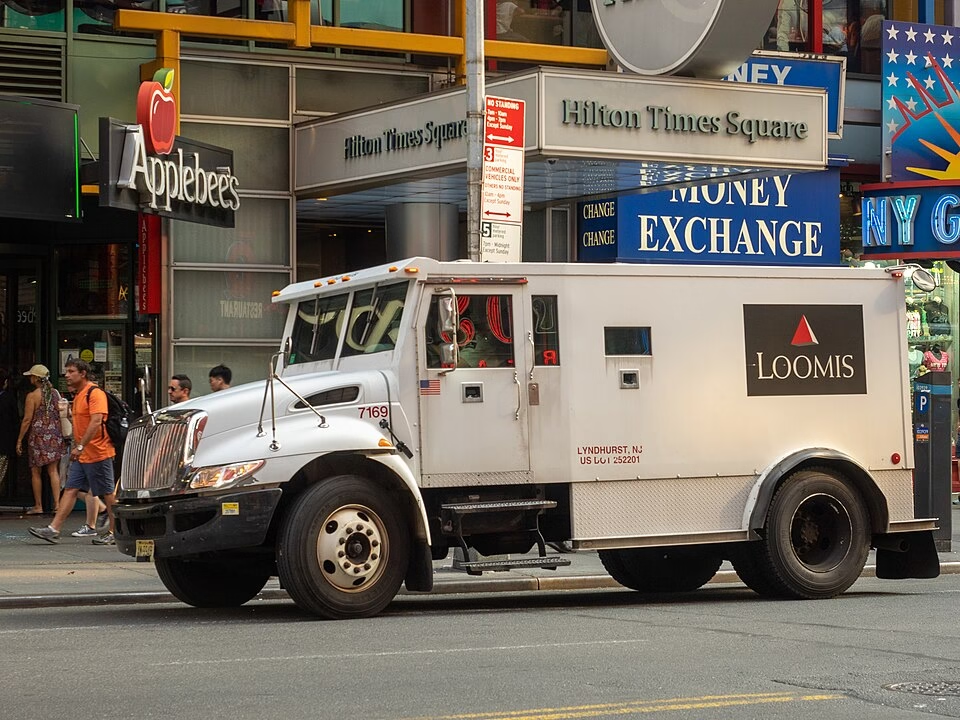
The tension of a heist gone wrong, the suspense of a high-value transport under threat, the intensity of a tactical extraction—these cinematic moments hinge on believability. When armored trucks appear on screen, audiences immediately understand the stakes. These formidable vehicles carry decades of real-world associations with security, danger, and valuable cargo, making them powerful visual shorthand for high-stakes scenarios. Yet their value extends far beyond mere aesthetics. For production teams navigating the complexities of action filmmaking, armored trucks offer a unique combination of authentic design, inherent safety features, and operational reliability that transforms challenging sequences into compelling cinema while protecting everyone involved in bringing those visions to life.
How Realistic Armored Vehicles Drive Suspense and Tension
Armored trucks possess an inherent dramatic presence that few vehicles can match. Their reinforced construction, small windows, heavy doors, and purposeful design immediately signal that something valuable—and potentially dangerous—is at play. This visual language operates on a subconscious level, priming audiences for conflict and heightening emotional investment before a single line of dialogue is spoken.
The authenticity of genuine armored vehicles amplifies this effect considerably. Real armored trucks feature design elements born from decades of security evolution: bullet-resistant glass with specific thickness and tinting, reinforced door hinges capable of supporting substantial weight, specialized locking mechanisms that look and sound distinctly different from standard vehicles, and robust construction details that close-up cinematography captures with unforgiving clarity. When actors interact with these authentic elements—struggling with genuinely heavy doors, peering through actual security glass, or operating real locking systems—the physicality reads as legitimate, deepening audience immersion.
CGI and modified standard vehicles simply cannot replicate these cumulative details convincingly. Audiences may not consciously identify what feels wrong about fake armored trucks, but the uncanny valley effect undermines tension and pulls viewers out of the story at precisely the moments when engagement matters most. Authentic vehicles eliminate this risk entirely, grounding high-stakes scenes in tangible reality that audiences instinctively trust.
On-Set Safety Protocols and Trained Professionals
While armored trucks contribute visual authenticity, their real-world protective features also provide significant safety advantages during action sequences. The reinforced steel frames, impact-resistant construction, and robust engineering that define these vehicles in security applications translate directly to enhanced protection during demanding filming scenarios involving stunts, controlled collisions, and pyrotechnic effects.
An armored truck rental provides both authenticity and confidence for high-stakes productions. Professional providers supply comprehensive safety support extending far beyond vehicle delivery. This includes precision drivers specifically trained on armored vehicle handling characteristics, ongoing mechanical inspections throughout production periods, detailed safety briefings for cast and crew, and immediate technical support when unexpected challenges arise.
The drivers represent critical safety components often underestimated by productions unfamiliar with specialized vehicles. Armored trucks exhibit unique operational characteristics due to their substantial weight, reinforced construction, and limited visibility. Braking distances extend considerably compared to standard vehicles, turning radiuses differ significantly, and visibility through small security windows requires constant awareness and positioning adjustments. Professional drivers internalize these characteristics through extensive training and experience, enabling them to execute precise choreography safely across multiple takes while maintaining constant communication with stunt coordinators and directors.
Safety protocols encompass environmental assessment as well. Experienced providers evaluate filming locations for adequate load-bearing capacity, identify potential hazards that armored vehicle weight or dimensions might create, and recommend modifications ensuring safe operations. This proactive approach prevents accidents, equipment damage, and costly production delays that inadequate planning might otherwise cause.
Modern vs. Period-Correct Vehicle Options
Temporal authenticity matters enormously in productions spanning different eras. Armored vehicle design has evolved dramatically over decades, with each period featuring distinctive styling, technology, and security approaches that knowledgeable audiences recognize. Period crime dramas set in the 1970s require vintage armored cars with era-appropriate bodywork, paint schemes, and security features reflecting that decade’s transportation technology. Contemporary thrillers demand current-generation vehicles showcasing modern design aesthetics, updated security systems, and the streamlined profiles characteristic of today’s armored transport industry.
Military versus civilian distinctions add another layer of selection criteria. Civilian cash-in-transit vehicles typically feature corporate branding, white or light color schemes, and styling optimized for urban environments. Military or tactical armored vehicles showcase camouflage patterns, weapon mounting points, reinforced bumpers, and aggressive designs signaling combat readiness. Production designers carefully match these aesthetic choices to narrative requirements, ensuring that vehicle selection reinforces story context rather than contradicting it.
Professional armored truck providers maintain diverse fleets spanning multiple eras and styles, enabling precise matches for any production’s storytelling needs. This variety allows productions to find vehicles that authentically represent specific time periods, operational contexts, and narrative tones without compromising on safety features or operational reliability.
Reliability Partners for Action Crews
Complex action productions demand more than just equipment—they require partners who understand the unique pressures and unpredictable challenges of filming high-intensity sequences. Experienced armored vehicle providers bring production-tested expertise that transforms potential obstacles into manageable logistics, allowing creative teams to focus on storytelling rather than troubleshooting mechanical or coordination issues.
This partnership begins during pre-production planning, where vehicle specialists collaborate with directors, stunt coordinators, and production designers to align creative vision with practical possibilities. They might suggest alternative vehicle models that photograph better under specific lighting conditions, recommend modifications enhancing period accuracy without compromising safety, or propose backup plans addressing potential weather or location challenges. This consultative approach prevents problems before they arise and often uncovers creative opportunities that initial planning might have overlooked.
The reliability extends throughout filming as well. Professional providers assign dedicated support personnel to major shoots, enabling rapid responses to mechanical needs, last-minute adjustments, or unexpected schedule changes. They maintain backup vehicles for extended productions, coordinate complex multi-location logistics, and handle insurance requirements with established relationships that streamline traditionally cumbersome processes.
This comprehensive support proves especially valuable during the inevitable unexpected moments that characterize action filming. When schedules shift, weather changes plans, or creative inspiration demands last-minute modifications, having experienced partners who can adapt quickly makes the difference between maintaining momentum and losing critical production days.
Frequently Asked Questions
What makes armored trucks more suitable than modified regular vehicles?
Authentic armored trucks feature genuine reinforced construction, bullet-resistant glass, specialized security hardware, and design proportions that cannot be convincingly replicated through modifications. These details matter enormously in close-up cinematography and audience perception, with authentic vehicles delivering visual credibility that fake alternatives simply cannot match.
Can productions customize armored trucks with fictional branding?
Yes, professional providers routinely accommodate temporary branding including magnetic signage, removable decals, custom license plates, and other modifications establishing fictional universes. These changes preserve underlying vehicles for future use while giving productions complete creative control over on-screen appearance and establishing authentic-looking fictional companies or agencies.
How do armored trucks perform in chase or collision sequences?
Armored trucks’ reinforced construction provides stability and protection during action sequences, but their substantial weight creates unique handling characteristics requiring specialized driver expertise. Professional precision drivers trained specifically on these vehicles ensure safe, repeatable performance across multiple takes while executing complex choreography that looks dramatic yet remains completely controlled.
What advance planning do armored truck sequences require?
Timeline requirements vary based on sequence complexity and vehicle specificity. Simple appearance shots might be arranged weeks ahead, while elaborate action sequences involving stunts, multiple vehicles, or period-specific models often need months of advance planning. Early consultation with experienced providers helps establish realistic timelines and identify potential challenges before production commitments solidify.
Are there location restrictions for filming with armored trucks?
Weight and size considerations affect location suitability. Armored trucks require adequate road surfaces, sufficient clearances for their height and width, and appropriate turning radiuses for maneuvering. Professional providers conduct location assessments identifying any limitations and recommending solutions ensuring safe, efficient operations within chosen filming environments.
Conclusion: Authentic Scenes Create Audience Trust
The choice to incorporate genuine armored trucks into high-stakes scenes reflects commitment to authenticity that sophisticated audiences instinctively recognize and reward with deeper engagement. These specialized vehicles deliver visual credibility that grounds dramatic moments in tangible reality, transforming potentially generic action sequences into memorable cinematic experiences that resonate emotionally and linger in viewer memory.
Beyond aesthetics, armored trucks provide the safety infrastructure and operational reliability that complex action productions demand. Their robust construction protects cast and crew during demanding sequences, while professional support systems ensure smooth logistics that keep productions on schedule and on budget. This combination of visual authenticity and practical functionality makes armored trucks indispensable tools for directors and production designers committed to excellence.
In an entertainment landscape where audiences have seen everything and trust nothing by default, earning credibility through meticulous attention to detail separates exceptional productions from forgettable ones. Armored trucks represent that commitment to getting details right—not just for their own sake, but because authentic scenes create the audience trust that transforms viewers into invested participants in the stories unfolding before them.
