

The Mental Game: How Racing Drivers Train Their Focus
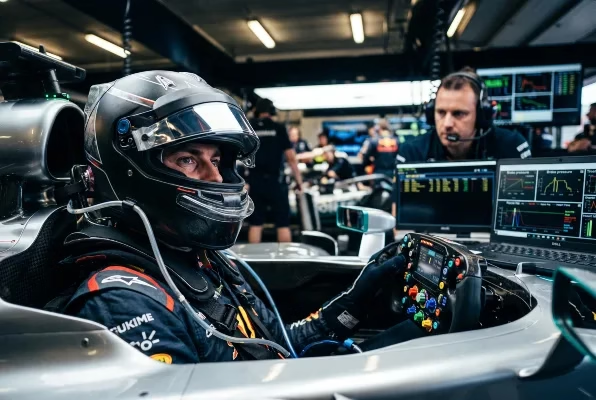
A Formula 1 car carries around 300 sensors, and engineers can study every brake application, throttle input and steering angle long after the chequered flag. Yet that data only records what the driver chose to do, and those choices are made at speeds where a single lapse costs tenths of a second or ends a race in the barriers.
That is why the driver’s mind receives the same scrutiny as the car. Teams treat concentration as a trainable skill, so the work begins long before a driver lines up on the grid.
What Makes Focus So Hard to Hold in a Race Car
A Grand Prix can run for up to two hours, and drivers manage braking zones, tyre wear, radio calls, and steering wheel settings throughout. Each lap demands fresh decisions because grip levels, fuel load, and distance to rivals keep changing. The steering wheel alone has more than 20 buttons, switches, and rotary dials, and drivers adjust several of them in a single lap.
The physical load adds to the mental one. Braking forces of around 5g push the body hard against the belts, while cockpit heat, layers of fire-resistant race gear, and the constant effort of resisting g-forces lead to heavy fluid loss through sweat. That kind of fatigue makes it harder to stay sharp in the closing laps, so mental training and physical conditioning go hand in hand.
How Drivers Train Their Focus Away From the Track
Mental training in motorsport combines technology, physical drills, and psychology, each targeting a different part of concentration. Some build a circuit memory, while others sharpen reactions or settle nerves before a session.
Three methods stand out in driver programmes, from karting academies to Formula 1, and each one trains attention in its own way.
Simulator Sessions
Team simulators recreate circuits using laser-scanned track data, so drivers can learn braking points, kerbs and camber before arriving at a venue. Once those reference points become automatic, the driver has more mental capacity for traffic, strategy and changing weather.
Reaction and Vision Drills
Light boards such as the Batak system ask drivers to strike illuminated targets as quickly as possible, which trains hand-eye coordination and peripheral awareness. Coaches also add thinking tasks during physical exercise, so the brain learns to make decisions while the heart rate is high.
Visualisation and Breathing
Drivers rehearse laps in their heads, running through each braking point, gear change, and apex with their eyes closed, and they can compare a timed lap to a real one. Controlled breathing is paired with this before a session, because a slower, steadier rhythm keeps nerves in check on the grid.
Recovery, Sleep and Nutrition Between Races
On-track concentration depends on what happens off it, and the F1 calendar crosses multiple time zones within a single season. Tiredness is a real concern in that schedule, and it applies to everyday motorists too, as the DVLA’s guidance on tiredness for drivers sets out how excessive sleepiness can affect anyone behind the wheel.
Diet also plays a part in driver preparation, and the growing range of nootropic supplements means athletes now have more nutrition options to research. The areas below show where drivers and their nutritionists direct attention between events.
- Sleep scheduling: Drivers adjust bedtimes in the days before long-haul races, so their body clock moves closer to local session times. Light exposure and fixed wake-up times are common tools in that process.
- Hydration plans: Fluid intake is planned around practice, qualifying and the race, and F1 cars carry a drinks system the driver can use on track. Weighing before and after sessions also shows how much fluid the driver has lost.
- Meal timing: Nutritionists schedule meals so drivers aren’t hungry or heavy when they climb into the car. On race day, they choose familiar, easily digested foods so nothing unexpected affects the session.
- Supplement choices: Supplements are meant to complement a normal diet, helping keep nutrient intake steadier when travel and unfamiliar food disrupt mealtimes. Options such as vitamin D, magnesium, omega-3 fatty acids or citicoline may feature, and every product, from a standard multivitamin to a citicoline supplement, is checked against anti-doping rules first.
Focus Is Built Long Before the Lights Go Out
Drivers also train how to reset after an error, because a missed apex in the first sector can spoil the rest of a lap if the mind keeps replaying it. Coaches use short cues, like a word or a breath at the next straight, so the driver lets the mistake go and commits to the next corner.
That ability to move on, lap after lap, separates a quick qualifying run from a complete race weekend. For anyone watching from the grandstand, each clean lap is the visible result of hours of preparation that no onboard camera ever records.