

Volkswagen Polo car leasing: is the Polo a practical choice for everyday driving?
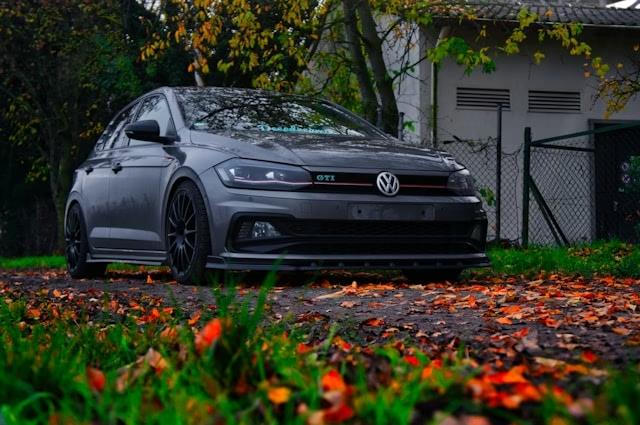
The Volkswagen Polo has long appealed to drivers who want a compact car without giving up the comfort, equipment and practicality associated with a larger hatchback. It is small enough for busy town centres but still capable of handling commuting, motorway journeys and regular family use.
When comparing Volkswagen Polo car leasing, you should consider more than the advertised monthly rental. Your annual mileage, preferred transmission, required equipment, initial rental and contract length will all affect whether the Polo represents good value for your circumstances.
The Polo is around 4.1 metres long and has a 351-litre boot, giving you more usable space than its compact appearance may suggest. Its 5-door layout also makes it easier to fit child seats, load shopping or carry adult passengers than a smaller 3-door city car.
It remains a familiar sight on UK roads. Society of Motor Manufacturers and Traders data shows that more than 716,000 Volkswagen Polos were registered for use in the UK during 2025. This placed it among the country’s most common car models.
Is the Volkswagen Polo suitable for everyday driving?
For many drivers, the Polo offers a sensible balance between size, comfort and running costs. You get a car that should be easy to position on narrow roads and in tight parking spaces, without choosing something that feels too limited for longer journeys.
The Polo may suit you if:
- You commute through towns or cities.
- You regularly use public or workplace car parks.
- You need space for 4 adults on occasional journeys.
- You want a practical first car or household second car.
- You make a mixture of short trips and motorway journeys.
- You prefer a petrol car to a larger SUV or electric vehicle.
It may be less suitable if you regularly carry 5 adults, need a large boot for work equipment or want a high driving position. In those circumstances, a Volkswagen Golf, T-Cross or another larger model may be more appropriate.
How practical is the Polo in towns and cities?
Compact dimensions are one of the Polo’s main advantages. At approximately 4,074 mm long and 1,751 mm wide without its door mirrors, it should fit into most standard UK parking spaces without causing the difficulties associated with larger SUVs.
Its turning circle is approximately 10.6 metres. This can help when you are navigating residential streets, multi-storey car parks or restricted urban areas.
Parking technology varies according to the model and specification. Depending on the vehicle you choose, equipment may include parking sensors, a reversing camera or automated parking assistance.
Do not assume that every vehicle includes the same features. Check the exact specification shown on your quotation, particularly if parking assistance is important to you.
Can the Volkswagen Polo work as a small family car?
The Polo can work well for a small family, especially if most of your journeys involve 2 adults and 1 or 2 children. The rear doors provide straightforward access to the back seats, while the split-folding rear bench gives you some flexibility when carrying longer items.
Its 351-litre boot should accommodate a weekly food shop, several small suitcases or a compact pushchair. However, you should check your own equipment before committing to an agreement. Larger travel systems can take up most of the available boot space.
You should also confirm that your child seats fit comfortably and can be installed correctly. A test drive gives you an opportunity to check rear legroom, headroom and access rather than relying entirely on measurements.
If you frequently travel with 5 people and luggage, the Polo may begin to feel restricted. A larger hatchback or compact SUV could provide a more comfortable long-term solution.
Is the Polo comfortable on longer journeys?
Although the Polo is commonly viewed as a town car, it can also handle longer A-road and motorway journeys. Its cabin, seating position and general refinement can make it feel more substantial than some smaller cars.
Your choice of engine, trim and wheel size can affect comfort. Larger alloy wheels may improve the vehicle’s appearance but can create a firmer ride and make replacement tyres more expensive.
Before selecting a sportier model, consider the roads you use most often. If your journeys include uneven urban streets, speed humps and poorly maintained surfaces, a version with smaller wheels may provide a more comfortable experience.
Cruise control, smartphone connectivity and driver assistance systems can also make longer trips easier. The equipment included will depend on the particular model, so compare the specification rather than choosing a trim based only on its name.
Should you choose a manual or automatic Polo?
First Vehicle Finance lists Polo models with both manual and automatic transmissions, subject to current stock and availability.
A manual gearbox may suit you if you want a straightforward specification and are comfortable changing gears in traffic. It may also have a lower monthly rental than a comparable automatic model.
An automatic Polo can make stop-start journeys and congested commutes more relaxing. However, the monthly rental and fuel economy may differ, so you should compare like-for-like quotations.
Consider how long you expect to keep the vehicle and how often you drive in heavy traffic. Paying an additional £20 per month for an automatic would add £960 across a 48-month agreement, excluding any difference in the initial rental. The extra cost may be worthwhile if it makes your daily commute significantly easier.
Which Volkswagen Polo trim should you choose?
Available trims can change, but the Polo range may include versions such as Life, Match, R-Line, Edition 50 and Black Edition. Each provides a different balance of equipment, appearance and monthly cost.
A lower or mid-range trim may be the most practical choice if you mainly need dependable everyday transport. Higher trims may add larger alloy wheels, upgraded lighting, climate control, heated seats or sportier exterior details.
Before moving to a more expensive model, ask yourself:
- Will you use the additional equipment regularly?
- Does the upgraded trim improve comfort or mainly change the appearance?
- Will larger wheels increase tyre replacement costs?
- Is the higher initial rental affordable?
- How much will the upgrade add across the full contract?
A difference of £30 per month amounts to £1,440 over 48 months. Comparing the total cost can help you decide whether the additional features justify the expense.
How should you structure your Polo lease?
You should choose an agreement based on realistic use rather than the lowest headline rental.
Check the following before applying:
- Initial rental: A larger upfront payment can reduce the monthly rental, but it does not create ownership in the vehicle.
- Contract length: Common terms include 24, 36 and 48 months, subject to the agreement available.
- Annual mileage: Estimate your commuting, personal journeys and holidays carefully.
- Excess mileage charge: You may be charged for each mile driven above the agreed allowance.
- Maintenance: Check whether servicing and tyre replacement are included or available for an additional monthly cost.
- Early termination: Ending an agreement before the scheduled date can be expensive.
Choosing an unrealistically low mileage allowance may reduce the monthly rental but leave you facing excess mileage charges when the car is returned.
Review your previous MOT certificates or servicing records to establish how many miles you normally cover each year.
What is included in a Polo lease?
The exact inclusions will depend on your quotation and finance provider. A new Polo arranged through First Vehicle Finance normally comes with the applicable UK manufacturer warranty, while optional maintenance packages may be available.
Personal customers will usually use Personal Contract Hire, while eligible business customers may use Business Contract Hire. Both are subject to status and lender criteria.
First Vehicle Finance Limited is a credit broker, not a lender. Finance is subject to status, and credit checks may affect your credit score. You should read the quotation and agreement carefully before proceeding.
What happens when the agreement ends?
At the end of a Contract Hire agreement, you return the Polo rather than own it. The vehicle will be inspected, and its mileage and condition will be checked.
Normal deterioration is generally treated as fair wear and tear. Damage caused by an accident, neglect or poor-quality repairs may result in additional charges. Missing keys, incomplete service records and damaged accessories can also create costs.
The vehicle should be returned in line with the applicable BVRLA Fair Wear and Tear guidelines. Inspecting it around 10 to 12 weeks before collection gives you time to arrange any necessary repairs.
Is the Volkswagen Polo the right choice for you?
The Polo can be a practical everyday car if you want compact dimensions, useful boot space and enough comfort for a mixture of town and motorway driving. It is particularly well suited to commuters, new drivers, couples and small families that do not require the space of a larger car.
Your decision should be based on the full agreement rather than the monthly rental alone. Compare the trim, transmission, mileage allowance, initial rental and maintenance provision before applying.
To find a Volkswagen Polo that fits your budget and daily driving needs, speak to First Vehicle Finance. The team can help you compare available models and arrange a personal or business lease with a contract term and mileage allowance suited to you.
Photo by Patrick Fusenich on Unsplash