

What Grease for Wheel Bearings? A Mechanic's Guide to Choosing the Right Type
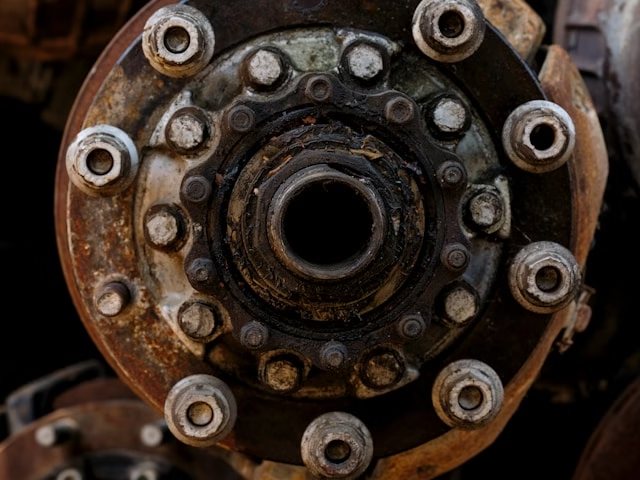
I’ve been under cars for six years at a shop in Fullerton, CA, and the number of times I’ve seen someone grab the wrong grease for wheel bearings is… way too many. It’s one of those jobs that seems simple until you’re standing in front of ten different grease options at the parts store, completely lost.
The truth is, picking the right wheel bearing grease isn’t complicated if you know what to look for. There are a few key specs that matter, and once you understand them, you’ll never waste time second-guessing yourself again.
BIGGEST TIP: Use NLGI Grade 2 grease for most wheel bearings – it’s the industry standard for a reason
NLGI Grade: Why 2 is Standard
When you’re looking at grease, the first thing you need to know is the NLGI grade. For wheel bearings, you want NLGI 2, and honestly, that covers about 99% of what you’ll work on.
NLGI 2 has the consistency of thick peanut butter or vegetable shortening – soft enough to flow into bearing cavities and coat the rollers, but thick enough to stay put and not leak out. It’s the sweet spot between protection and workability.
Higher grades (NLGI 3 or above) are too stiff for wheel bearings. Lower grades (NLGI 1) are too thin and won’t hold up under the pressure that wheel bearings deal with. Stick with 2, and you’re golden.
Grease Type: Lithium vs. Synthetic vs. Specialty
Now that you know the grade, let’s talk about what the grease is actually made of. This is where the real decision comes in.
Lithium-Based Grease (Most Common)
Lithium grease is the workhorse of the industry. It’s reliable, affordable, and does the job well for standard wheel bearing applications. When you see “GC-LB rated” on a container, that means it’s approved for automotive wheel bearings, and it’s made with lithium complex thickeners.
For mobile work in Orange, CA, I’ll be honest – most of the time I’m reaching for lithium. It handles normal driving conditions, temperature swings, and the occasional water splash just fine. Back at the Fullerton shop, we used it on everything from Corollas to Tundras.
Synthetic Grease
Synthetic wheel bearing grease is your upgrade option. It’s typically more expensive, but it lasts longer and handles extreme temperatures better than lithium. If you’re working on a vehicle that sees serious heat – a race car, a truck that tows heavy loads, or anything that regularly runs at the high end of normal operating temps – synthetic makes sense.
The key benefit is oxidation resistance. Synthetics break down more slowly under heat, which means the grease stays effective longer and you’re not replacing bearings as often.
Silicone-Based Grease
Silicone grease is for high-temperature applications where lithium would start to break down. It’s stable at much higher temps than lithium or synthetic. If you’re doing a wheel bearing repack on something that operates in extreme heat conditions, silicone-based is your answer.
Moly-Grease
Some manufacturers – Ford especially – require moly-grease for wheel bearings. Moly contains molybdenum disulfide, an anti-wear additive that provides extra protection under pressure. If your service manual calls for moly, use moly. Don’t substitute. This is one of those areas where the OEM spec matters.
What About Marine and Trailer Applications?
If you’re repacking wheel bearings on a boat trailer or anything that spends time in water , marine-grade grease is worth the extra cost. These are formulated with water-resistance additives that keep the grease from washing out or emulsifying.
Regular lithium grease will break down faster if it’s constantly exposed to saltwater or freshwater. Marine grease is thicker and stickier, which helps it cling to the bearing even when things get wet.
GC-LB Rating Explained
You’ll see the letters GC-LB on wheel bearing grease containers. Here’s what they mean: GC stands for automotive wheel bearing applications, and LB stands for lithium complex. That “GC-LB” stamp tells you the grease is specifically designed and tested for the job.
When you’re shopping, look for that rating on the label. It’s your guarantee that the grease has been validated for wheel bearing use.
The Critical Rule: Never Mix Greases
This is non-negotiable. Do NOT mix lithium, calcium, sodium, or barium complex greases together. Different base oils and thickener systems can react badly with each other, causing separation, viscosity breakdown, or even sludge formation inside the bearing.
When you’re switching from one grease type to another, clean out all the old grease first. I mean really clean it – use a brush, wipe out the cavity, get it as dry as possible. Then pack in the new grease. A buddy of mine found this out the hard way about three years ago when he mixed silicone and lithium on a customer’s wheel bearing. The bearing started making noise, and we had to pull it apart and start over. Not fun.
How Much Grease Should You Pack In?
Pack the bearing cavity about one-third to one-half full. More than that, and you’re just creating heat and friction. Less than that, and you won’t have adequate lubrication. The goal is to coat all the rolling elements and allow them to spin freely without unnecessary resistance.
Use a grease gun if you have one, but for wheel bearings, your hands work fine too – just take your time and make sure every roller gets coated.
Checking Your Service Manual
Before you buy a single container, check the vehicle’s service manual. Some vehicles have specific requirements: the grease type, the viscosity, sometimes even a particular brand. Fords are notorious for asking for specific moly-grease types. Toyotas are usually happy with standard lithium.
If you skip this step, you might end up doing the job twice.
FAQ
Can I use multi-purpose grease for wheel bearings?
Multi-purpose grease is not ideal for wheel bearings. Multi-purpose grease is designed to work in a range of applications, which means it’s a compromise product that doesn’t optimize for the specific demands of wheel bearings. Wheel bearing grease is thinner and better formulated for the rolling action of bearings. Use grease that’s specifically rated for wheel bearings – GC-LB grease is your best bet.
How often should I repack wheel bearings?
Wheel bearing repacking intervals depend on driving conditions and the vehicle, but most manufacturers recommend every 30,000 to 50,000 miles for standard driving. Heavy hauling, dusty conditions, or water exposure means more frequent repacking. Some newer sealed bearings don’t need repacking at all – they’re packed for life at the factory. Check your service manual for the exact interval.
What happens if I use the wrong grease?
Using the wrong grease can lead to bearing failure. Grease that’s too thick creates drag and heat. Grease that’s too thin doesn’t provide adequate protection. Wrong base oils can separate or fail under heat. Incompatible greases mixed together can cause sludge. The bearing will wear faster, run hot, and eventually seize or fail. Always use the manufacturer’s specified grease or an equivalent rated for the application.
