

When Your Scooter Stops Being Just a Scooter in the Eyes of New York Law
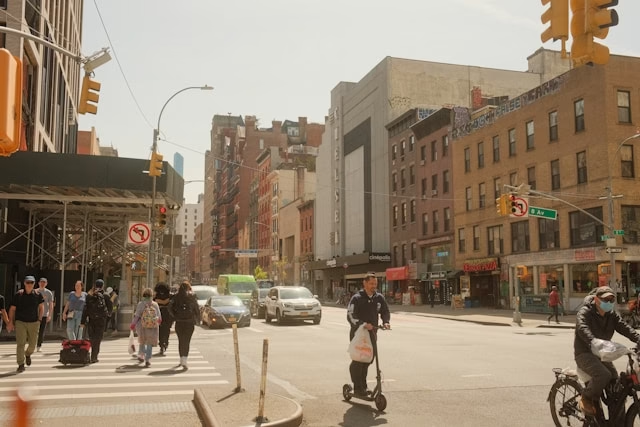
A scooter can feel like one of the simplest ways to get around New York. There’s no giant vehicle to park, squeezing through crowded streets feels easier, and filling a small tank beats watching the numbers climb at a gas pump. You buy it, put on a helmet, and figure you’re basically ready to ride.
Then the paperwork enters the picture. New York doesn’t necessarily look at every scooter, moped, or small motorcycle and see the same thing. Details about how the vehicle is built and how it performs can affect what riders need before legally taking it onto public roads.
That’s where New York moped laws become important. A machine that looks like a basic scooter may fall into a particular legal category, and that classification can determine everything from licensing requirements to where it can be ridden.
Two Wheels Don’t Automatically Mean the Same Rules
Park several small motorized bikes next to each other and they may look almost interchangeable. One might be called a scooter, another a moped, and another a Vespa. Those everyday names are useful in conversation, but they’re not necessarily what determines how New York treats the vehicle legally.
Classification can depend on characteristics such as the vehicle’s capabilities and design. That classification matters because different categories can come with different requirements for registration, licensing, insurance, equipment, and roadway use.
This is where relying on appearance can cause trouble. Two vehicles that look similar may not belong to exactly the same legal category. Even the name used by a seller or manufacturer doesn’t necessarily answer every regulatory question a rider needs to consider. Before heading into traffic, it makes sense to identify what the vehicle legally is rather than assuming that every small two-wheeler follows one convenient set of rules.
The Ride May Start With Some Paperwork
Buying the scooter is only one part of getting it onto the street legally. Depending on how the vehicle is classified, New York may require registration and particular licensing or insurance before the rider can use it on public roads.
Safety equipment can matter too. Helmet requirements may apply, and the vehicle itself may need specific equipment for lawful operation. Lights, mirrors, brakes, and other components aren’t merely accessories when regulations require them. A scooter that runs perfectly well can still create a legal problem if it isn’t properly equipped or documented.
The important point is that requirements aren’t necessarily identical across every type of small motorized vehicle. A friend riding something that looks nearly the same may have different obligations because the underlying classification differs. Checking the actual specifications and current state requirements before riding is considerably easier than learning about the distinction during a traffic stop.
The Street Isn’t the Same as the Bike Lane
Once the paperwork is handled, riders still need to know where the vehicle belongs. A small scooter may physically fit almost anywhere a bicycle does, but that doesn’t mean the law allows it to use the same spaces.
Bike lanes are an obvious source of confusion. Riders may see an open lane beside congested traffic and assume that a smaller motorized vehicle belongs there. Roadway rules can distinguish between bicycles, electric bicycles, mopeds, motorcycles, and other vehicles, so size alone doesn’t establish permission.
Highways and other limited-access roads can create a different issue. Certain vehicles may not be appropriate or permitted there based on their classification or capabilities. Parking can come with its own rules as well. The practical lesson is simple: being able to maneuver into a particular space doesn’t necessarily mean the vehicle legally belongs there. Riders need to match the vehicle’s classification with the rules for the road they’re actually using.
A Classification Mistake Can Follow You
Misclassifying a scooter can seem like a technical mistake until something happens. A traffic stop may expose registration or licensing problems that the owner didn’t realize existed. Improper roadway use can lead to another issue if the vehicle was being operated somewhere its category isn’t permitted.
An accident can make those questions considerably more important. Insurance coverage, vehicle registration, licensing, and how the scooter was being operated may all receive closer attention after someone gets hurt or property is damaged.
That’s why figuring out the classification shouldn’t be left until there’s already a problem. Riders can check the vehicle’s specifications, registration requirements, insurance obligations, and applicable operating rules before using it regularly. The seller saying, “It’s basically a scooter,” isn’t the same thing as knowing how New York legally categorizes it. A few details about the machine can determine a surprisingly large part of the rider’s responsibilities.
Conclusion
Mopeds and scooters earn their appeal by feeling uncomplicated. They’re smaller than cars, relatively easy to maneuver, and can make short city trips far more convenient. But simplicity from the rider’s seat doesn’t necessarily mean simplicity under the law.
New York can treat small motorized vehicles differently depending on their classification. That distinction can affect registration, licensing, insurance, safety equipment, and where the vehicle may be operated. Two machines that look almost identical from across the street may therefore come with different legal requirements.
Before assuming a scooter is ready for New York traffic, riders should find out exactly what they own. Check the specifications, confirm its legal category, and then follow the rules that apply to that category. It’s a small amount of homework compared with discovering halfway through a ride that New York sees your simple little scooter very differently than you do.
Resources: Photo by Kevin Snow on Unsplash