

Why More Travelers Are Swapping Tents for a Dedicated Camping Vehicle
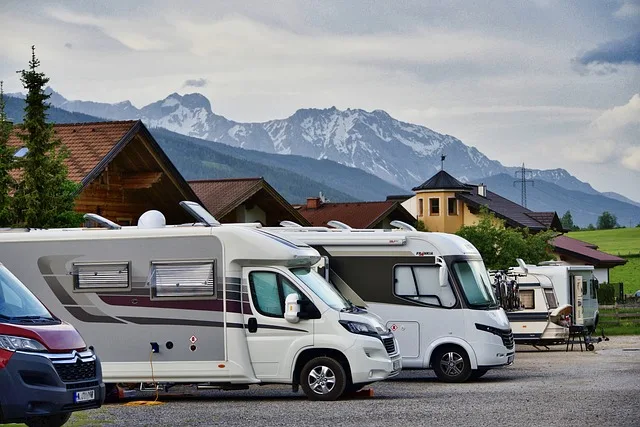
Eventually, the tent ceases to be part of the adventure, and instead becomes the obstacle to it. Putting up in the dark, sleeping on ground that’s wetter than you thought it was, breaking down a damp fly at 6 a.m. – these aren’t character-building moments for most people; they’re reasons to stay home. Which is why so many hardened campers are turning to a camping vehicle, not to somehow go soft, but to go harder.
Setup fatigue is real, and it compounds
If you ask anyone who regularly goes camping why they eventually decided to purchase a camper or trailer, the answer will almost always be: Time. It can take nearly an hour to set up a complete family tent with pegs, poles, rainfly, sleeping equipment, and camp kitchen. And when you’re already exhausted from a four-hour drive down rough dirt roads, that hour multiplies by three.
Mid-hybrid campers have since condensed that process significantly. Most will have you from hitched and towed to camp-ready in under 10 minutes. Pop the roof, drop the stabilizer legs, plug in gas. Boom. The feeling goes a long way after a full day’s travel. But moreover, if you get home at 6 pm on a Tuesday and can still be set up to enjoy your night by 6:15 pm, you’re more likely to actually use the thing on weekends than if setting up requires justifying the effort with a once-a-year long-haul trip.
Getting into tougher country, not avoiding it
A persistent myth about shifting to a camping vehicle is that you lose access. That tent campers can always reach a spot that a towed rig can’t. There used to be some truth in that. There isn’t now.
The technology that’s pushed this change – independent trailing arm suspension, articulating couplings, real ground clearance – means a well-designed off-road camping vehicle can navigate tracks that would have blocked a van less than a decade ago. Even then, the weakest link off-road is usually the tow vehicle. But make no mistake: a well-built, properly-equipped camper can go almost anywhere a car/tent can.
This is important for a certain breed of camper with no time for powered sites. National parks, the high country, and coastal tracks will always be out of reach for anything less than a capable tow vehicle – but you can’t access them on that alone, either. That’s where the right camping vehicle comes in. You need grey water containment, a self-sufficient water supply, and off-grid power (preferably from lithium batteries and decent roof-mounted solar, not a stinky generator) for a night-time camp that’s independent of any hook-up, and a properly engineered camping vehicle can give you just that.
The hybrid option bridges the gap
Transitioning directly from a tent to a full caravan can be daunting. It’s a big cash outlay, and for campers who built their identity around rugged, minimal travel, the idea of a full-size van feels like a different hobby entirely.
That’s where the middle ground has grown. A caravan in the hybrid category gives you hard-walled protection – proper insulation, a real bed, a sealed interior that keeps the dust out on long dirt-road approaches – with a footprint and weight that stays manageable for most medium-sized tow vehicles. You don’t need to buy a new truck. You’re not committing to holiday park sites. You’re just removing the parts of tent camping that were costing you days off the trip.
Year-round camping becomes practical, not heroic
Winter tent camping is feasible, however, it is just uncomfortable enough that too few people tend to do it. You can survive in a -10°C sleeping bag with a good mat, but one night where you’re in a cloud with condensation and you feel the cold air flow through all the seams will most likely postpone your next trip to autumn.
A camping vehicle with diesel heating and reasonable wall insulation changes that equation. The season expands on both sides. Cold areas become nice rather than hell. You get more trips in a year and that was the real aim.
And the same applies to safety. Being off the ground matters more than most tent campers want to admit – not just for wildlife but for flash flooding, rising water, and the simple problem of sleeping on ground that was dry when you arrived and isn’t by 3am.
The cost argument holds up over time
Kitting out a family for camping properly isn’t cheap. The tent alone is a significant outlay, and once you add sleeping gear, a camp kitchen, and lighting, you’re easily looking at several thousand dollars all in. And that’s before any of it starts breaking down, which it will. Zippers go, poles bend, waterproofing loses its effectiveness, and most serious campers end up replacing big chunks of their setup every few seasons whether they planned to or not.
A well-built off-road camping vehicle ages differently. The resale market for quality second-hand rigs is strong, and the structural components, chassis, suspension, cabinetry, tend to outlast anything built from fabric and fibreglass by a considerable margin.
The industry’s growth reflects how people are starting to think about this differently. Record production numbers suggest that more travelers are treating a camping vehicle as durable infrastructure rather than a seasonal purchase.
None of this is an argument against tents. But if you’re camping seriously, regularly, in remote locations, through whatever the weather throws at you, a dedicated vehicle stops feeling like a luxury fairly quickly. It becomes the thing that makes the whole thing actually work.
