

PCV Valve Kit: What It Is, How It Works, and When You Need One
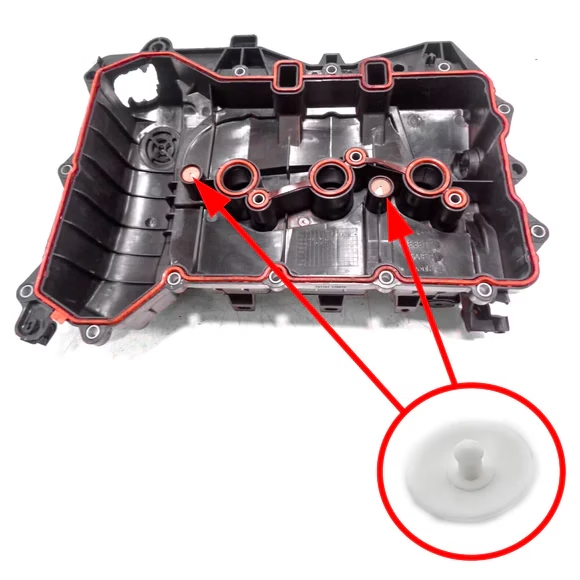
The Positive Crankcase Ventilation (PCV) system is now a critical component fo emissions and engine protection in modern vehicles. The task of this system is very simple: first, it balances crankcase pressure, and then it pipes blow-by gases back to the intake for combustion. Despite its simplicity, PCV failures are increasingly common. The combination of higher operating temperatures, turbocharging, direct injection, and a plastic PCV housing has caused the membranes and seals to wear out prematurely. Thus, the use of a PCV valve kit has turned from a complete engine cover or assembly replacement into a practical repair solution.
What Is a PCV Valve and Its Function
A PCV valve controls the amount of blow-by gases from the crankcase that are allowed to enter the intake manifold. The blow-by gases are caused by combustion pressure leaking past the piston rings. When there is no ventilation, the pressure that has built up in the crankcase pushes oil through seals, leading to more sludge formation.
The valve opens or closes depending on the engine load. At idle or light throttle, the intake vacuum is high, so the valve limits gas flow to avoid a lean mixture. When the engine is under load, the vacuum decreases, and the valve opens further, allowing more ventilation. The latest PCV systems generally employ a diaphragm-based design housed in the valve cover. While this aids in emissions control, it also makes the system more prone to heat, oil contamination, and material aging.
Common Symptoms of a Faulty PCV Valve
A damaged PCV valve or diaphragm causes the loss of proper pressure regulation and air metering. The most noticeable indications are mechanical and obvious rather than subtle. Usual symptoms are as follows:
- seepage of oil from valve cover gaskets, rear main seals, or turbocharged oil lines due to too much crankcase pressure;
- poor idling, firing problems, or hissing sounds from air leaks;
- increased oil consumption due to vacuum leaks;
- engine warning light with too lean mixture or crankcase pressure-related faults.
- PCV problems, when ignored, can be a major cause of damage to turbochargers, catalytic converters, and intake components.
What a PCV Valve Kit Includes
A PCV valve kit is designed to restore the original assembly’s function rather than replace it entirely. While contents vary by engine, most kits include:
- a replacement PCV diaphragm made from heat-resistant elastomer;
- sealing rings or gaskets to restore crankcase and vacuum integrity;
- caps, covers, or retainers specific to the PCV housing design;
- supporting components needed to reinstall the system correctly.
These kits target the known failure points of specific engines and eliminate the weakest factory materials.
How to Replace or Repair a PCV Valve Using a Kit
Repair begins with confirming PCV failure through vacuum testing, smoke testing, or visual inspection. Once confirmed, the engine covers and intake components are removed to access the PCV housing, which is typically located on the valve cover.
The damaged diaphragm and sealing elements are removed, and the housing is thoroughly cleaned of oil residue and carbon deposits. Then, new parts from the kit are installed in the same airflow direction as the originals. Proper seating of the parts is crucial, as improper installation can result in either excessive ventilation or vacuum leaks. After the assembly process, the engine is inspected for idle stability, proper vacuum operation, and absence of oil leakage. In most cases, the ECU doesn’t need to be recalibrated.
Benefits of Using a Repair Kit Instead of Full Replacement
Using a PCV valve repair kit offers clear advantages over full component replacement. The cost difference is significant, especially on engines where the PCV is integrated into an expensive valve cover. Labor time is reduced because fewer components must be removed. Repair kits also avoid introducing new plastic housings that may fail again under the same heat and pressure conditions.
High-quality kits are engineered to OEM specifications while using improved materials. This maintains factory crankcase pressure control and emissions performance without altering engine calibration. For many engines, a repair kit effectively resolves the root cause of PCV failure, rather than replacing the entire assembly.
A PCV valve kit is a targeted, effective remedy for restoring crankcase ventilation in modern engines. It addresses the usual failure factors, like diaphragm wear and seal hardening, without changing any other parts that are still fine. When problems such as oil leaks, rough idling, or high oil consumption arise, using a quality PCV repair kit is usually the best option for technical soundness and cost-effectiveness.