
1957 Ferrari 250 Testa Rossa - One of The Most Desirable Cars Ever
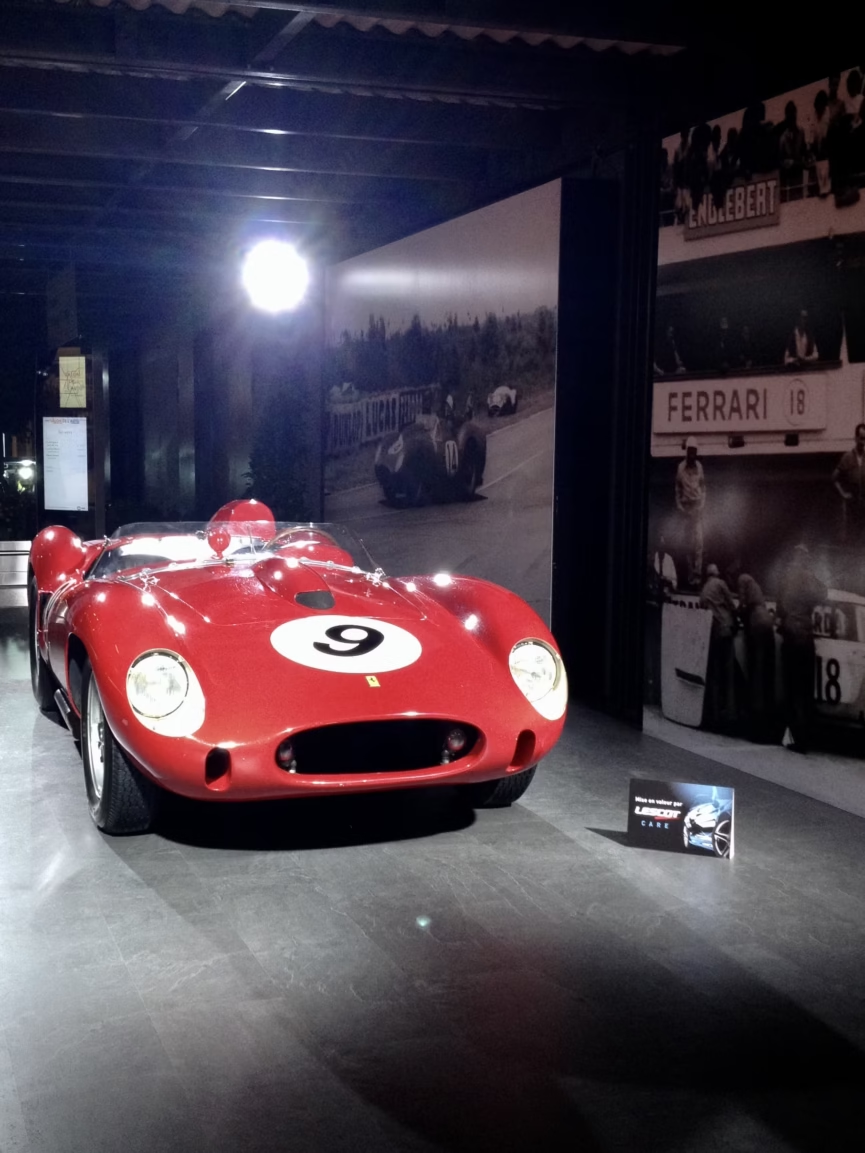
1957 Ferrari 250 Testa Rossa is among the most successful racing Ferraris ever, with three overall wins at 24 Hours of Le Mans and four wins at Sebring.
Originally published October 2015. Last updated November 2026: full 2026 revival — specs table, TOC, FAQ, Commons images with attribution
The Ferrari 250 Testa Rossa — “red head” for the valve covers on its Colombo V12 — is one of the most successful Ferrari sports racers ever built, with three outright wins at the 24 Hours of Le Mans (1958, 1960, and 1961) and four victories at Sebring. Created in 1957 on the 250 chassis family, it combined Scaglietti and Fantuzzi coachwork with a tuned 3.0-litre twelve-cylinder engine. Only a few dozen genuine cars left Maranello, which is why verified auction results still reach eight figures — second only to the Ferrari 250 GTO among Ferrari legends.
This guide explains the name, the evolving body styles, the major race wins, and why collectors treat surviving chassis as crown jewels — with links to Le Mans cluster pages such as Circuit de la Sarthe, fastest Le Mans cars, and top Le Mans cars.
Contents
Ferrari 250 Testa Rossa facts
| Also known as | Ferrari 250 TR / Testa Rossa |
|---|---|
| Built | 1957–1961 (about 34 cars) |
| Engine | 3.0 L Colombo Tipo 128 LM / 125 V12 (2,953 cc) |
| Power (period) | ~300 hp |
| Body builders | Scaglietti (early), Fantuzzi, Pinin Farina styling |
| Signature look | Early “pontoon” fenders; later “sharknose” TR61 front |
| Le Mans wins | 1958, 1960, 1961 (outright) |
| Sebring wins | Four (12 Hours of Sebring) |
| Championships | World Sportscar Championship 1958, 1960, 1961 |
| Key drivers | Olivier Gendebien, Phil Hill, Paul Frère, Maurice Trintignant |
Name and engine
Testa Rossa means red head in Italian — Ferrari painted the cam covers on the V12 red so mechanics could spot the Testa Rossa engine family at a glance. The 250 TR shared the 250 line’s 2,953 cc displacement but received higher compression, hotter cams, and race exhausts. Around 300 hp was realistic for endurance events, enough to compete with Maserati and Aston Martin opposition on long circuits like the Mulsanne straight.
The model was not a single fixed design. Ferrari refreshed bodies as seasons changed, which is why a 1957 Scaglietti spyder looks nothing like a 1961 Fantuzzi “sharknose” car — yet both count as 250 Testa Rossa history.
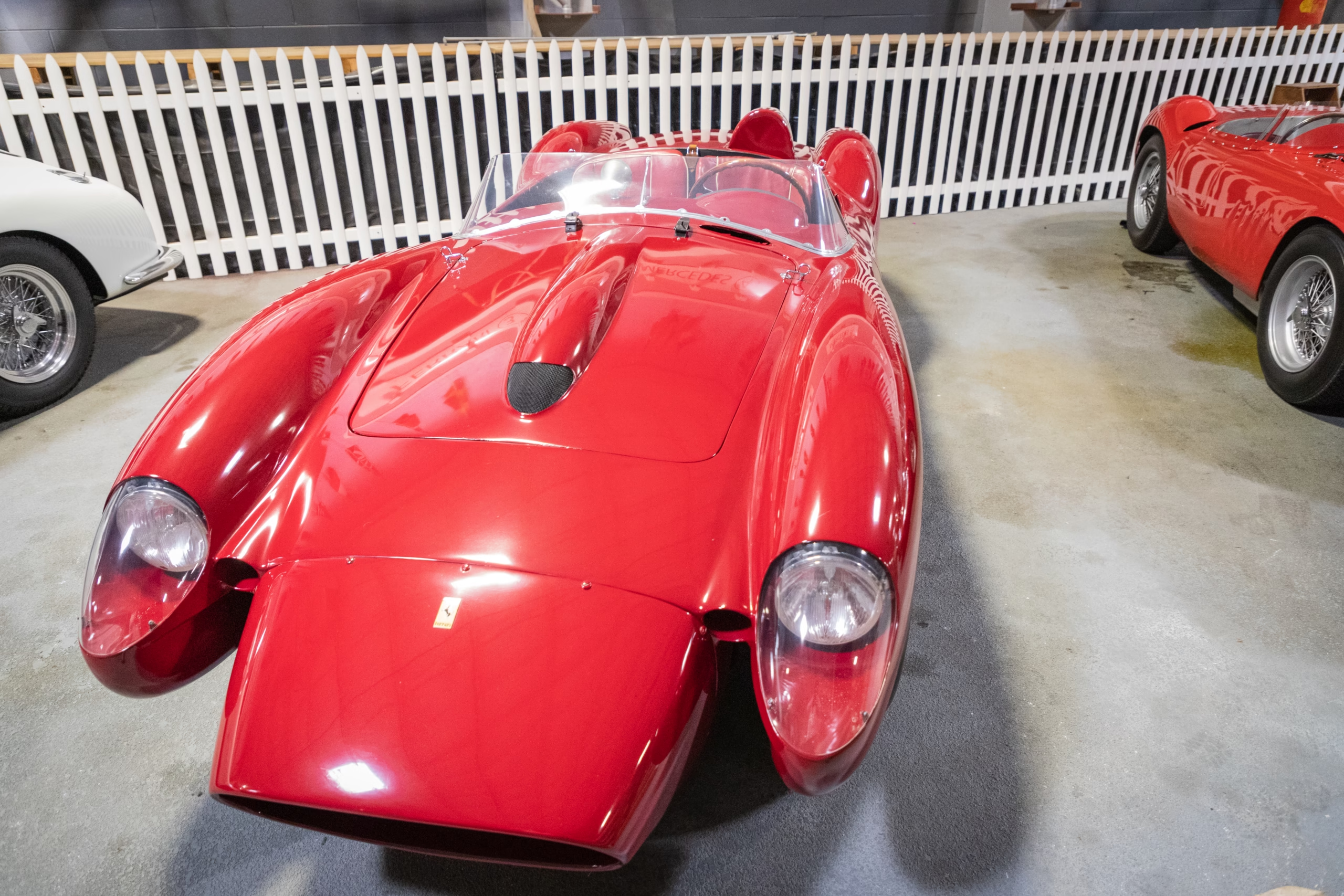
The 1957-season 250 Testa Rossa package evolved quickly from the first Scaglietti “pontoon” bodies. Shown: s/n 0710TR (Simeone Foundation). Photo: Al R / CC BY-SA 2.0
Design evolution
The first 1957 cars used Scaglietti coachwork with separate pontoon front wings ducting air through the brakes — a Formula One-inspired idea on a sports racer. Pinin Farina revised the shape for 1959, with Fantuzzi building the alloy bodies. Later TR59/60 and TR61 cars adopted the pointed nose that mirrored Ferrari’s concurrent single-seaters, including the front-end treatment later nicknamed sharknose.
Each evolution chased better cooling and stability, not showroom elegance. That functional aggression is a large part of the car’s lasting appeal in concours and historic grids.
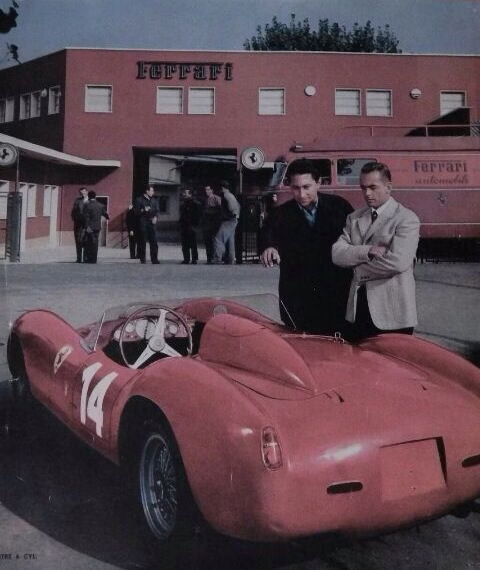
Chassis 0728TR at Maranello in a period shoot often credited to Phil Hill (right) and Ferrari staff. Photo: Wikimedia Commons / public domain
Racing debut and early seasons
The prototype arrived in 1957. Gendebien and Trintignant retired at that year’s Le Mans, but the 250 TR quickly scored elsewhere — Buenos Aires 1000 km, Targa Florio, and the 12 Hours of Sebring among them. Ten Ferrari 250 TRs started Le Mans in 1958; only three finished, but the leading factory car was in a class of its own.
1958 Le Mans — first win
Gendebien and Phil Hill won the 1958 24 Hours of Le Mans with a margin of twelve laps over the second-place Aston Martin DB3S — one of the more dominant outright victories of the decade. The result anchored Ferrari’s 1958 World Sportscar Championship, with the 250 TR also strong at Sebring and in shorter European rounds.
Hill’s relationship with Ferrari — and with open sportscars — made him the natural ambassador for the model in period photography and later historic events.
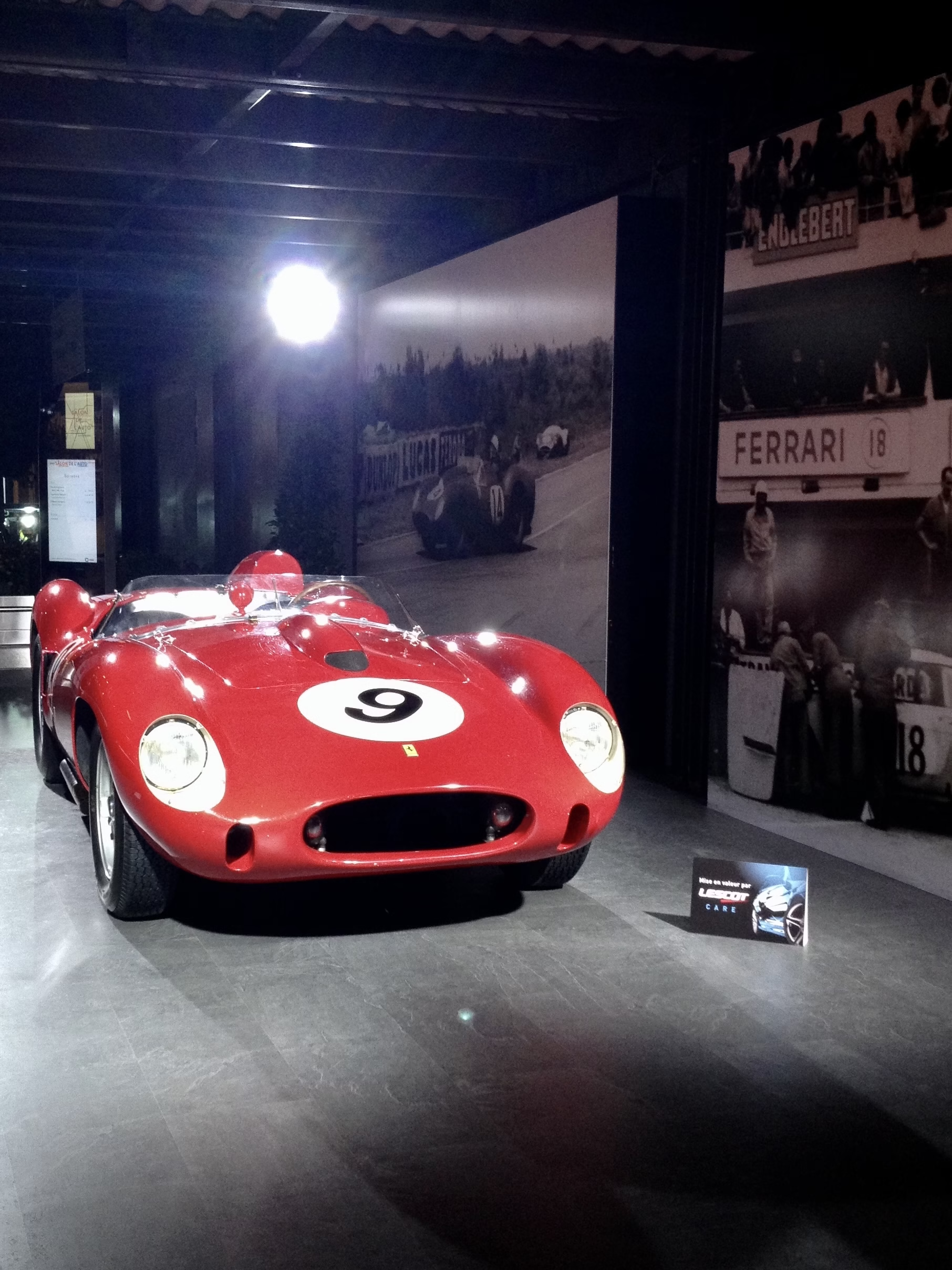
The 1958 Le Mans-winning Ferrari 250 Testa Rossa lineage: Gendebien and Phil Hill’s dominant run is the car’s defining story. Photo: Ank gsx / CC BY-SA 4.0
1960 and 1961 domination
Factory Ferraris failed to finish Le Mans in 1959, but the model returned to the front in 1960. Gendebien and Paul Frère won again for Scuderia Ferrari; a North American Racing Team 250 TR finished second with Ricardo Rodríguez and André Pilette. Phil Hill and Cliff Allison added a 1000 km of Buenos Aires win in a TR59/60 Fantuzzi spyder as Ferrari secured another world title.
1961 brought a Ferrari 1-2-3 at Le Mans: Gendebien and Hill first, Willy Mairesse and Mike Parkes second in another 250 TR, and a 250 GT in third. Four wins from five championship races underscored how completely Maranello owned endurance racing before the 250 GTO took centre stage.
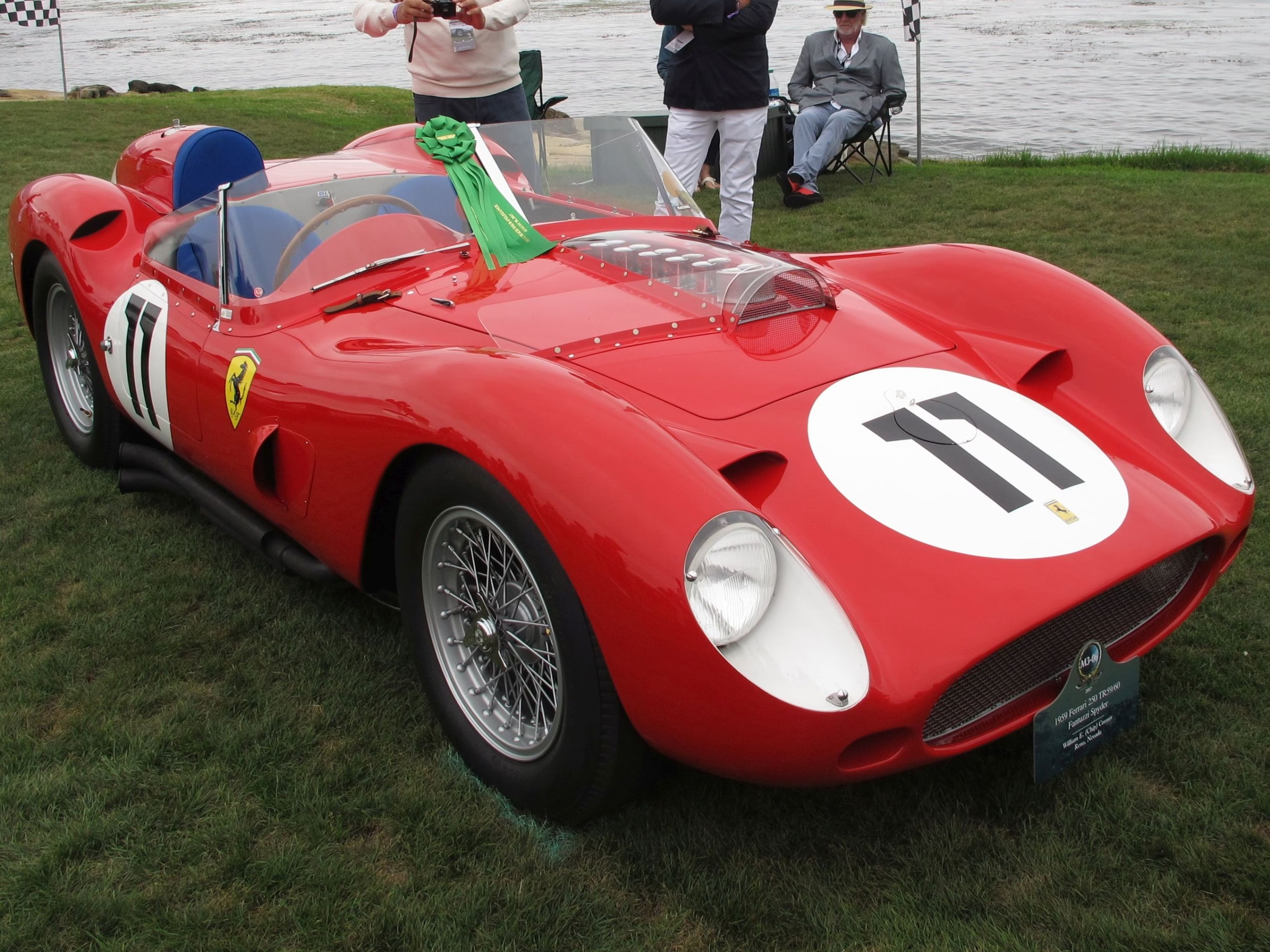
Pinin Farina lines and Fantuzzi coachwork replaced the early “pontoon” fenders on late-1950s cars — closer to Ferrari’s contemporary F1 “sharknose” look. Photo: Wikimedia Commons
Retirement and privateer life
From 1962 Ferrari focused on the 250 GTO for GT-class homologation, and the 250 Testa Rossa left factory programmes. Privateers kept winning — notably Jo Bonnier and Lucien Bianchi at Sebring in 1962. Survivors later became staples of retrospective events; many chassis still appear on the Mille Miglia and at Le Mans Classic.
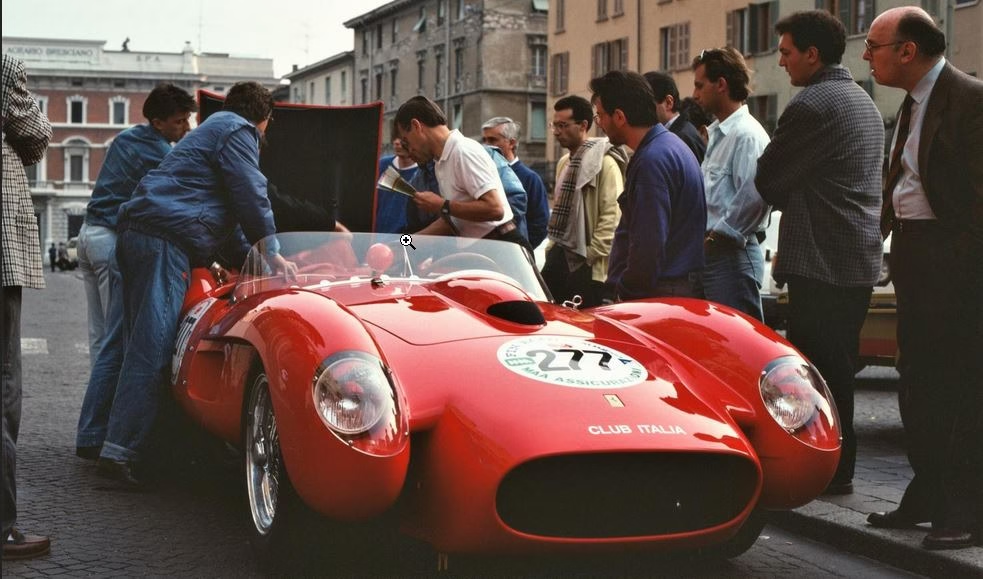
Even after factory retirement, surviving 250 TR chassis became historic-rally royalty — here s/n 0758TR on the 1988 Mille Miglia. Photo: Wikimedia Commons / public domain
Collectors and auction results
Rarity and race pedigree pushed prices beyond supercar territory decades ago. Chassis 0666 — a 1957 prototype later raced by NART — sold at auction in 2011 for about $16.39 million including fees, still the best-documented record for a 250 Testa Rossa. Chassis 0714 reached roughly $12.4 million in 2009.
Unconfirmed private sales for early prototypes such as 0704 circulate in collector press; treat those figures as rumour unless a house publishes a result. For verified numbers, the 250 TR consistently ranks behind the 250 GTO but ahead of almost every other Ferrari racer at public auction.
On-track video
Archive footage of the Ferrari 250 Testa Rossa in period competition — the same era as Gendebien and Phil Hill’s Le Mans wins.
Related reading
- 1962 Ferrari 250 GTO profile
- 24 Hours of Le Mans hub
- Circuit de la Sarthe guide
- Fastest Le Mans cars
- Top 10 Le Mans cars
- Olivier Gendebien — driver profile
- Phil Hill — driver profile
Resources: Ferrari official heritage summaries; FIA/CSI sportscar championship records of the period; RM Sotheby’s and Gooding & Co. auction catalogues for chassis 0666 and 0714; 24h-lemans.com.
Photographs: Wikimedia Commons files cited in image captions (CC BY-SA and public domain).
Frequently asked questions
What does Ferrari Testa Rossa mean?
Testa Rossa is Italian for “red head” — a reference to the red valve covers on the Colombo V12 engine used in Ferrari’s 250-series sports racers. The name was applied to the 250 TR sportscar family from 1957 and later to road cars, but the 1957–1961 racing 250 Testa Rossa is the machine that earned three outright wins at the 24 Hours of Le Mans.
How many Le Mans races did the Ferrari 250 Testa Rossa win?
Three outright victories: 1958 (Olivier Gendebien and Phil Hill), 1960 (Gendebien and Paul Frère), and 1961 (Gendebien and Hill again). Ferrari also won the World Sportscar Championship in those seasons alongside wins at Sebring and shorter endurance rounds.
How many Ferrari 250 Testa Rossas were built?
About 34 customer and works cars across 1957–1961, including evolving Scaglietti, Fantuzzi, and Pinin Farina body styles. Ferrari often refreshed bodywork in step with the season rather than building one fixed design — so no two years look quite the same even though the 3.0-litre 250 engine family stayed constant.
What is a Ferrari 250 Testa Rossa worth?
Verified auction prices run into eight figures. Chassis 0666 sold at RM Auctions in 2011 for about $16.4 million including fees; chassis 0714 brought roughly $12.4 million in 2009. Private trades are rumoured higher, but published auction results still place the 250 TR behind the Ferrari 250 GTO as the second most valuable Ferrari model line at public sale.
What engine does the Ferrari 250 Testa Rossa use?
A 3.0-litre (2,953 cc) Colombo V12 — the same displacement as other Ferrari 250 road and race cars, tuned for endurance racing with roughly 300 hp in period trim. The “red head” nickname comes from the valve covers on this unit, not from a separate engine family.