

Hungaroring – Hungarian Grand Prix Circuit Guide

Originally published July 2016. Last updated September 2026: expanded Tier B circuit guide, facts table, table of contents, internal links, FAQ schema, and editorial refresh while preserving legacy narrative and images.
Hungaroring is a 4.381-kilometre permanent circuit at Mogyoród, north-east of Budapest — the first Formula One venue behind the Iron Curtain and still one of the calendar’s hottest, tightest, and hardest tracks for overtaking. Built in just eight months in the mid-1980s, it opened the Hungarian Grand Prix era in 1986 and remains Hungary’s flagship motorsport destination.
Compare Central European neighbours at Red Bull Ring, Automotodrom Brno, and Pannónia-Ring, or Tilke-era street contrasts such as Baku City Circuit.
Contents
Hungaroring facts
| Location | Mogyoród, Pest County, Hungary (about 20 km from Budapest) |
|---|---|
| Circuit type | Permanent road course (clockwise) |
| Opened | 1986 (first Hungarian Grand Prix same year) |
| Current Grand Prix layout | 4.381 km, 16 turns |
| Construction time | Eight months (1985–1986) |
| Grandstand capacity | About 70,000 seats |
| Main event | Formula 1 Hungarian Grand Prix (usually mid-summer) |
| Notable lap record (F1) | 1:19.071 — Michael Schumacher (Ferrari, 2004) |
| Operator | Hungaroring Sport Zrt. |
Lap record note: F1, GT, and touring-car sessions use different tyres and layouts. Compare lap times only within the same category and track configuration.
Behind the Iron Curtain: why Hungary built F1
In the mid-1980s Bernie Ecclestone wanted Formula One in Eastern Europe. Moscow proved unrealistic; Hungarian officials offered land in Mogyoród instead of a Budapest park-street proposal. The valley setting gave natural elevation and sightlines while the M3 motorway linked the site to the capital.
Construction began in October 1985 and finished in time for a 1986 world championship round — a remarkable pace, though underground springs forced layout changes that made the finished circuit slower than first planned.
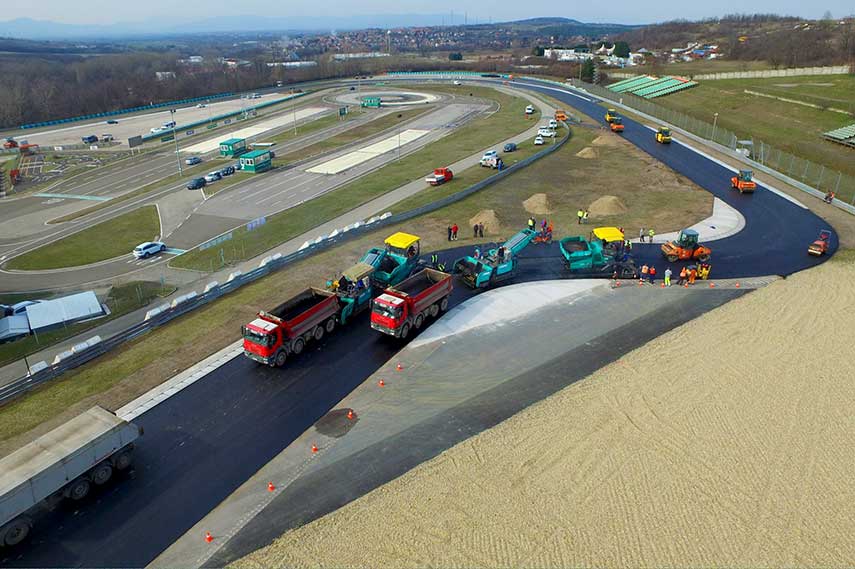
Hungaroring under construction in the mid-1980s
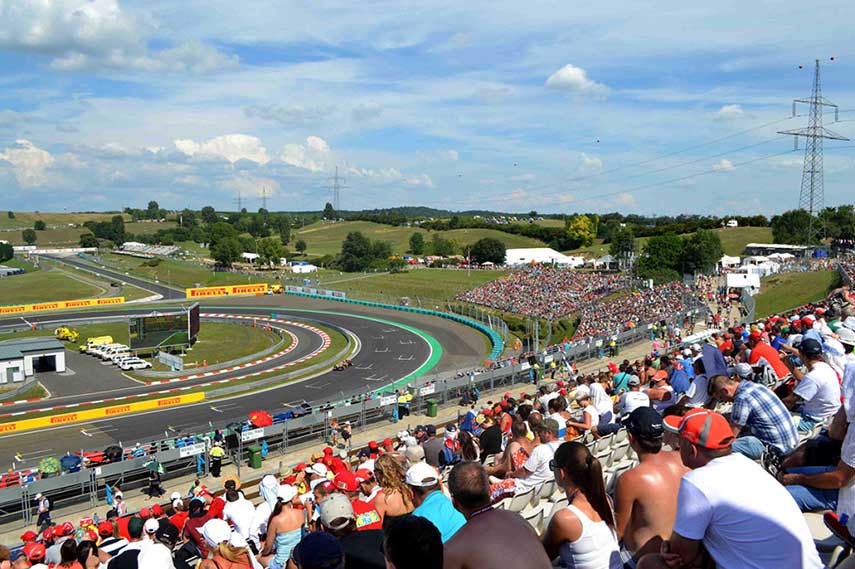
Valley seating gives wide views of the lap
How the layout evolved
The original 1986 course measured 4.014 km with 16 turns. After the 1988 Hungarian Grand Prix it shortened to 3.975 km and 13 turns. A 2003 revision created today’s 4.381 km, 16-turn Grand Prix loop used for Formula One.
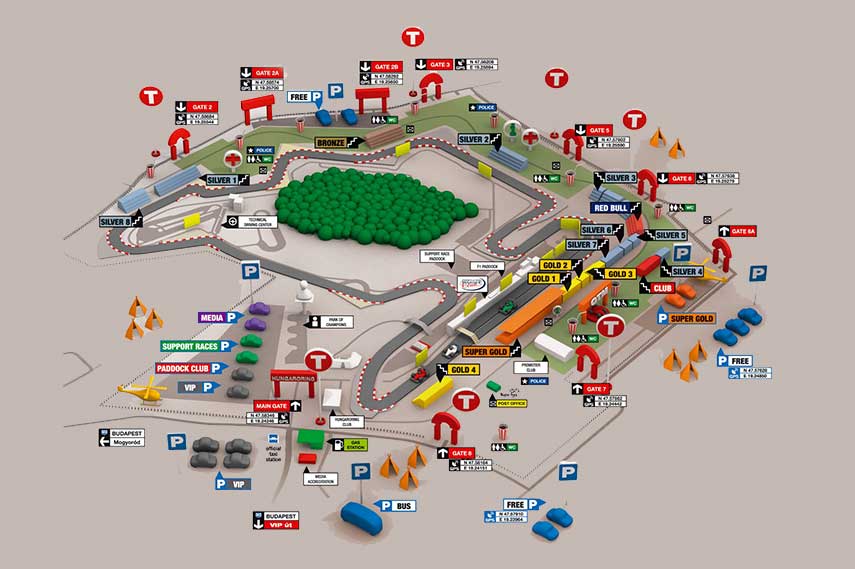
Map: current Hungaroring Grand Prix layout
Why drivers love and hate the Hungaroring
The Hungarian Grand Prix traditionally sits in high summer. Heat, dusty sandy soil, and a narrow track make following closely difficult — overtaking often needs strategy or rain. Only the 2006 race is remembered as fully wet among early 21st-century visits; a full 2016 resurfacing changed grip levels again.
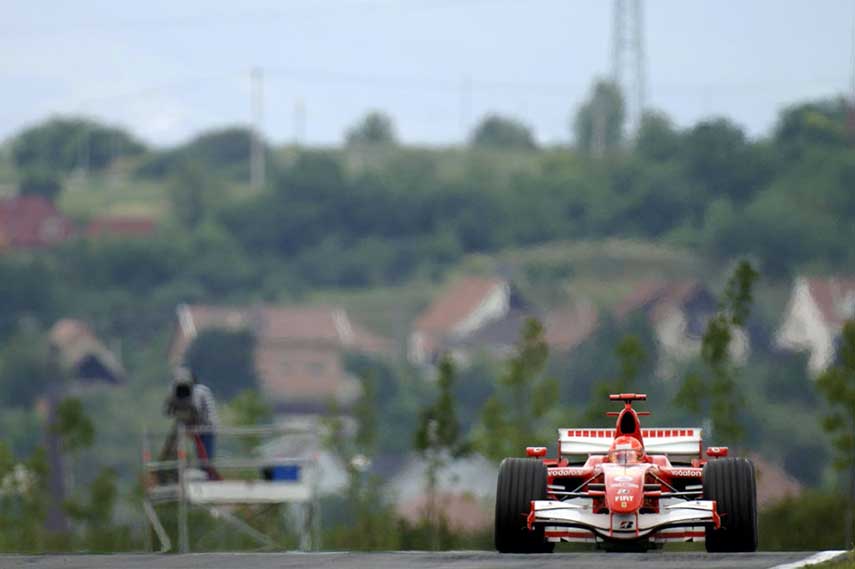
Michael Schumacher won four Hungarian Grands Prix
Grand Prix history and lap records
The inaugural race in 1986 drew close to 200,000 spectators for Nelson Piquet’s victory. Michael Schumacher’s 1:19.071 from 2004 long stood as the benchmark race lap in dry conditions.
Lewis Hamilton later became the most successful driver at the venue with multiple Hungarian Grand Prix wins, joining legends such as Ayrton Senna on the roll of honour.
Beyond Formula One
Hungaroring has hosted DTM, FIA GT, World Touring Car Championship rounds, and Formula Renault World Series events. Off-track activities include karting, driving experiences, and conference facilities — reasons Hungarian tourism ranks the circuit among the country’s most visited attractions.
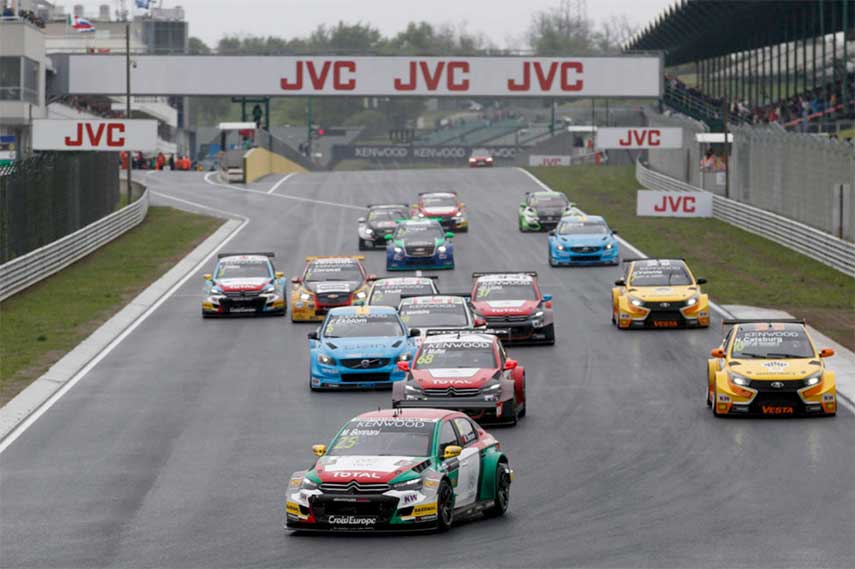
WTCC action at Hungaroring
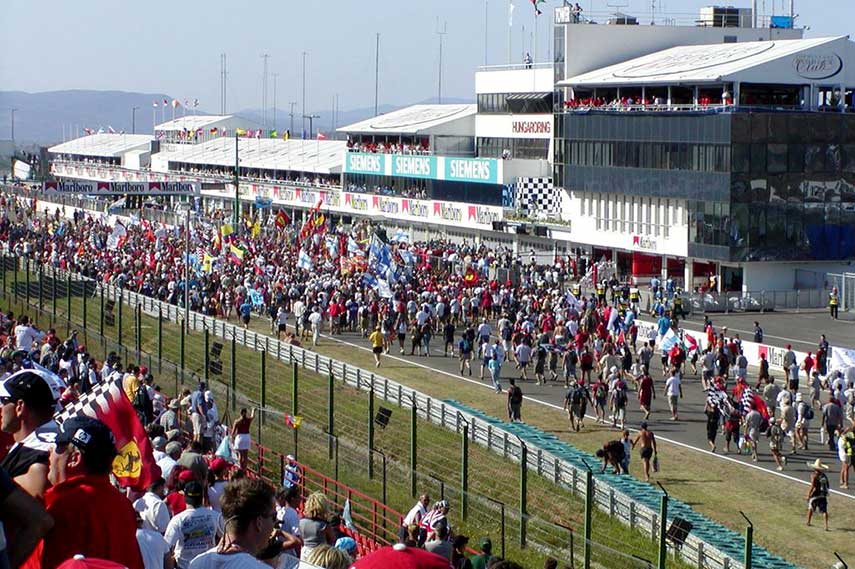
Pit-lane walks draw large crowds on race weekends
Getting there and accommodation
Budapest Ferenc Liszt International Airport connects to major European hubs. The M3 motorway passes the circuit; shuttle buses run from Budapest on Formula One weekends. Camping fields around the venue are popular with fans from Germany, Austria, and neighbouring countries.
Address: 2146 Mogyoród, Hungaroring út 10, Hungary
Phone: +36 28 444 444
Website: hungaroring.hu
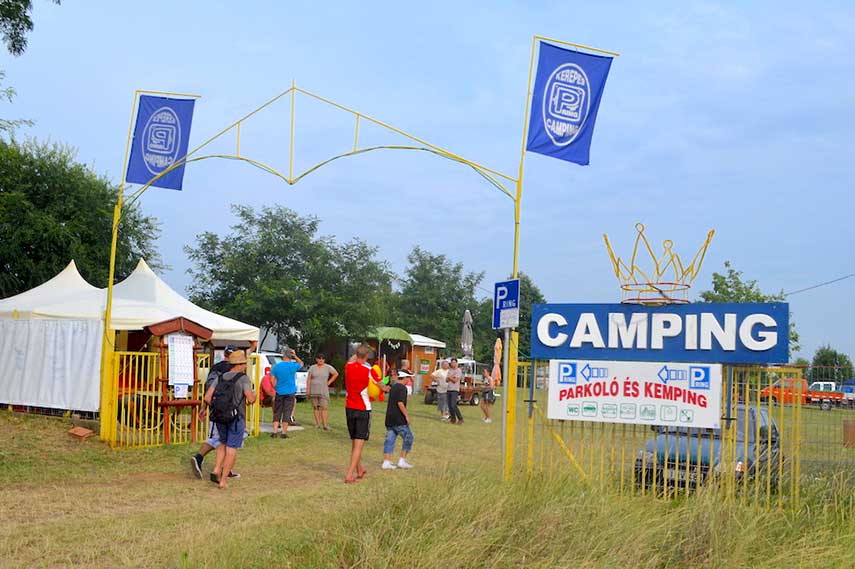
Camping remains part of the Hungarian GP experience
Frequently asked questions about Hungaroring
Where is Hungaroring?
Hungaroring is at Mogyoród in Pest County, Hungary, roughly 20 km north-east of Budapest, beside the M3 motorway.
How long is Hungaroring?
The current Formula One layout is 4.381 km with 16 turns, run clockwise. Earlier configurations were slightly shorter before the 2003 revision.
When did Hungaroring open?
Construction started in October 1985 and the circuit opened in 1986, hosting the first Hungarian Grand Prix that same summer.
Why is Hungaroring historically important?
It was the first Formula One circuit behind the Iron Curtain, giving the world championship a foothold in Eastern Europe during the Cold War’s final years.
What is the lap record at Hungaroring?
Michael Schumacher set 1:19.071 for Ferrari during the 2004 Hungarian Grand Prix in dry conditions on the modern layout.
Is Hungaroring good for overtaking?
Generally no. The track is narrow, often dusty, and historically processional. Strategy, tyre degradation, and rare wet races — such as 2006 — create most passing opportunities.
When is the Hungarian Grand Prix held?
Formula One usually schedules Hungary in mid-summer, making it one of the hottest races on the calendar. Plan for heat and sun protection in the grandstands.
Who has won the most Hungarian Grands Prix?
Lewis Hamilton collected multiple victories at the venue in the hybrid era, joining multiple-time winners such as Michael Schumacher and Ayrton Senna on the roll of honour.
What other racing happens at Hungaroring?
The venue has hosted DTM, FIA GT, WTCC, and Formula Renault World Series rounds, plus track days, karting, and corporate events on non-GP weekends.
How do you get to Hungaroring?
Fly to Budapest Ferenc Liszt International Airport, drive the M3 to Mogyoród, or use organised shuttle buses from Budapest on Grand Prix weekends. Camping is available around the circuit.