

In What Ways Can a Car be Modified for a Handicapped Person?
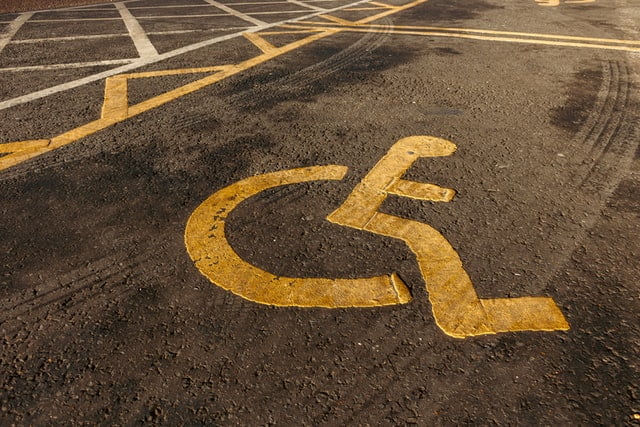
Just as with casinos, like the Thunderbolt casino coupons, there is something personal and exciting about driving a car. For some people, their ideal car is a custom red sports car that is similar to the kind you see in auto races. But for a person who has a physical handicap, a custom car means freedom. The ability to get from point A to point B without having to ask mom or dad or a friend for help.
Some custom features for the handicapped are obvious, while others are not.
Automobile manufacturers are not directly responsible for paying for adjustments for cars for people with disabilities, as these are often viewed as items of personal preference. Nonetheless, it appears that there are some funding opportunities available to help defray costs for vehicle-related modifications/additions, and it also appears that some automobile manufacturers offer reimbursement programs for individuals with disabilities. The reimbursements from Ford are $1000, but only for new cars where the equipment is permanently installed.
Why should you not buy a Tesla car?
One would think that since Tesla is leading the industry in electric cars and self driving cars, the Telsa car would be the default go-to for custom adjustments for people with handicaps. But Tesla is the last company you would want to buy a car from if you need custom adjustments to your automobile.
In February 2022, it became public knowledge that Tesla added a new feature to all of their cars … well feature for Tesla, but illegal under the Americans with Disabilities Act for everybody else.
“Elon Musk-owned electric vehicle company Tesla’s new vehicles rolling out of the factory will include a feature designed to prevent abuse of the seat adjustment controls. The new seats will track and measure the number of adjustments users make and will disable the controls if they detect “excessive” changes. Tesla recently began installing new seat motors in some of its Model 3 and Model Y vehicles, in addition to the seats it gets from China’s Yangfeng and the ones it makes in-house.”
So why did Tesla add a “feature” to all of their cars that break the Americans with Disabilities Act (ADA Act)? Their seat adjustment motors cannot hold up to 10 years of use, and too many customers who were buying the 10 year extended warranty were bringing in their Tesla cars with broken seat adjustment motors to be fixed, so Tesla purposely bricks its cars? Instead of Tesla fixing the underlying problem, Telsa decided to play an Apple, and installed a “self destruct” mechanism in their cars?
Apple for many years has gotten away with putting self destruct mechanisms in all of their phones (and people are still stupid enough to buy Apple products), so Tesla thought that they should be allowed to install “self destruct mechanism” into all of their cars.
Except there is a major difference. If a person is sitting in a car that is not properly adjusted for their height (or other needs), they become a danger to themselves, a danger to anybody that is in their car, and a danger to anybody who is driving on the road while they are driving on the road.
“The first warning — “Excessive use of seat track motor detected” — comes after 90 seconds of use within a 5-minute period of time. If you decide to say “screw it” and keep messing with the controls for an additional 30 seconds, the car will disable the seat control tracker altogether with a warning against further “excessive use.” ”
The other side of the argument is that Tesla stores custom profiles, so you set your adjustments and then press a button to record the adjustments. So if you are a short person, and your spouse is a tall person, you can each store your adjustments and then change profiles with a push of a button.
There are two reasons why people think Tesla put this “feature” in. One is that Tesla knows that it is using sub quality motors, so it put in software code instead of investing in better quality motors. But there are plenty of things in the car that have motors: the opening of the doors and the adjustment of mirrors are two major ones. If Tesla is allowed to disable seat controls, what is going to stop them from stopping the car doors from open and closing or preventing the mirrors from adjusting?
The other argument is these motors have always failed. But I always owned Ford cars with motorized adjustable seats and small children, and I have never had any issue with the seat adjustment motors breaking, even near the end of the life of my car. So my personal view is that first option, Tesla is using subquality motors on their seat adjustments. And if Tesla is using sub parts for their seat adjustment motors, what is going to stop them from using sub parts from any other part of their vehicle?
Is the long term problem children using the seat controls as a toy or is normal 4 adults sharing a car going to cause the seat adjustment motor to break? If it was just the children using the seat adjustments as a toy, then just install a manual shut off control and call it “parental controls for seat adjustments”, same as what car companies have been doing with window controls.
Even create two versions. Option 1 shuts it off completely, and the second option does the timeout shut off. “Mommy, the seat controls don’t work anymore. Oh, sorry Joey, the car is tired and wants to rest. Play with your puppets in the back seat now.” But when it is hidden, it is no longer a feature, it is a warning of a bigger problem the company is trying to hide.
Car modifications for the hearing impaired
- a turn signal alert for when the turn signal is accidentally left on (a modification)
- a siren alarm for alerting the driver to the sirens of nearby police and emergency vehicles (an addition)
Car modifications for driving controls
- Mechanical hand controls – Mechanical hand controls enable drivers to control the brake and accelerator with their hands instead of their feet. Pedal functions are retained so the vehicle can still be driven without use of the adaptations.
- Push/pull hand controls
- Radial hand controls
- Floor mounted push/pull hand controls
- Electronic hand controls – Most electronic hand controls operate in a similar manner to manual hand controls, but they are much lighter to use.
- Over ring accelerators
- Under ring accelerators
- Ghost adaptors
- Electronic radial hand controls
- Trigger hand controls
- Satellite accelerators
- Electric pull accelerators
- Pedal adaptors
- Left foot accelerator pedals
- Floor mounted left foot accelerators
- Electronic left foot accelerator
- Pedal guards
- Pedal extensions
- Pedal extensions with raised floor
- Hinged accelerator pedals (to use with hand controls)
- Removable pedals (to use with hand controls)
- Steering aids
- Steering ball
- Wireless keypad steering aids
- Glove and peg
- Tetra grip
- Remote control devices
- Wireless keypad
- Mini keypads
- Bleeper system –
- Other driving controls
- Easy release hand brakes
- Electric handbrakes
- Easy release gear levers
- Electric gear selectors
- Remove ignition switch
- Lightened power steering
- Reduced sized steering wheel
- Removable steering wheel
Can anybody drive a car with modification?
It would depend on the type of modifications.
What is the cost for automobile modifications for the handicapped?
For mechanical hand controls, the cost can be between $500 and $2,000. Electronic controls can cost up to $100,000, depending on what exactly is installed. Due to safety (and liability concerns), hand controls, pedal controls, and other driver modifications should be installed by a professional that is experienced in this area (aka, not your local general mechanic).
Can adaptions be transferred from one vehicle to another?
If you are talking about transferring from adaptions from your old car to your new car, then you may be able to transfer them. Sometimes they may be transferred for free. You buy adaptation devices and the place that did the original installation does the transfer. Or there might be a small fee for the transfer, but the cost will be nowhere near the original cost of the adaption device.
Are there limits on which vehicles can be fitted with electronic adaptation devices?
“Most new vehicles, if not all new vehicles, have electronic acceleration,” said Crook (from MobilityWorks). “We just built a system that allowed us to redirect the OEM signal and instead of sending it to the gas pedal, you choose to send it to the hand control.”
The general public cannot directly buy these products. They are sold through a certified dealer network involving trained dealers and technicians who install these products. There is too much liability to allow untrained people to install these devices.
How does a physically disabled person get a driver’s license?
- Take a driver’s test. This is the theory test that involves the rules of the road, knowing road signs, and other general stuff (alcohol level of a drunk driver).
- Have special modifications. In order to be issued a driver’s license, you must show the licensing authority that you not only know the rules of the road, but that you can safely drive a vehicle without any hindrances or obstructions. This means special steering wheel hand controls, including throttle, braking, signaling and steering, must be installed. In some states, a second set of controls should be included in the passenger seat.
- Pass road test. Once you have shown your car has the required handicap driving modifications made to it, you can take the driving test. If you pass this test, you will be issued a driver’s license.
- Follow the rules of the road. After you have passed the driver’s test, there are no special requirements other than having a special license plate and a placard to hang on your mirror that specifies you are disabled. This is not to single out a disabled driver, but to let others know in case there is an emergency or some other problem.
What are the requirements for a disabled person taking driving lessons?
- Must be 16 years of age (or whatever the age requirements are for your state).
- The vehicle must be modified to accommodate your disability
- Pass the theory and practical test.
Advanced Active Parking Assistant
Not all “special needs” for a car require specially installed equipment. There are some features that handicapped people can benefit from that a majority of the population could benefit from as well. Enhanced Active Park Assistant is one of them. Enhanced Active Park Assistant helps with parallel parking. As a person who has no depth perception, that is a nice feature. This feature can also help with reverse perpendicular parking.
Adaptive Cruise Control
Adaptive Cruise Control is not self-driving cars. But it does have a lot of handy features. Adaptive Cruise Control allows you to set your speed and the distance of the car in front of you. When the car in front of you slows down, you slow down. When they speed up, you speed back up to your preassigned speed and distance.
With ACC Stop and Go, It enables your vehicle to come to a complete stop when the car in front of your comes to a complete stop. But if the vehicle is stopped for more than 3 second, the driver has to manually restart the cruise control.
The last major feature in this category is “Lane Centering”, which scans the lane markings to help you stay in your lane if the system detects that you are drifting out of it. The final feature in this group is “Speed Sign Recognition”, which automatically adjusts the set speed of your vehicle to the posted speed limit.
Do not forget auto cameras to detect blind spots and small children behind a car.
Summary
Whether your needs can be met with features that are now considered standard features in a car or your needs require a bit more customization, the auto industry in 2022 is a lot different than in past generations.
Featured Photo by Jakub Pabis on Unsplash