

Karlskoga Motorstadion – Sweden’s Oldest Race Circuit Guide
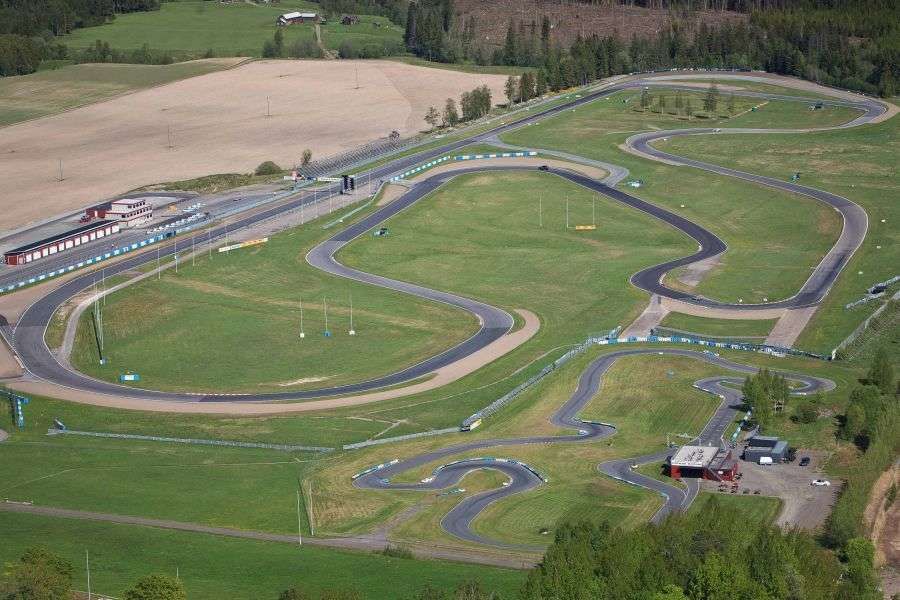
Originally published February 2017. Last updated September 2026: expanded Tier B circuit guide, facts table, table of contents, internal links, FAQ schema, and editorial refresh while preserving legacy narrative and images.
Karlskoga Motorstadion (Gelleråsen Karlskoga) is Sweden’s oldest permanent race circuit, opened in 1949 on quarry gravel in Örebro County. Before Anderstorp hosted Formula One world championship Grands Prix, Karlskoga staged non-championship Kanonloppet Formula One races in 1961–1963 with grids of Moss, Clark, Brabham, and Surtees — and a Formula 2 “Swedish Grand Prix” in 1967.
The circuit’s modern identity is national tin-top racing: Scandinavian Touring Car Championship rounds, Porsche Carrera Cup Scandinavia, and Camaro Cup share a 2.4 km layout reshaped after spectator-safety reforms in the 1970s. Fresh asphalt arrived in 2016, keeping Sweden’s first purpose-built track relevant for club and regional events.
For Swedish contrast read Scandinavian Raceway Anderstorp, Mantorp Park, and Jyllands-Ringen in Denmark.
Contents
- Karlskoga Motorstadion facts
- 1949 origins and Kanonloppet
- Formula One at Karlskoga (1961–1963)
- Formula 2, Swedish GP, and sportscars
- 1970 tragedy and closure
- Reopening, F2, and motorcycle GPs
- 1990s shortening and today’s layout
- STCC and national racing today
- Getting to Karlskoga
- Frequently asked questions
Karlskoga Motorstadion facts
| Location | Karlskoga, Örebro County, central Sweden (Gelleråsen) |
|---|---|
| Also known as | Gelleråsen Karlskoga; Kanonloppet circuit |
| Circuit type | Permanent road course |
| Opened | 1949 (first Kanonloppet 4 June 1950) |
| Current length | 2.4 km (layout set in 2006) |
| Historic maximum | About 3.0 km before Velodromkurvan section removed (mid-1990s) |
| Main events (historic) | Kanonloppet F1 (1961–1963); F2 Swedish GP (1967); F2 European Championship (1973–1974) |
| Main events (today) | Scandinavian Touring Car Championship; Porsche Carrera Cup Scandinavia; Camaro Cup |
| Notable viewing | Spectators can see much of the lap from grass banking on north and west sides |
Lap record note: Kanonloppet sportscar, Formula One, Formula 2, and modern touring-car sessions used different layouts and tyres. Chris Craft’s 1970 mark and current STCC times are not directly comparable.

STCC racing at Karlskoga Motorstadion
Gunnar Olsson’s idea became a reality
The idea of a racetrack in Karlskoga was born in the mind of Gunnar Olsson, chairman of Karlskoga Motor Klub during the 1940s. After World War II, races were held mostly on public roads, but Olsson wanted a permanent facility.
When he met Elias Frisk, a motorsport enthusiast and local landowner, the plan became concrete. They built a track on Frisk’s land using gravel from his quarry to form the surface — the first 1.55 km circuit took about a week to construct.
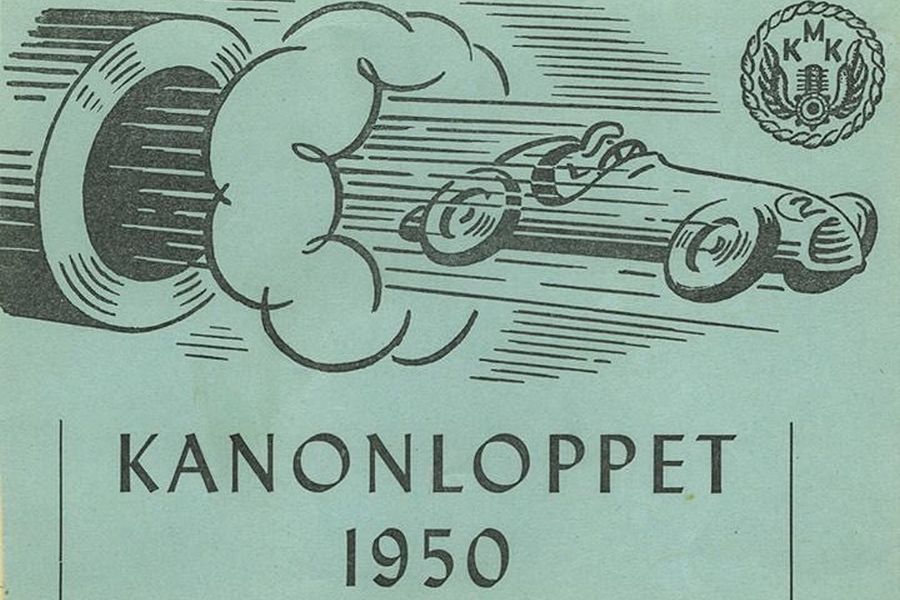
The inaugural Kanonloppet in 1950
The inaugural race was the first Kanonloppet on 4 June 1950. About 15,000 spectators attended. Olsson then pushed for international stars: the course was asphalted for the 1952 Kanonloppet and extended to 1.6 km, with further length added in 1953 and 1958.
In 1958 the addition of two straights linked by the steeply banked Velodromkurvan hairpin brought the lap to about 3.0 km.

Kanonloppet events drew large crowds
Formula One cars came to Karlskoga in 1961
Sportscar racing dominated early Kanonloppet events until 1961, when the seventh Kanonloppet ran to Formula One rules — Sweden’s first F1 race and the fulfilment of Olsson’s dream. The grid included international stars; Stirling Moss won the 30-lap race in a Lotus-Climax for UDT Laystall, 12 seconds ahead of Joakim Bonnier (Porsche). John Surtees completed the podium alongside Jim Clark, Jack Brabham, and Roy Salvadori.
Olsson died at the end of 1961, but Karlskoga hosted two more non-championship Formula One Kanonloppet races in 1962 and 1963. Resurfacing before 1962 dropped lap times by about five seconds; John Surtees took pole in 1:25.4 where Jim Clark had been on pole at 1:30.1 a year earlier.
Masten Gregory won in 1962 for UDT Laystall; Roy Salvadori finished second just two-tenths ahead of Bonnier. In 1963 Jack Brabham set pole with a record 1:22.6; Jim Clark took his first Swedish win ahead of Lotus teammate Trevor Taylor, with Brabham third.
Formula 2, Swedish Grand Prix, and sportscars
From 1964 the Kanonloppet switched to Formula 2 rules. Jack Brabham won three consecutive F2 races from 1964 to 1966.
The 1967 event was also billed as the Swedish Grand Prix under F2 regulations; Jackie Stewart won. A Sportscar Grand Prix the same year went to Jacky Ickx in a Mirage M1-Ford ahead of Bonnier in the same chassis.
After 1968 there were no more F1 or F2 Kanonloppet races, but Formula 3 and sportscars still drew crowds. David Piper (Ferrari 412 P) won the 1968 Sportscar Grand Prix; Jo Bonnier was second in a McLaren M6B. Brian Redman won in 1969.

Touring cars at Karlskoga in 1964
1970 tragedy and two-year closure
Tragedy struck during a touring-car support race at the 1970 Kanonloppet when two cars collided and went over the grass banking into the crowd. Five spectators died and about 30 were injured. Racing paused for hours but eventually resumed; Chris Craft won the main event in a McLaren M8C and set an all-time lap reference of 1:16.4.
Jo Bonnier finished third — one of many Karlskoga podiums for Sweden’s great international driver, though he never won the headline Kanonloppet. Bonnier was killed at Le Mans two years later.
Swedish authorities demanded better spectator safety. Gelleråsen closed for two years while viewing areas moved to the northern and western sides only, preserving the ability to see much of the lap from one vantage point.
Reopening, Formula 2, and motorcycle GPs
The track reopened in 1973 with touring cars and a Formula 2 European Championship round won by eventual champion Jean-Pierre Jarier. Formula 2 returned in 1974 with a home victory for Ronnie Peterson.

Karlskoga hosted motorcycle Grands Prix in 1978 and 1979
1978 and 1979 brought Swedish Motorcycle Grand Prix races; Barry Sheene won both 500cc events. International car racing then faded: Karlskoga Motor Club declared bankruptcy in 1986, and new companies Gelleråsen AB and Karlskoga Motor Stadium AB under Mike Luff and Lennart Bohlin took over operations.

Grass banking lets fans follow much of the lap
1990s shortening and today’s layout
By the mid-1990s an extensive renovation shortened the course to 2.53 km by removing two straights and Velodromkurvan, adding a kart circuit in the freed space plus a short test loop.
In 2000 pits and paddock moved outside the start/finish straight. A 2006 change moved first corner Troskurvan closer to the line, cutting length to 2.4 km — the configuration used today. A short infield loop was added in 2014; new asphalt followed in 2016.
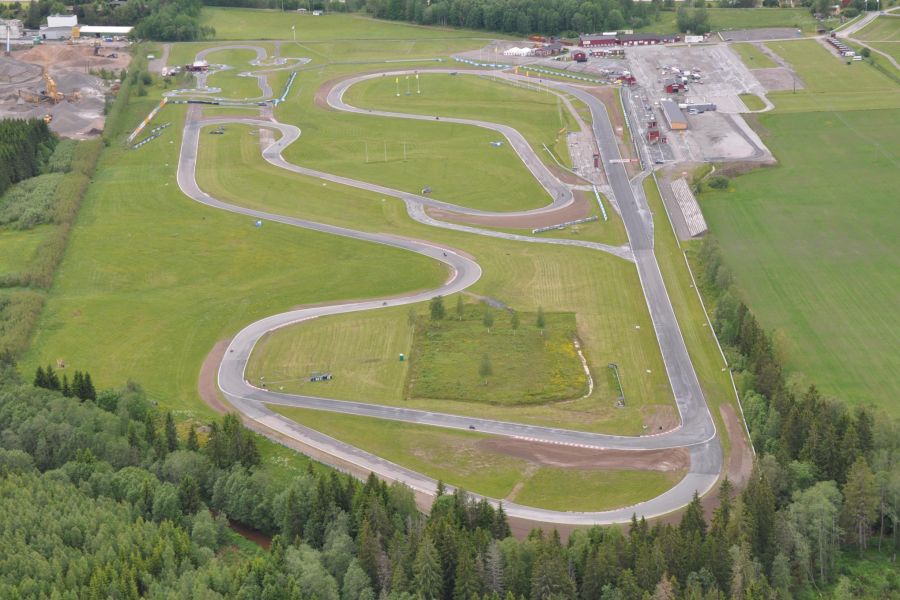
Aerial view of Karlskoga Motorstadion

Fresh asphalt in 2016
STCC and national racing today
Renovated Karlskoga attracts major national and regional series including Swedish GTR and the Scandinavian Touring Car Championship, which first visited in the inaugural STCC season of 1996 and remains a season highlight. Porsche Carrera Cup Scandinavia and Camaro Cup also race on the current 2.4 km course.
Getting to Karlskoga
Karlskoga lies in central Sweden between Oslo and Stockholm, with road links via the E18/E20 corridor. Check karlskogamotorstadion.com for event calendars, track days, and club hire.
Frequently asked questions about Karlskoga Motorstadion
Where is Karlskoga Motorstadion?
Karlskoga Motorstadion (Gelleråsen) is in Karlskoga, Örebro County, in central Sweden.
Is Karlskoga the oldest race circuit in Sweden?
Yes. The track opened in 1949 and hosted the first Kanonloppet on 4 June 1950, making it Sweden’s oldest permanent racing circuit.
Did Formula One race at Karlskoga?
Yes — non-championship Formula One Kanonloppet races were held in 1961, 1962, and 1963 before the event switched to Formula 2 rules.
Who won the first F1 race at Karlskoga?
Stirling Moss won the 1961 Kanonloppet in a Lotus-Climax, ahead of Joakim Bonnier.
How long is Karlskoga Motorstadion today?
The current layout is 2.4 km, set in 2006 when Troskurvan was moved closer to the start/finish line.
What is the Kanonloppet?
The Kanonloppet (“Cannon Race”) was Karlskoga’s flagship event from 1950, later hosting Formula One, Formula 2, sportscars, and touring cars until international car racing faded in the 1970s.
Why did Karlskoga close in 1970?
A touring-car crash at the 1970 Kanonloppet killed five spectators. Swedish authorities required safety upgrades; the circuit stayed closed for about two years.
What races happen at Karlskoga now?
The Scandinavian Touring Car Championship, Porsche Carrera Cup Scandinavia, Camaro Cup, and regional club events use the modern 2.4 km course.
When was Karlskoga resurfaced?
A major asphalt renewal was completed in 2016, the latest major investment after 1990s layout changes.
Which Swedish circuits compare with Karlskoga?
See Scandinavian Raceway Anderstorp, Mantorp Park, and Jyllands-Ringen.
Related reading
- Scandinavian Raceway Anderstorp — Swedish F1 Grands Prix
- Mantorp Park — STCC and European F2
- Jyllands-Ringen — Denmark’s permanent circuit
- Lånkebanen — Norwegian rallycross
- Joakim Bonnier — Swedish sportscar pioneer
Address: Karlskoga Motorstadion, PO Box 296, 691 25 Karlskoga, Sweden
Phone: +46 586 150 10
Website: karlskogamotorstadion.com
Photo credits: karlskogamotorstadion.com, stcc.se, legendsracingsweden.com, touringcarracing.net
