

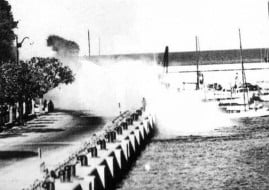
Monaco Grand Prix – Circuit de Monaco Street Circuit Guide
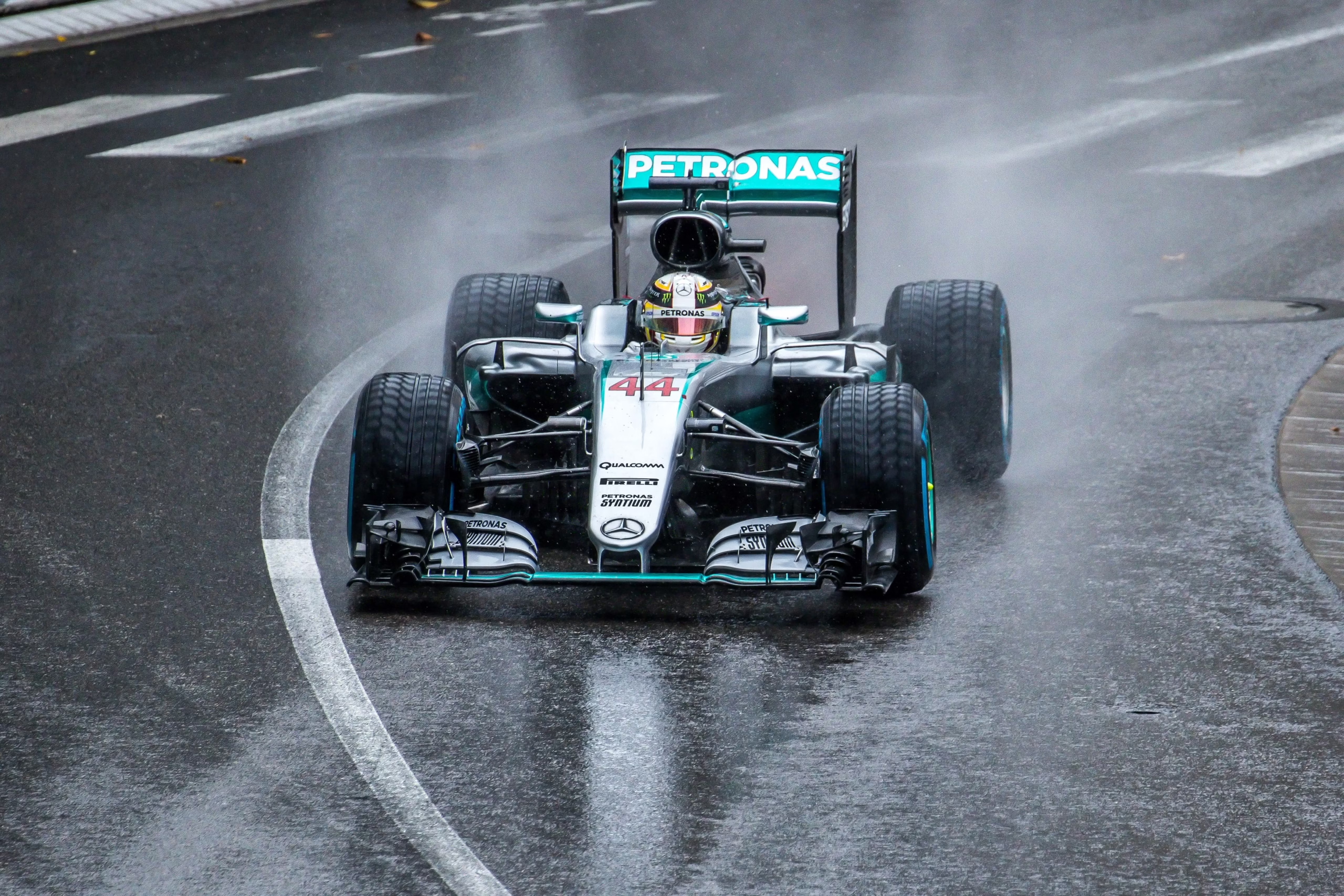
Originally published May 2017. Last updated September 2026: full circuit guide revival with facts table, narrative refresh, Wikimedia Commons images, FAQ schema, and related reading.
The Circuit de Monaco is a temporary street circuit through the Principality of Monaco and Monte Carlo, used for the Monaco Grand Prix since 1929 and on the Formula One world championship calendar since 1950. At 3.337 km per lap it is the shortest track in modern F1, yet its narrow width, blind crests, and unforgiving barriers make it one of the few venues where outright lap time matters less than precision and nerve.
No other grand prix sells glamour and danger in the same breath. Yachts in the harbour, apartment blocks that double as grandstands, and corners named after saints and swimming pools turn a Sunday race into a global television postcard — while drivers treat a single mistake as a race-ending meeting with the Armco.
Monaco is not a permanent circuit and never pretends to be. Public roads are closed for the event, then handed back to buses and commuters. That temporary character is central to its identity: a race that could not exist without the city, and a city that would feel diminished without the race.
Contents
Circuit de Monaco facts
| Location | Monte Carlo and La Condamine, Principality of Monaco (French Riviera) |
|---|---|
| Circuit type | Temporary street circuit (public roads) |
| First race | Monaco Grand Prix, 14 April 1929 (William Grover-Williams won in a Bugatti) |
| First Formula One race | 21 May 1950 (Juan Manuel Fangio won for Alfa Romeo) |
| Layout length | 3.337 km (current F1 configuration) |
| Direction | Clockwise |
| Turns | 19 |
| Main events | Formula One Monaco Grand Prix; Historic Grand Prix of Monaco; Formula E Monaco E-Prix (support layout) |
| Best-known sections | Sainte Devote, Casino Square, Tunnel, Nouvelle Chicane, Swimming Pool, Rascasse |
Lap record note: the official Formula One race lap record on the current layout is 1:14.260, set by Lewis Hamilton during the 2021 Monaco Grand Prix. Qualifying laps and historic configurations are faster or slower for different reasons — compare like with like.
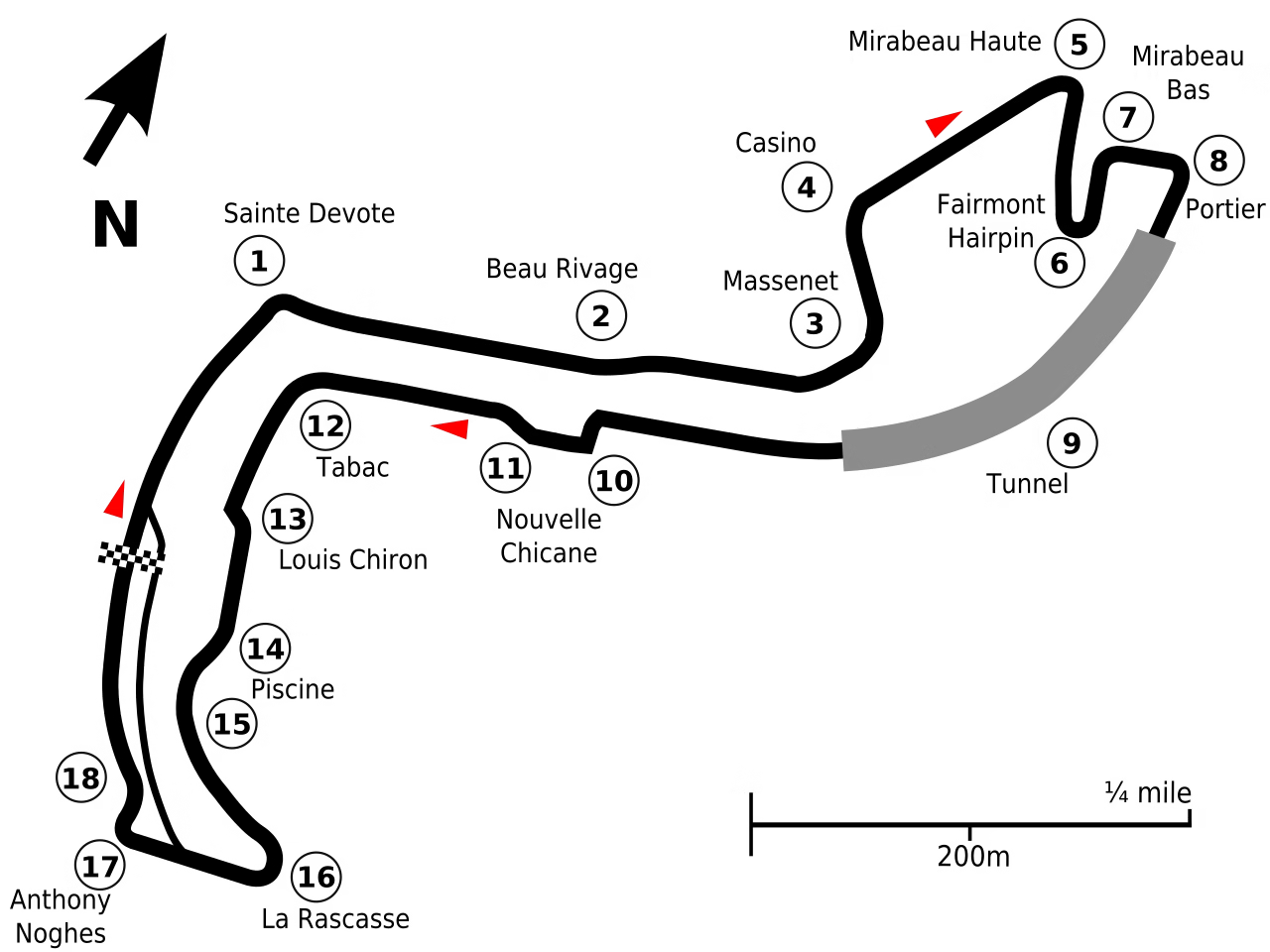
Circuit de Monaco Grand Prix layout (3.337 km) — Map: Will Pittenger / CC BY-SA 3.0
Origins and the first Monaco Grand Prix
Monaco—s grand prix was the vision of Antony Noghès, son of the president of the Automobile Club de Monaco, who wanted a major race to put the tiny principality on the motoring map. The first event in 1929 ran on a 3.18 km course through the harbour streets; Grover-Williams— victory for Bugatti announced a venue that would outlast almost every contemporary road race.
Pre-war races attracted Europe—s finest drivers and manufacturers. The circuit gained a reputation early: average speeds were modest, but consequences of error were absolute. When Formula One arrived in 1950, Monaco was already a crown jewel — and Juan Manuel Fangio—s win that year linked the new world championship to inter-war romance.
Through the 1950s and 1960s the race survived financial scares and safety debates that closed other street venues. Monaco endured because the location was unique and because organisers accepted that evolution would be slow: you cannot widen a casino square without demolishing history.
Layout, corners, and why it is so hard
Modern F1 cars are longer and wider than the generations that first raced here, which makes Monaco feel tighter every decade. Overtaking is limited; qualifying position and strategy often decide the winner before the lights go out.
Sainte Devote and the climb to Casino Square
The lap begins on the waterfront straight before braking hard for Sainte Devote — a right-hander that has collected many first-lap incidents. From there the road climbs past the Fairmont hairpin (the slowest corner on the calendar) towards Casino Square, where cars brush rails with millimetres to spare.
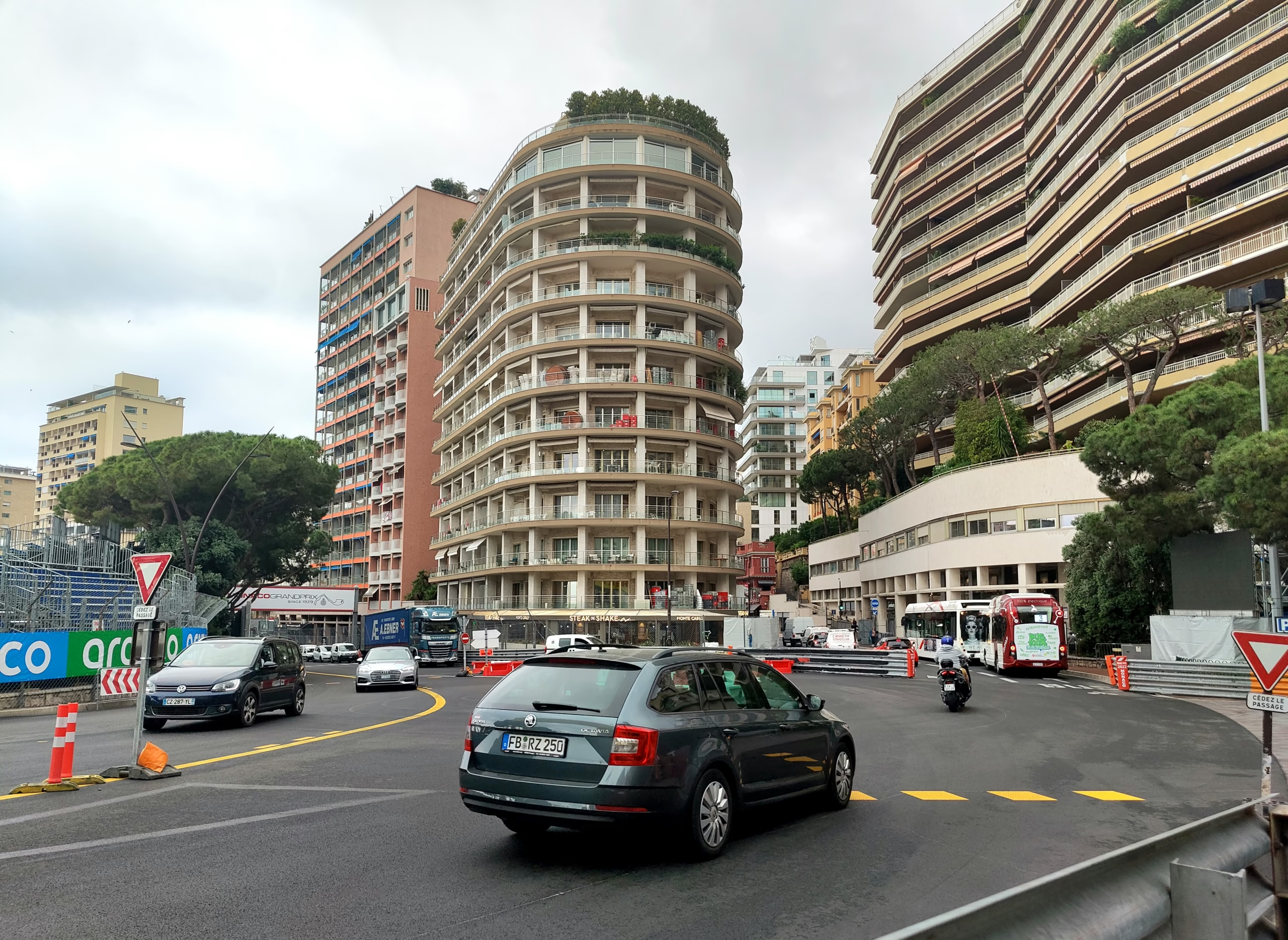
Sainte Devote — the first corner after the start/finish straight — Photo: Circuit de Monaco / CC BY 2.0
Tunnel, chicane, and the Swimming Pool
The famous tunnel section delivers a sudden change from bright sunlight to shade and back again, unsettling vision and tyre temperatures. The Nouvelle Chicane leads into the Swimming Pool complex — a fast left-right taken close to the harbour — before the run to Tabac and the tight Rascasse hairpin that feeds the pit straight.
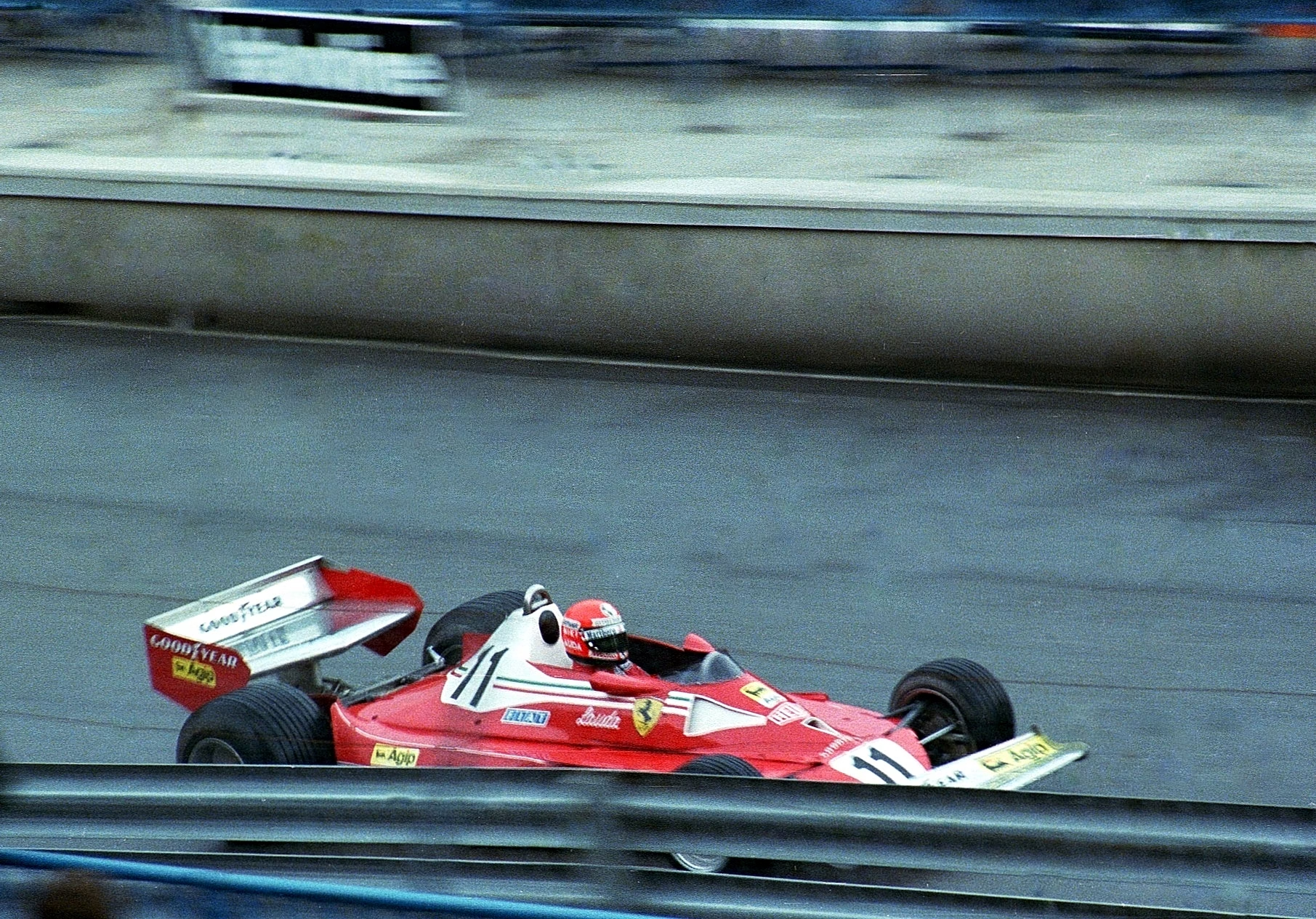
The Swimming Pool section in 1977 — Photo: Martin Lee / CC BY 2.0
Downforce matters, but so does mechanical grip on patched public asphalt. Ride height and suspension compliance decide whether a car can be pushed through the Swimming Pool without bouncing off the kerbs. Engineers who excel at conventional permanent circuits sometimes find Monaco exposes weaknesses in slow-speed stability.
Formula One at Monaco
Monaco has hosted the world championship every year since 1950 except when the race was cancelled (1951, 1953, 1954, and 2020 due to the COVID-19 pandemic). No other current venue can match that continuity of prestige.

Starting grid, 2019 Monaco Grand Prix — Image: Odor / CC BY-SA 4.0
Golden eras
1960sΓÇô1970s: Graham Hill earned the nickname ΓÇ£Mr MonacoΓÇ¥ with five wins. Jackie Stewart and Niki Lauda added victories in an era when safety improvements were gradual but real.
1980sΓÇô1990s: Alain Prost and Ayrton Senna defined the modern statistical record. Senna—s six Monaco wins — including a dominant run in the late 1980s — remain central to how fans remember both the driver and the circuit.
2000s: Michael Schumacher won five times for Ferrari, matching Hill—s tally and underlining how track position and qualifying mastery translate directly into trophies here.
Modern championship weekends
Recent seasons have reinforced Monaco—s strategic character. Tyre management, safety-car timing, and pit-stop undercuts often matter more than raw pace. Hamilton—s 2021 race lap record came in a year when overtaking was especially scarce; the competitive story was as much about track position as about ultimate single-lap speed.
Formula One—s calendar has expanded into the Middle East and Asia, yet Monaco retains a protected status. Promoters and the FIA accept compromises — fewer overtakes, tighter logistics — because the race—s global visibility is unmatched.
Other racing in Monaco
Formula One is the headline, but not the only motorsport story in the principality.
The Historic Grand Prix of Monaco runs classic machinery on the same streets between F1 visits, giving spectators a sense of how much grip and courage have changed. Formula E has used a shortened harbour layout for the Monaco E-Prix, linking the modern electric championship to the same waterfront imagery.
Before the world championship era, sports cars and voiturette races shared the calendar. Today—s supporting categories on F1 weekend — Formula 2 and F3 — give younger drivers their first taste of barriers that do not forgive experimentation.
Records, legends, and famous moments
- Most F1 wins: Ayrton Senna (6).
- Five wins: Graham Hill, Michael Schumacher.
- Official F1 race lap record (current layout): Lewis Hamilton, 1:14.260 (2021).
- First championship race winner (1950): Juan Manuel Fangio.
Memorable races are not always record-breaking. Senna—s 1988 qualifying lap — when he pulled seconds on his team mate — is still discussed as a psychological as much as a technical feat. Schumacher—s battles with Fernando Alonso in the mid-2000s showed how Monaco could decide championship momentum without a single bold overtake.
Compared with high-speed temples such as Spa-Francorchamps or permanent modern venues like the Bahrain International Circuit, Monaco trades average speed for theatre. That trade is deliberate, and after nearly a century it still works.
Safety and circuit changes
Monaco has never been ΓÇ£safeΓÇ¥ in the abstract sense of wide run-off. Instead, organisers have chipped away at specific dangers: barrier advances, chicane additions, and runoff where geography allows. The Swimming Pool section replaced older harbour-side roads; the Nouvelle Chicane slowed approach speeds to the tunnel.
Fatal accidents here, as at any street circuit, shaped attitudes across the sport. Modern F1 cars survive impacts that would have been unsurvivable in the 1960s, yet the fundamental risk profile — close walls, no gravel — remains. Drivers accept that contract once a year in exchange for the honour of winning on the most famous strip of asphalt in motorsport.
Visiting Monaco during race week
Monaco is among the most expensive and crowded weekends on the sporting calendar. Hotels book years ahead; harbour-view terraces sell as corporate hospitality. For many fans, watching from the hillside paths above the circuit or from a rented apartment balcony is the realistic option.
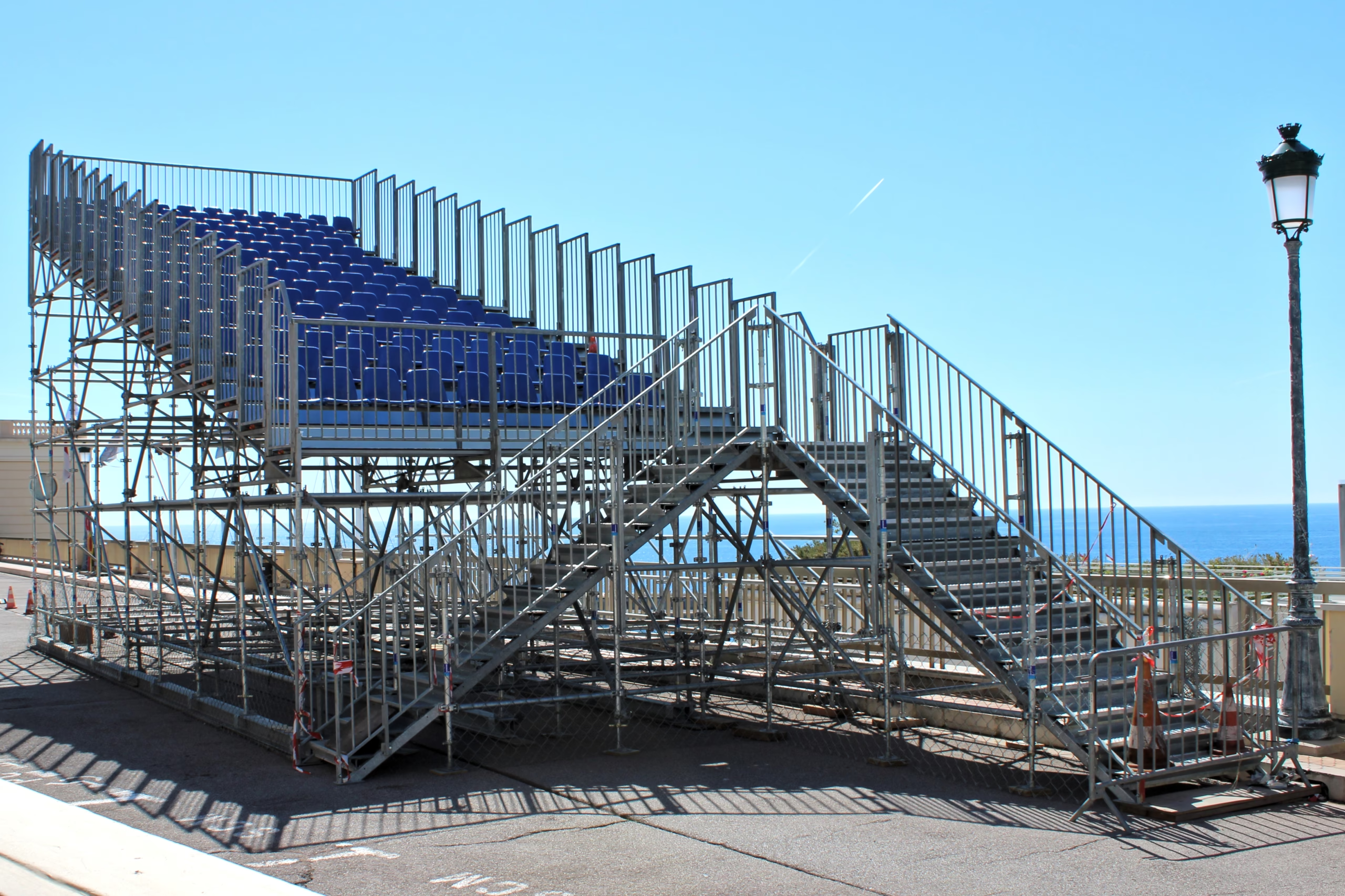
Grandstands packed above the harbour — Photo: Alexander Migl / CC BY-SA 4.0
Getting around
Nice C├┤te d—Azur Airport is the usual gateway, with trains and helicopters linking the French coast to Monaco. On race weekend, roads inside the principality close progressively as barriers are installed. Walking is often faster than driving.
Tickets and viewing
Official grandstands line the harbour and swimming pool sections; general-admission areas on the hills fill early. Ear protection, sun cream, and realistic expectations about overtaking all improve the experience.
Outside May, you can still walk much of the lap on public footpaths and recognise corners from television. The circuit is the city — there is no separate ΓÇ£track dayΓÇ¥ toll road as at the N├â•rburgring.
Fast facts about the Monaco Grand Prix
- The first Monaco Grand Prix was held in 1929.
- The current F1 layout measures 3.337 km with 19 turns.
- It is the only grand prix run entirely within city streets on the modern calendar.
- Ayrton Senna holds the record of six Formula One wins at Monaco.
- The race was part of the first F1 world championship season in 1950.
- Lewis Hamilton set the official F1 race lap record (1:14.260) in 2021.
- The 2020 Monaco Grand Prix was cancelled because of the COVID-19 pandemic.
Frequently asked questions about the Monaco Grand Prix
Where is the Monaco Grand Prix held?
In the Principality of Monaco and Monte Carlo, on a temporary street circuit that uses public roads around the harbour, tunnel, and casino district. The race is not held on a permanent track outside the city.
How long is the Circuit de Monaco?
The current Formula One layout is 3.337 km per lap with 19 turns. It is the shortest lap distance on the modern F1 calendar.
When was the first Monaco Grand Prix?
The first Monaco Grand Prix was run on 14 April 1929. William Grover-Williams won in a Bugatti. Formula One has raced there since the inaugural 1950 world championship season (with a few cancellations).
Why is Monaco so hard for Formula One drivers?
There is almost no margin for error. Armco barriers line the circuit, overtaking is rare, and modern cars are long and wide. Qualifying position and flawless precision matter more than at most permanent circuits such as Silverstone.
Who has won the most Formula One races at Monaco?
Ayrton Senna holds the record with six Formula One wins at Monaco. Graham Hill and Michael Schumacher each won five times.
What is the Formula One lap record at Monaco?
The official F1 race lap record on the current layout is 1:14.260, set by Lewis Hamilton in the 2021 Monaco Grand Prix. Faster laps in qualifying use different session rules and should not be compared directly to race records.
Is Monaco a permanent racing circuit?
No. It is a temporary street circuit. Roads are closed and barriers installed for the event, then returned to normal traffic. That is part of what makes it unique compared with purpose-built venues like the Hungaroring.
Can you walk the Monaco Grand Prix circuit?
Yes, outside race week. Much of the route is ordinary city streets and footpaths. During the grand prix, large areas are restricted to ticket holders and accredited personnel.
Was the Monaco Grand Prix ever cancelled?
Yes. The race was not held in some early championship years (for example 1951, 1953, and 1954) and was cancelled in 2020 because of the COVID-19 pandemic. It has otherwise been a fixture of the F1 calendar for decades.
Monaco in modern Formula One
Calendar politics, sustainability targets, and the push for overtaking-friendly tracks have prompted recurring debate about Monaco—s place on the schedule. Yet the race survives because it delivers something metrics struggle to capture: a sense of occasion.
Drivers still want to win here. Teams still bring special liveries. Fans still treat the Sunday procession through the principality as a ritual. As long as that holds, the Circuit de Monaco will remain the street race by which every other street race is judged.
Related reading
- Spa-Francorchamps — Ardennes speed and elevation
- Silverstone Circuit — British Grand Prix home
- Imola Circuit — San Marino and Emilia-Romagna history
- Hungaroring — Hungary—s permanent F1 venue
- Yas Marina Circuit — Abu Dhabi season finale
Location: Circuit de Monaco, Monte Carlo, Principality of Monaco
Event: Formula One Monaco Grand Prix (typically late May)
Related Posts