
Autopolis Circuit – Kyushu Super GT and Mountain Track Guide
Originally published May 2016. Last updated September 2026: expanded Tier B circuit guide, facts table, table of contents, internal links, FAQ schema, and editorial refresh while preserving legacy narrative and images.
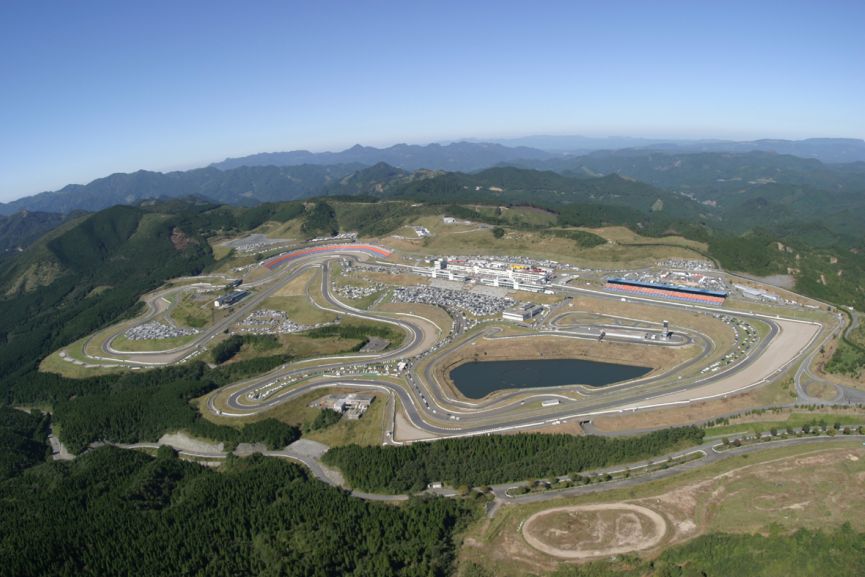
Autopolis is a 4.673-kilometre permanent race circuit in Oita Prefecture on Japan’s Kyushu island, built on a forested mountainside more than 600 metres above sea level. Tomonori Tsurumaki opened the track in 1990 with museum-grade facilities and Benetton Formula One guests; financial collapse closed it in 1993 before Kawasaki Motors revived the venue in 2005 for Super GT and Super Formula.
Autopolis matters because it is Japan’s most ambitious “destination” circuit — part racetrack, part art gallery, part billionaire’s retreat. Michael Schumacher and Karl Wendlinger won the only World Sportscar Championship race here; Super GT regulars treat the long lap as a horsepower and tyre-wear exam.
Compare Kyushu’s mountain track with Sportsland SUGO, Fuji Speedway, and Suzuka — only Autopolis tried, and failed, to lure Formula One away from the established Japanese calendar.
Contents
- Autopolis Circuit facts
- Tomonori Tsurumaki’s vision
- 1990 opening and Benetton
- 1991 World Sportscar Championship
- The failed Formula One dream
- Bankruptcy and silence
- Kawasaki revival
- Super GT at Autopolis
- Super Formula and Formula Nippon
- 2016 Kumamoto earthquakes
- Autopolis today
- Frequently asked questions
Autopolis Circuit facts
| Location | Hita, Oita Prefecture, Kyushu, Japan |
|---|---|
| Circuit type | Permanent road course (mountain facility) |
| Opened | November 1990 |
| Length | 4.673 km (main layout); 3.022 km short course |
| Turns | 19 (full course) |
| Elevation change | About 52 m |
| Main events | Super GT; Super Formula; MFJ Superbike; national club racing |
| Operator | Kawasaki Motors Corporation (since 2005) |
| Major international win | 1991 WSC — Schumacher / Wendlinger (Sauber-Mercedes C291) |
Lap record note: GT, superbike, and open-wheel categories run different tyres and downforce levels. Compare lap times only within the same series and layout.
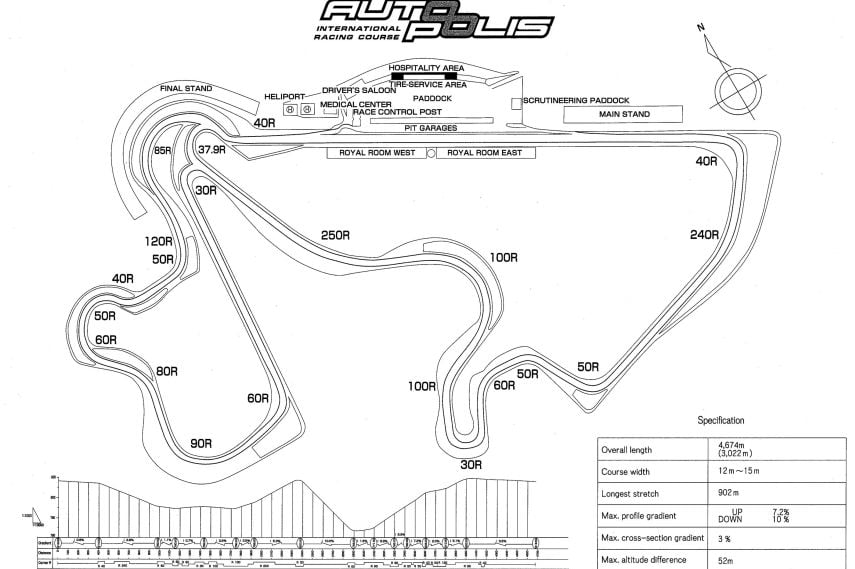
Autopolis track layout (legacy article map)
Tomonori Tsurumaki imagined a mountain art resort
Japanese property developer Tomonori Tsurumaki wanted businessmen to escape polluted cities for art and racing in the Aso Kuju National Park. He commissioned designer Yoshitoshi Sakurai and planned an on-site gallery for his collection — including a $51.3 million Pablo Picasso, Les Noces de Pierrette, bought at auction in Paris in 1989.
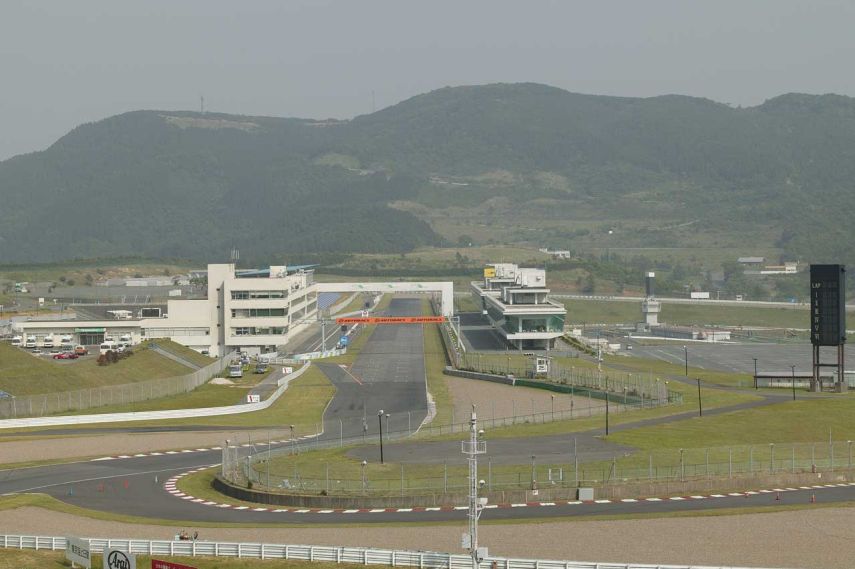
Autopolis opened in 1990 with lavish facilities
Benetton helped open Autopolis in 1990
The November 1990 ceremony featured Benetton drivers Nelson Piquet and Alessandro Nannini with team principal Flavio Briatore. Autopolis sponsored Benetton in 1990 as Tsurumaki pushed for a Formula One calendar slot.
The first competitive event paired American Buick single-seaters shipped from the United States with Japanese drivers — a USA-versus-Japan spectacle with CART veterans such as Johnny Rutherford and Gary Bettenhausen.
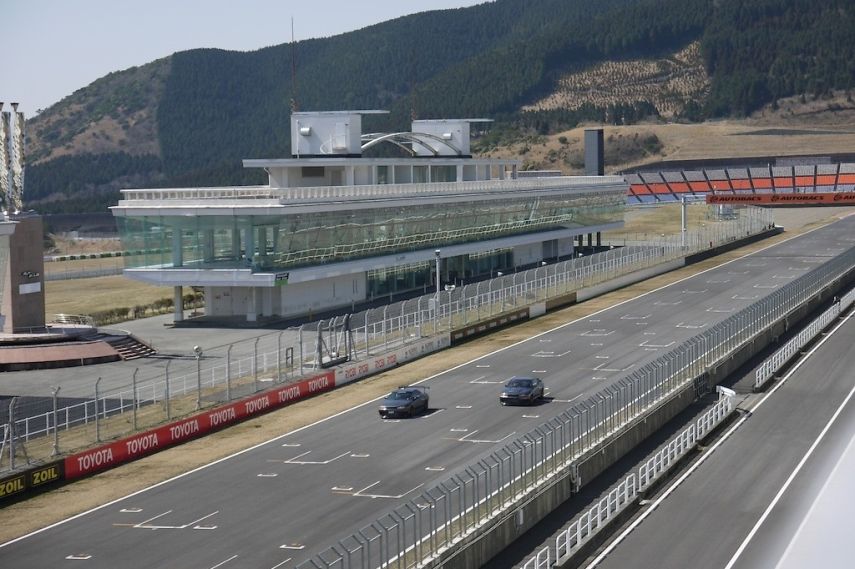
Ultra-modern facilities could not overcome Autopolis’s remote location
Schumacher and Wendlinger won the 430 km of Autopolis
The 1991 World Sportscar Championship finale, the 430 km of Autopolis on 28 October 1991, remains the circuit’s only major world-championship race. Schumacher and Wendlinger won in the Sauber-Mercedes C291; Teo Fabi finished third in a Jaguar XJR-14 and took the drivers’ title.
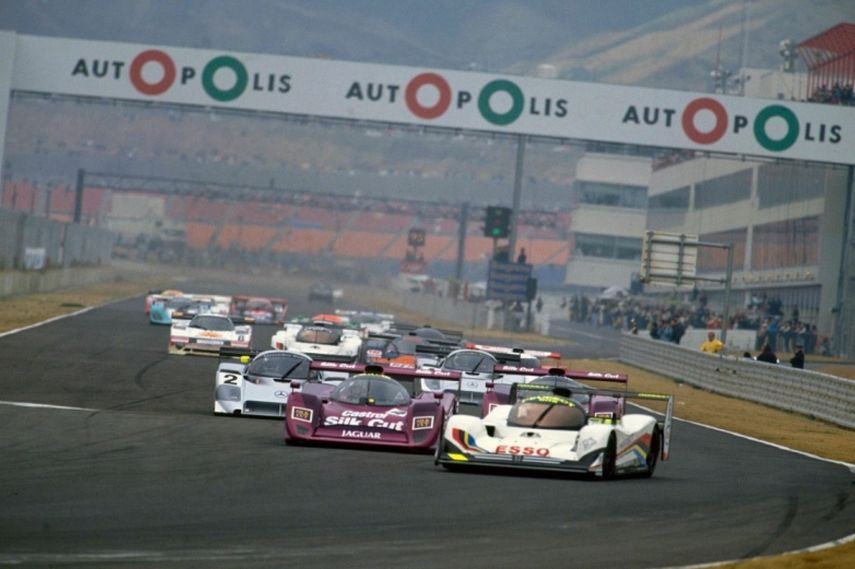
Schumacher and Wendlinger won the 1991 WSC race at Autopolis
Formula One never came to Kyushu
Tsurumaki believed altitude and scenery would sell tickets, but the nearest city was roughly 40 minutes away by road — too far for Formula One’s hotel-and-logistics model. FIA draft calendars listed a 1993 Asian Grand Prix at Autopolis, yet Japan’s early-1990s financial crisis bankrupted Tsurumaki’s Nippon Tri-Trust group before a race could be organised.
Bankruptcy left Autopolis dormant
After Tsurumaki lost control, the Hazama Corporation held the site through years of minimal activity. Japanese Formula 3000 raced in 1991–1992; otherwise the mountain complex sat largely unused until motorcycle manufacturer Kawasaki intervened.
Kawasaki Motors reopened Autopolis in 2005
Kawasaki Motors Corporation purchased the circuit in 2005 and restored national championship calendars. The investment stabilised maintenance on a track that had been designed for international glamour but needed domestic racing to survive.
Super GT made Autopolis a regular stop
JGTC/Super GT arrived in October 2003 before the Kawasaki takeover, with Manabu Orido and Dominik Schwager winning in a Toyota Supra. Satoshi Motoyama became the first three-time GT winner at Autopolis; Tsugio Matsuda and Ronnie Quintarelli later matched that record with back-to-back victories in 2014–2015.
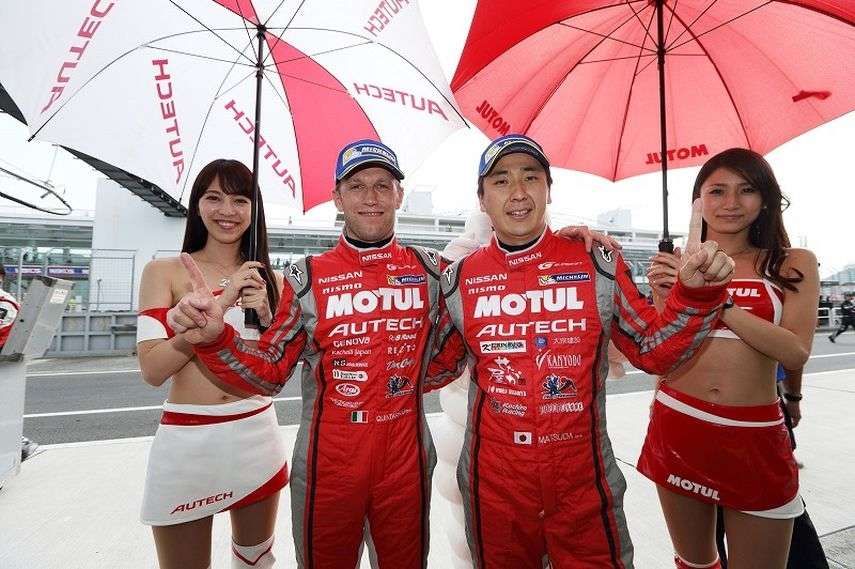
Quintarelli and Matsuda dominated recent Super GT races at Autopolis
Single-seaters returned with Formula Nippon
Formula Nippon resumed at Autopolis in 2006 after Japanese F3000 visits in the early 1990s. Matsuda won both GT and Formula Nippon races that year. Kazuki Nakajima and André Lotterer each collected victories in multiple disciplines at the circuit.
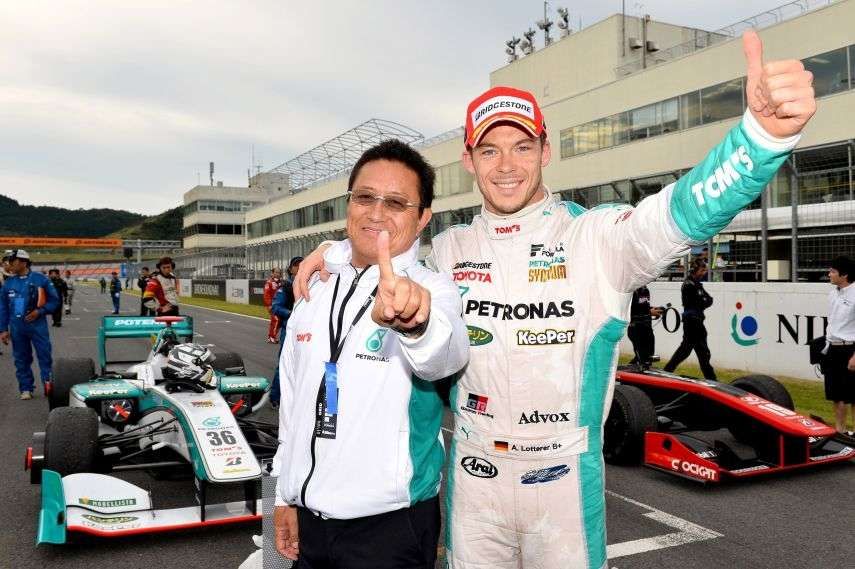
Lotterer scored four Autopolis wins across GT and single-seater categories
2016 earthquakes cancelled a double-header
The April 2016 Kumamoto earthquakes forced cancellation of planned Super GT and Super Formula rounds. Both series returned in 2017; Nakajima later recorded a fourth career win at the venue in Super GT.
Autopolis in 2026
Autopolis remains on the Super GT and Super Formula calendars alongside club racing and manufacturer testing. Allow extra travel time from Oita or Fukuoka and check autopolis.jp for ticketed events.
Frequently asked questions about Autopolis Circuit
Where is Autopolis Circuit?
Autopolis International Racing Course sits in Hita, Oita Prefecture on Japan’s southern island of Kyushu, in the hills of the Aso Kuju National Park.
How long is the Autopolis circuit?
The main road course is 4.673 km with 19 turns and about 52 metres of elevation change. A shorter 3.022 km layout is also available.
When did Autopolis open?
The circuit opened in November 1990, built by businessman Tomonori Tsurumaki with a reported investment of around $500 million.
Did Formula One ever race at Autopolis?
No. FIA draft calendars once listed a 1993 Asian Grand Prix at Autopolis, but Tsurumaki’s company collapsed in the early-1990s financial crisis before a race could be held. Distance from hotels was another obstacle.
Who owns Autopolis today?
Kawasaki Motors Corporation bought the venue in 2005 and reopened it for national championships after years of near-inactivity under interim owners.
What major international race has Autopolis hosted?
The 1991 World Sportscar Championship round — the 430 km of Autopolis — was won by Michael Schumacher and Karl Wendlinger in a Sauber-Mercedes C291.
Does Super GT race at Autopolis?
Yes. Super GT has visited regularly since the 2003 JGTC era. Drivers such as Tsugio Matsuda and Ronnie Quintarelli each have multiple GT wins at the mountain circuit.
What happened to Autopolis after the 2016 Kumamoto earthquakes?
Planned 2016 Super GT and Super Formula rounds were cancelled after the Kumamoto earthquakes in April. Both series returned in 2017.
Why is Autopolis famous off the track?
Tsurumaki paid $51.3 million for Pablo Picasso’s Les Noces de Pierrette in 1989, announcing it would hang in an art gallery at the circuit — part of his vision of a luxury motorsport retreat.
How do you visit Autopolis?
Event tickets and circuit information are at autopolis.jp. Allow extra travel time from Oita or Fukuoka; the venue sits well away from city-centre hotels.
Related reading
- Sportsland SUGO — Japan’s northern touring-car temple
- Okayama International Circuit — Pacific Grand Prix history
- Fuji Speedway — Japan’s Fuji Formula One host
- Twin Ring Motegi — oval and road course in one
Address: Autopolis International Racing Course, 877-0312 Hita, Oita Prefecture, Kamitsue, Kaminoda 1112-8, Japan
Phone: +81 973-55-1111
Official website: autopolis.jp