

Circuit of the Americas – US Grand Prix Circuit Guide
Originally published August 2015. Last updated September 2026: replaced broken 2015 uploads with Wikimedia Commons images (attribution in captions)
Circuit of the Americas (COTA) is a 5.513-kilometre counter-clockwise road course near Austin, Texas, and the first United States track purpose-built for modern Formula 1. Since its 2012 opening it has hosted the United States Grand Prix, MotoGP, IMSA WeatherTech SportsCar Championship, FIA WEC Lone Star Le Mans, and IndyCar, alongside concerts and club racing on Hermann Tilke’s rolling Travis County layout.
The venue matters because it brought F1 back to the USA with Grade 1 infrastructure, a signature Turn 1 climb, and a 77-metre observation tower that defines the Austin skyline on race weekend. Drivers praise the challenge; critics sometimes compare later sectors to other Tilke templates — but the combination of elevation, crowd energy, and Texas hospitality keeps COTA on the world calendar.
Compare other Hermann Tilke American neighbours and US road-course hubs: Sepang International Circuit, Indianapolis Motor Speedway, Watkins Glen International, and Road Atlanta.
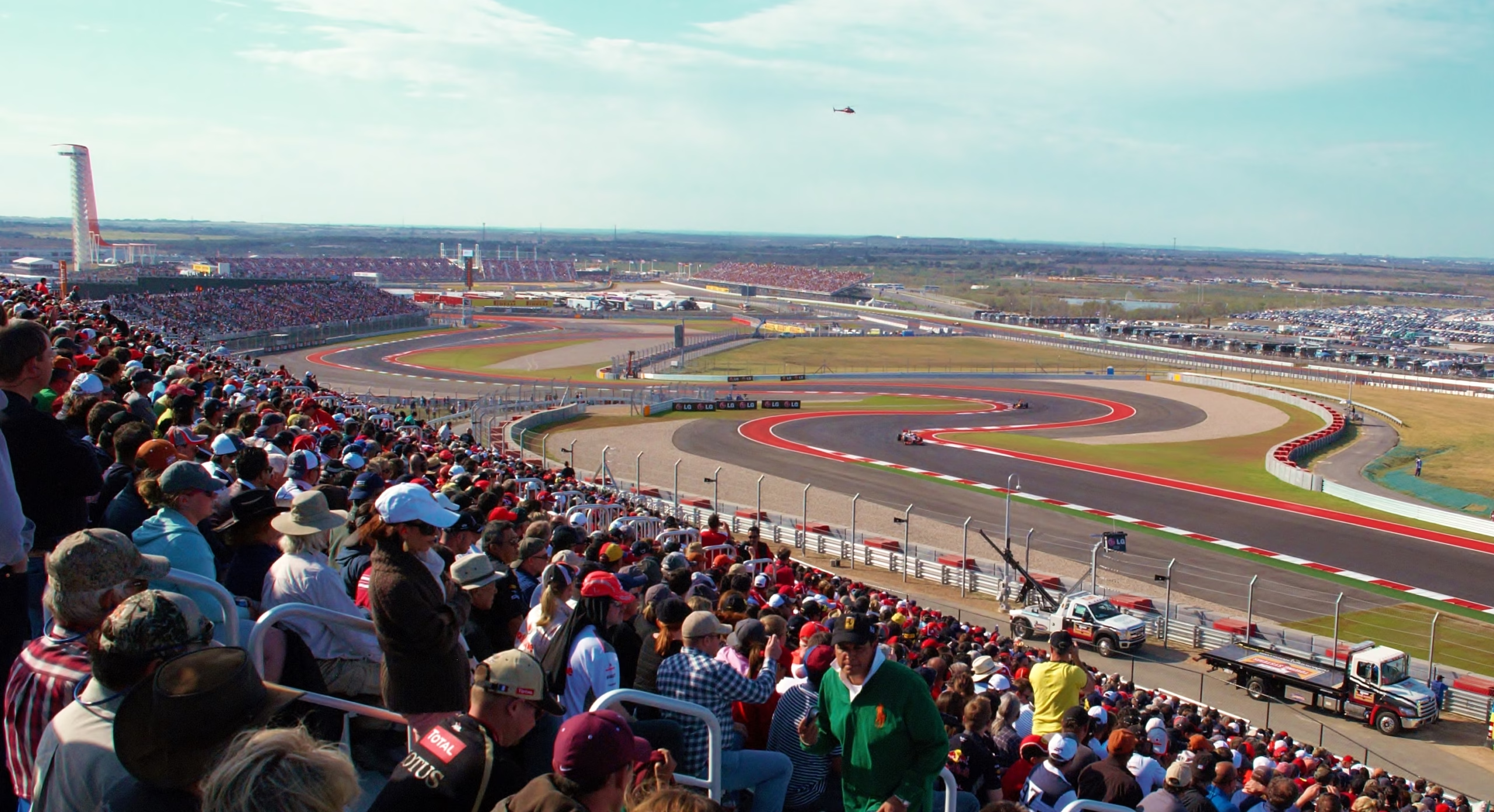
Fans packed COTA for Formula 1’s return to the United States in November 2012 — Photo: Seefrank / CC BY-SA 3.0
Contents
Circuit of the Americas facts
| Location | Elroy, Travis County, near Austin, Texas, United States |
|---|---|
| Circuit type | Permanent road course (counter-clockwise) |
| Opened | October 2012 (first United States Grand Prix 18 November 2012) |
| F1 layout | 5.513 km, 20 turns |
| Designer | Hermann Tilke |
| Grandstand capacity | About 120,000 (venue-wide figures higher with general admission) |
| Main events | Formula 1 United States Grand Prix; MotoGP; IMSA; FIA WEC; IndyCar (historic) |
| Notable sections | Turn 1 uphill hairpin; Esses (Turns 3–6); Stadium section; long back straight |
| Landmark | 77 m observation tower and Austin 360 Amphitheater (14,000 seats) |
Lap record note: F1 qualifying, race, IMSA, and MotoGP sessions use the same footprint but different tyres and fuel loads. The official F1 race lap record is 1:36.169 (Max Verstappen, 2021).
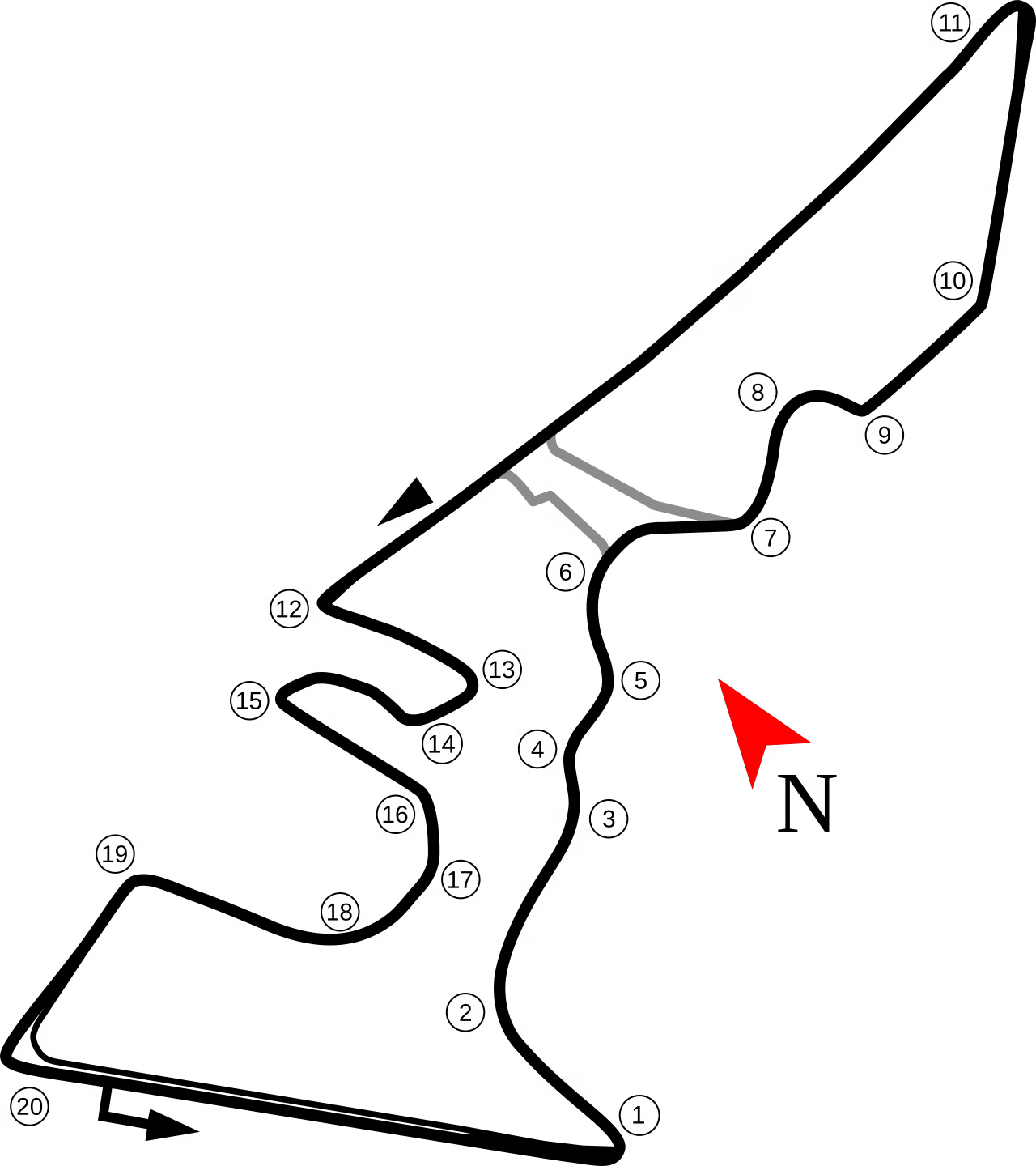
Circuit of the Americas Grand Prix layout (5.513 km) — Map: Francesco Betti Sorbelli via Wikimedia Commons
Circuit of the Americas opened in 2012
In 2010, when the US Federal Emergency Management Agency issued a letter stating the project met its floodplain criteria (part of the site lies in a floodplain), construction began. The track was funded entirely using private money. It took two years to complete and was officially opened in October 2012.
Inspired by other Formula 1 circuits
This was the first circuit in the USA specially designed for Formula 1 racing. The designer was German architect and circuit designer Hermann Tilke, who already had acclaimed layouts such as Sepang, Yas Marina, Shanghai, and Bahrain attached to his name.
The Circuit of the Americas is a 5.513 km counter-clockwise track with 20 turns. The capacity of the main grandstands is about 120,000. The track follows the contours of the land, like many European circuits, and borrows corner inspiration from several Formula 1 venues. One distinctive feature is the deliberate widening of corners to encourage drivers to follow multiple racing lines.

On-track action during the inaugural United States Grand Prix at COTA, 2012 — Photo: Ryan Bayne / CC BY 2.0
Turn 1 and the esses
The opening sequence climbs sharply to the left-hand Turn 1 hairpin — one of the steepest braking zones on the calendar — before the flowing esses through Turns 3 to 6. That combination of elevation and rhythm defines COTA’s character more than the later stadium section, which some drivers compare to other Tilke venues.
Divided opinions about the demanding track
Circuit of the Americas is one of the few counter-clockwise tracks on the Formula 1 calendar, so it is more physically demanding: drivers’ bodies, especially necks, are more accustomed to the lateral G-forces of clockwise circuits.
Despite the extra strain, most Formula 1 drivers describe Circuit of the Americas as spectacular and challenging, while some are less enthusiastic about sectors that echo other Tilke templates, especially in the second and third sectors.
Sebastian Vettel set the pole lap of 1:39.347 for Red Bull during the inaugural United States Grand Prix in 2012 — a benchmark from the first year of Pirelli-era tyres. Lewis Hamilton won that race for McLaren and has since added multiple US Grand Prix victories at Austin. Max Verstappen holds the current official F1 race lap record after his 2021 win for Red Bull.
Attractive and modern facilities
Other major features on the site are the Observation Tower, Grand Plaza, and Austin 360 Amphitheater, all designed by Miro Rivera Architects. The observation tower is a 77 m landmark for the venue and provides a 360-degree panorama of the circuit, as well as a view of downtown Austin. Visitors can take a high-speed elevator or climb 428 steps to the top.
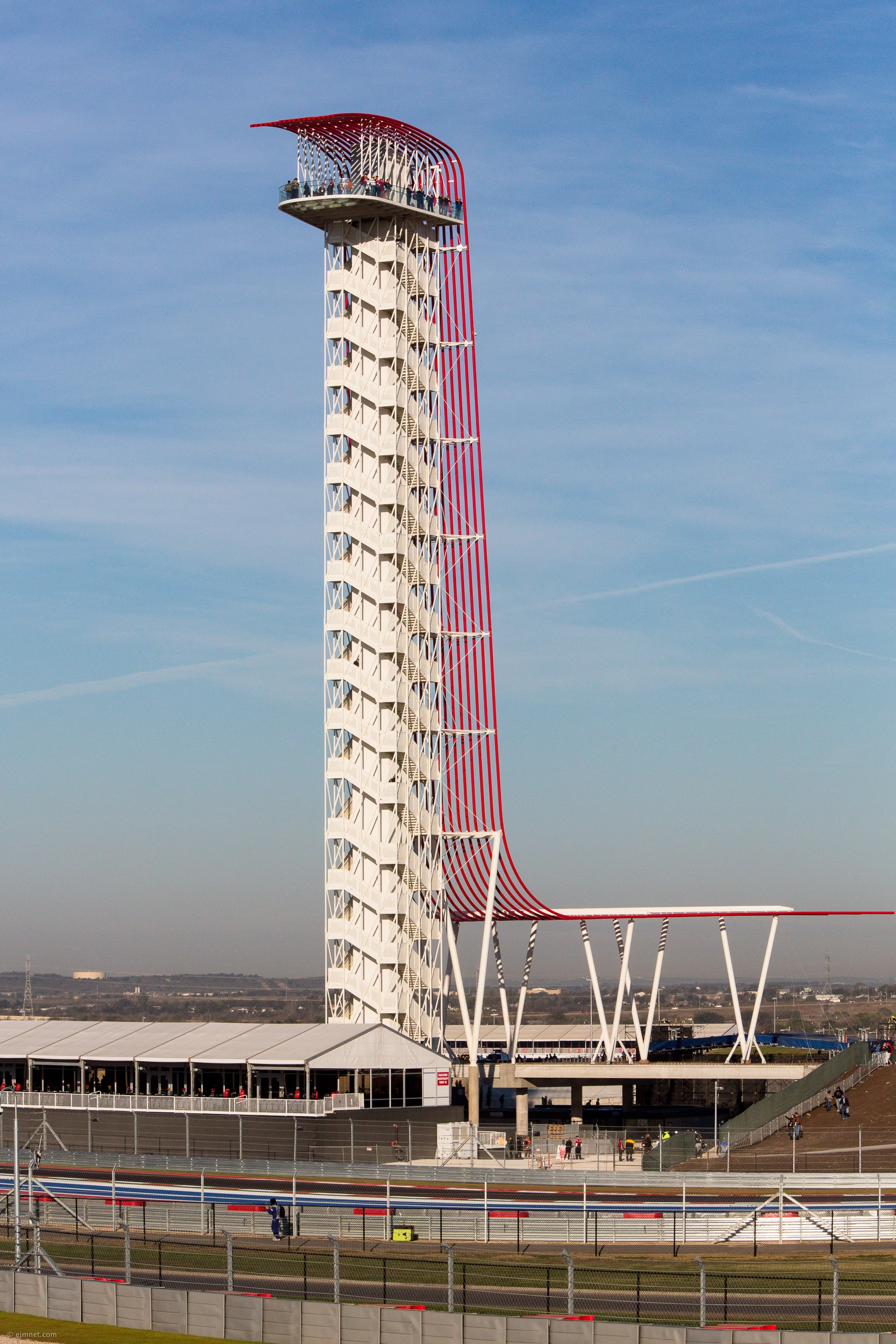
COTA’s observation tower rises above the Grand Plaza — Photo: formulanone / CC BY-SA 2.0
The Grand Plaza provides retail and restroom facilities, a large reflecting pool, lawn, and landscaped zones. The open-air amphitheater, with a capacity of 14,000 seats, hosts major concerts and non-racing events.
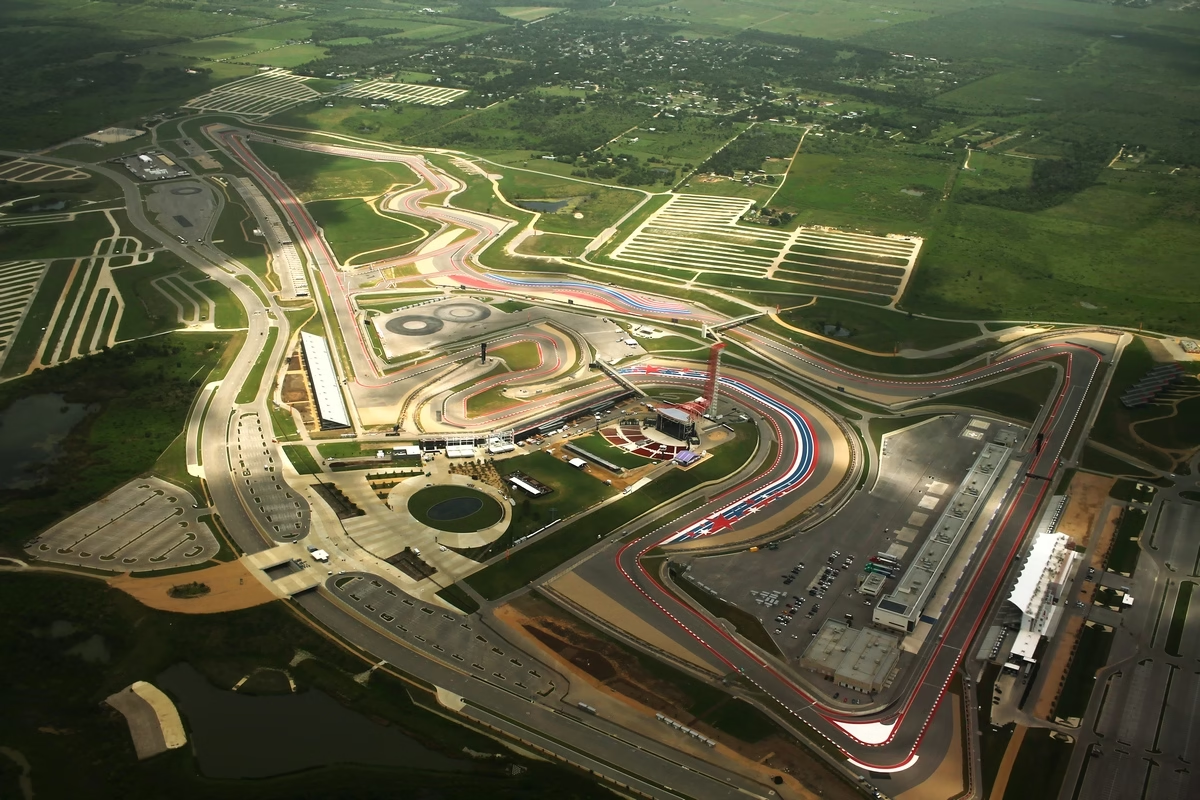
The circuit follows rolling Travis County terrain east of downtown Austin — Photo: formulanone / CC BY-SA 2.0
World championships and economic impact
Today, Circuit of the Americas brings almost $1 billion in economic impact to Central Texas through increased tourism and annual operations. With Formula 1, MotoGP, IMSA, WEC, and major concerts on the calendar, COTA remains one of the busiest purpose-built motorsport campuses in North America.
One round of the Australian V8 Supercars Championship was also held at Circuit of the Americas in the venue’s early years, underlining how aggressively promoters marketed the track to international series.
Address and contact
Address: 9201 Circuit of the Americas Blvd, Austin, TX 78617, United States
Phone: +1 512-301-6600
Website: circuitoftheamericas.com
Frequently asked questions about Circuit of the Americas
Where is Circuit of the Americas?
Circuit of the Americas (COTA) is in Travis County near Austin, Texas, United States — about 15 miles south-east of downtown Austin off State Highway 130.
When did Circuit of the Americas open?
COTA opened in October 2012 after roughly two years of private construction once floodplain approvals cleared in 2010.
How long is the Circuit of the Americas F1 track?
The current Formula 1 Grand Prix layout measures 5.513 km with 20 turns on a counter-clockwise road course.
Who designed Circuit of the Americas?
German architect Hermann Tilke designed COTA — the first United States circuit built specifically for modern Formula 1, following his work on venues such as Sepang and Shanghai.
What is the United States Grand Prix lap record at COTA?
Max Verstappen set the official F1 race lap record of 1:36.169 for Red Bull at the 2021 United States Grand Prix. Compare only within the same layout and session type.
Why is COTA physically demanding for drivers?
COTA runs counter-clockwise, so lateral loads stress neck muscles differently from most clockwise F1 calendars. The opening Turn 1 climb and long esses in Sector 1 add to the workload.
What major championships race at COTA?
The calendar has included Formula 1 United States Grand Prix, MotoGP, IMSA WeatherTech SportsCar Championship, FIA WEC Lone Star Le Mans, and IndyCar — plus concerts and club racing on support weekends.
What is the COTA observation tower?
The observation tower is a 77-metre landmark by Miro Rivera Architects with a 360-degree panorama of the track and Austin skyline, reached by elevator or 428 steps.
Who won the first United States Grand Prix at COTA?
Lewis Hamilton won the inaugural 2012 United States Grand Prix for McLaren. Sebastian Vettel finished second for Red Bull after leading much of the race.
Can you visit Circuit of the Americas?
Yes. COTA hosts public track days, driving experiences, concerts at the Austin 360 Amphitheater, and major race weekends. Check circuitoftheamericas.com for tickets and schedules.