

Circuits
Arctic Circle Raceway – Northernmost Permanent Race Track Guide
The Arctic Circle Raceway is the longest racing venue in Norway and northernmost racetrack in the world, just around 30 km from the Arctic Circle.
Originally published December 2016. Last updated September 2026: expanded Tier B circuit guide, facts table, table of contents, internal links, FAQ schema, and editorial refresh while preserving legacy narrative and images.
Arctic Circle Raceway (ACR) is a 3.753 km permanent road course near Mo i Rana in northern Norway — the northernmost permanent race track on Earth and one of the longest circuits in the country. Built in 1995 on a former iron-ore mine about 30 km south of the Arctic Circle, it combines fast flowing corners with midnight-sun track days in summer and ice-racing weekends in winter.
The venue matters because local enthusiasts designed it without a professional circuit architect, borrowing inspiration from corners at the Nürburgring, Circuit Paul Ricard, and Silverstone. Scandinavian Touring Car Championship rounds once headlined the calendar; today drifting cups, motorcycle track days, and driver training keep the asphalt busy despite the remote location.
For Nordic context compare Mantorp Park, Scandinavian Raceway Anderstorp, and Karlskoga Motorstadion — Scandinavian national circuits that mixed tin-top glory with Formula 3 visitors.
Contents
Arctic Circle Raceway facts
| Location | Near Mo i Rana, Nordland county, Norway (about 25 km north of town; ~30 km south of the Arctic Circle) |
|---|---|
| Circuit type | Permanent asphalt road course (counter-clockwise) |
| Opened | 1995 (construction cost about USD 10 million) |
| Length | 3.753 km (13 turns; width 11–13 m) |
| Elevation change | About 31 m across the lap |
| Longest straight | 493 m |
| Main activities | Track days, driver training, drifting cups, motorcycle racing, winter ice events |
| Historic headline series | Scandinavian Touring Car Championship (1990s–early 2000s) |
| Operator | Arctic Circle Raceway AS (local ownership; investment plans ongoing) |
Lap record note: Motorcycle, car, and drifting sessions use different tyres and layouts. Published lap times are useful references only within the same category and event.

Arctic Circle Raceway sits in dramatic northern Norwegian scenery
Twenty-four hours of daylight in summer
ACR is among the most exotic destinations for motorsport travellers. Reaching it takes effort — flights to Trondheim or Bodø, long drives, or a train to Skonseng — but summer visitors can lap under the midnight sun while winter guests find ice-racing and snow events on the same property.
Local enthusiasts built the track in 1995
A group of Norwegian car and speed fans designed the circuit themselves, stitching together favourite corners from famous European tracks. The result opened in 1995 on an abandoned iron-ore mine at a reported cost of USD 10 million. The flowing layout was planned primarily for motorcycle racing even though cars and drifting now share the calendar.

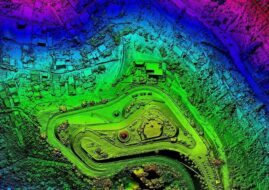
Aerial view of Arctic Circle Raceway
Fast, flowing, and counter-clockwise
The counter-clockwise lap measures 3.753 km with 13 turns, 11–13 m of width, a 493 m main straight, and 31 m of elevation change. Photogenic fjord-and-mountain scenery is part of the appeal — a contrast with flat infield ovals such as Mantorp Park.
STCC glory and today’s club calendar
In the 1990s and early 2000s the Scandinavian Touring Car Championship visited ACR, putting tin-top stars on the same asphalt as national motorcycle grids. Distance from Stockholm, Oslo, and other population centres eventually pulled major championships south, but the circuit remains one of Norway’s best permanent tracks.
Today the calendar leans on track days, driver training, go-karts, and well-attended drifting cups. Remarkably, the original asphalt has not been fully renewed since opening yet still grips well in dry conditions.

Race control tower at Arctic Circle Raceway
Restaurant, press centre, and upgrades
The race-control tower houses a restaurant, café, modern press centre, and circuit administration. Owners have discussed further investment to attract national and regional championships back to the world’s northernmost permanent racecourse.

Pit lane at Arctic Circle Raceway
Getting to Mo i Rana
ACR lies about 25 km north of Mo i Rana. The nearest airport is Røssvoll (Mo i Rana) with links to Bodø and Trondheim; Trondheim Airport is the nearest major international hub, roughly a seven-hour drive. Oslo is about 13 hours by road.
Trains connect Trondheim and Bodø; Skonseng station sits about 15 km south of the circuit. Mo i Rana offers limited but comfortable hotel options. Plan fuel, tyres, and recovery carefully — assistance is sparse compared with southern European circuits.
Frequently asked questions about Arctic Circle Raceway
Where is Arctic Circle Raceway?
Arctic Circle Raceway is near Mo i Rana in Nordland, northern Norway, about 25 km north of town and roughly 30 km south of the Arctic Circle.
How long is Arctic Circle Raceway?
The permanent layout is 3.753 km per lap with 13 turns, running counter-clockwise. Track width is about 11–13 m.
When did Arctic Circle Raceway open?
The circuit opened in 1995 on a former iron-ore mine at a reported cost of about USD 10 million, built by local motorsport enthusiasts.
Is Arctic Circle Raceway the northernmost race track?
Yes among permanent asphalt race circuits — ACR is widely cited as the northernmost permanent race track in the world, which is central to its appeal for midnight-sun track days.
What races are held at Arctic Circle Raceway?
Major championships are limited today, but the calendar includes track days, driver training, drifting cups, motorcycle events, and winter ice racing. The Scandinavian Touring Car Championship raced here in the 1990s and early 2000s.
Can you drive at Arctic Circle Raceway in summer daylight all night?
During the Arctic summer, 24-hour daylight allows extended track sessions without floodlights — one of the circuit’s unique selling points for visitors.
How do you get to Arctic Circle Raceway?
Most visitors fly to Trondheim or Bodø and drive, or use the regional airport at Røssvoll. The train station at Skonseng is about 15 km south of the track. Oslo is roughly a 13-hour drive.
Who designed Arctic Circle Raceway?
Local car enthusiasts designed the layout without hiring a professional circuit architect. They combined favourite corners inspired by tracks such as the Nürburgring, Paul Ricard, and Silverstone.
What facilities are at Arctic Circle Raceway?
The race-control tower includes a restaurant, café, press centre, and administration offices. Pit lanes and spectator areas serve club and training events.
Is the Arctic Circle Raceway surface still original?
Much of the asphalt dates to the 1995 opening without a full resurfacing project, yet the surface has remained in good condition for track days and drifting according to long-term operators.
Related reading
- Jyllands-Ringen — Denmark’s FIA-approved circuit
- Scandinavian Raceway Anderstorp — Sweden’s former F1 host
- Karlskoga Motorstadion — Sweden’s oldest circuit
- Nürburgring Nordschleife — inspiration for ACR’s design ethos
Address: Arctic Circle Raceway, PO Box 446, N-8601 Mo i Rana, Norway
Phone: +47 913 01 222
Official website: acr.no