

Istanbul Park Circuit
Originally published September 2026. Last updated September 2026: added circuit images (Wikimedia Commons, with attribution in captions).
Istanbul Park is a purpose-built racing circuit on the eastern edge of Istanbul, Turkey, opened in 2005 and best known as the home of the Formula One Turkish Grand Prix. Designed by Hermann Tilke, its 5.338 km anti-clockwise layout is defined by long straights, a plunging first corner, and the flat-out quadruple-apex left-hander known as Turn 8 — one of the most demanding sustained corners in modern grand prix racing.
The track was built to bring Formula One to Turkey at a time when new venues were reshaping the world championship calendar. For six seasons it produced close racing, championship-defining weekends, and a corner that engineers and drivers still discuss years after the race left the schedule.
Istanbul Park is not a street circuit and it is not carved into a forest. It sits on rolling land near the Sea of Marmara, with generous run-off and the polished geometry typical of early-2000s Tilke designs — yet Turn 8 gives it a character that separates it from many of its contemporaries.
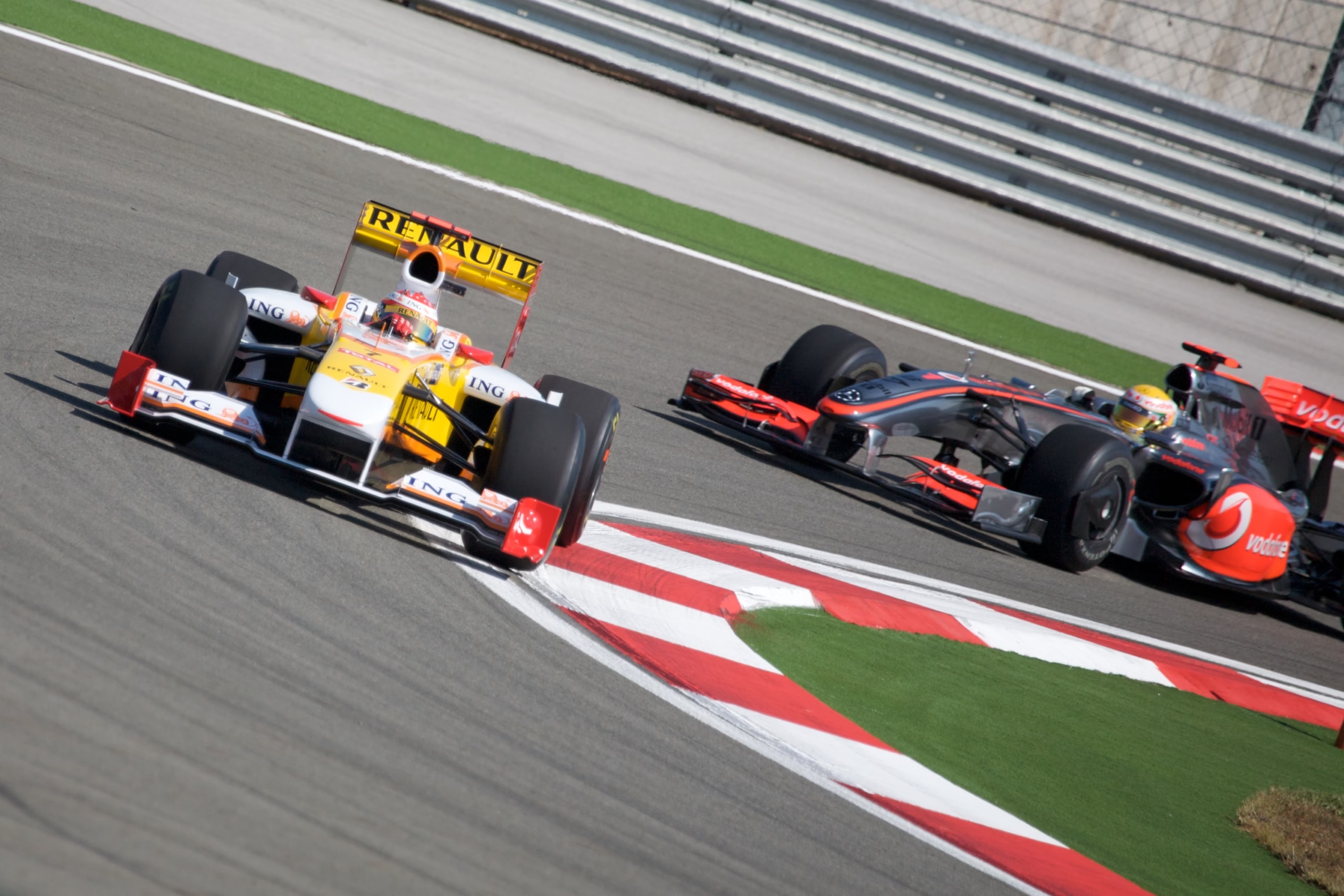
Fernando Alonso and Lewis Hamilton at the 2009 Turkish Grand Prix — Photo: Mark McArdle / CC BY-SA 2.0
Contents
Istanbul Park circuit facts
| Location | Akfırat, Tuzla, Istanbul Province, Turkey (east of central Istanbul, near the Sea of Marmara) |
|---|---|
| Circuit type | Permanent purpose-built circuit |
| Opened | 2005 |
| First Formula One race | Turkish Grand Prix, 21 August 2005 |
| Layout length | 5.338 km (current F1 configuration) |
| Direction | Anti-clockwise |
| Turns | 14 |
| Designer | Hermann Tilke |
| Main events (historic) | Formula One Turkish Grand Prix (2005–2011, 2020–2021); World Superbike; FIA World Rallycross |
| Best-known sections | Turn 1 (Istanbul Corner), Turn 8, main straight |
Lap record note: the official Formula One race lap record at Istanbul Park is 1:24.770, set by Sebastian Vettel during the 2011 Turkish Grand Prix. Faster laps have been set in qualifying or in other categories; compare records only within the same session type and car specification.
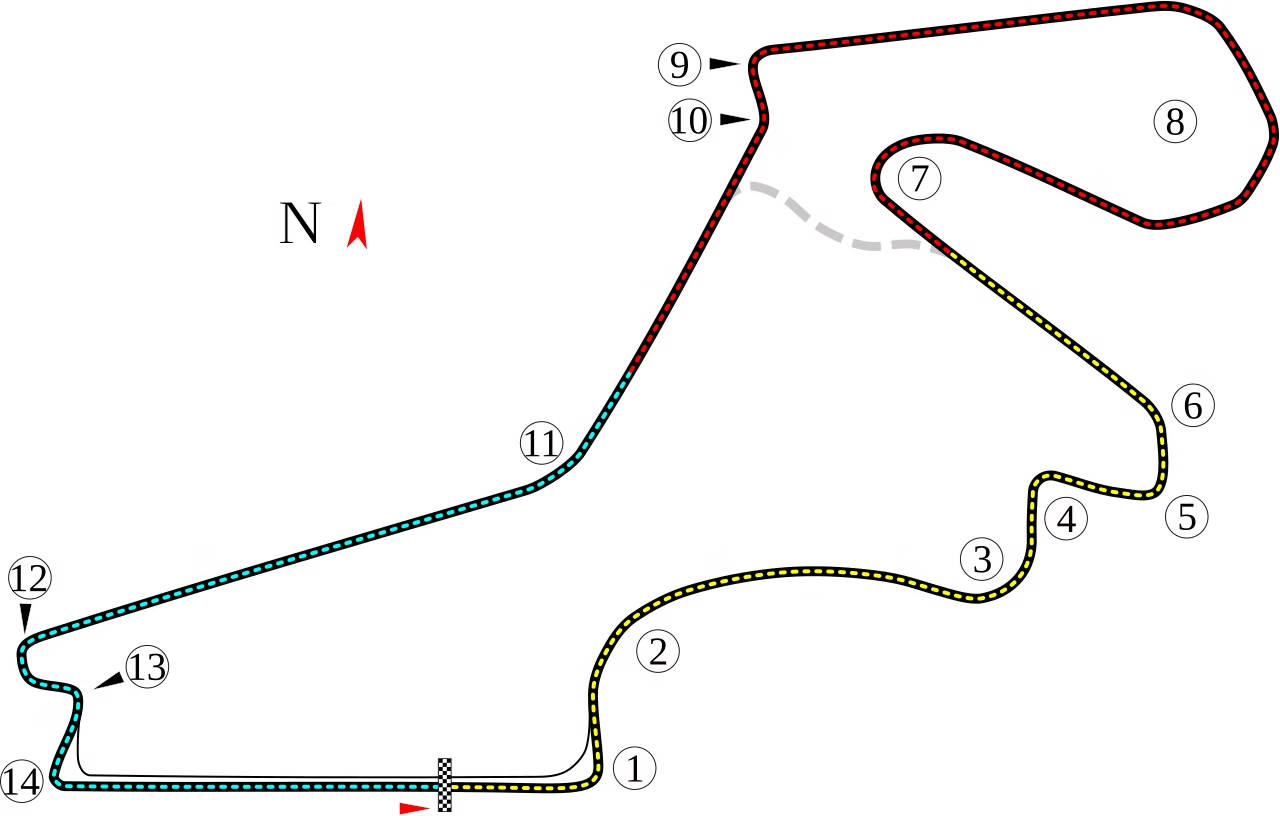
Istanbul Park Grand Prix layout (5.338 km) — Map: Will Pittenger / CC BY-SA 3.0
Why Turkey built Istanbul Park
By the early 2000s, Formula One was expanding aggressively into new markets. Permanent circuits were commissioned across the Middle East, Asia, and Europe, often with the dual aim of hosting a grand prix and promoting national tourism and industry.
Turkey’s bid followed that pattern. Istanbul Park — also promoted under names such as Intercity Istanbul Park — was constructed east of the city centre to give the championship a waterfront-adjacent venue with room for modern paddock facilities and spectator areas.
Hermann Tilke, the architect behind many new circuits of the era, produced a layout that mixed a long main straight with a dramatic drop into Turn 1 and a technically unusual middle sector. The project was expensive by regional standards and politically visible: a Formula One race in Istanbul was meant to signal Turkey’s place on the global sporting map.
When the first Turkish Grand Prix was held in August 2005, the infrastructure was new but complete. The challenge for organisers was not whether the track worked, but whether they could keep it on the calendar once initial enthusiasm had to be backed by long-term funding and promoter contracts.
Layout, elevation, and Turn 8
On paper, Istanbul Park looks like a conventional modern grand prix circuit: a kilometre-long straight, a mix of medium-speed corners, and generous asphalt run-off. In practice, two features dominate how drivers describe it.
Turn 1 and the drop to the Sea of Marmara
The main straight ends in a tight, downhill left-hander. Drivers brake from top gear into a corner that falls away towards the coast, making it easy to lock a wheel or run wide on entry. Overtaking into Turn 1 is possible with a strong slipstream down the straight, but the approach requires confidence because mistakes are punished quickly.
This corner set the tone for the 2005 inaugural race, when Kimi Räikkönen won for McLaren after a race-long battle that introduced the circuit to a global television audience.
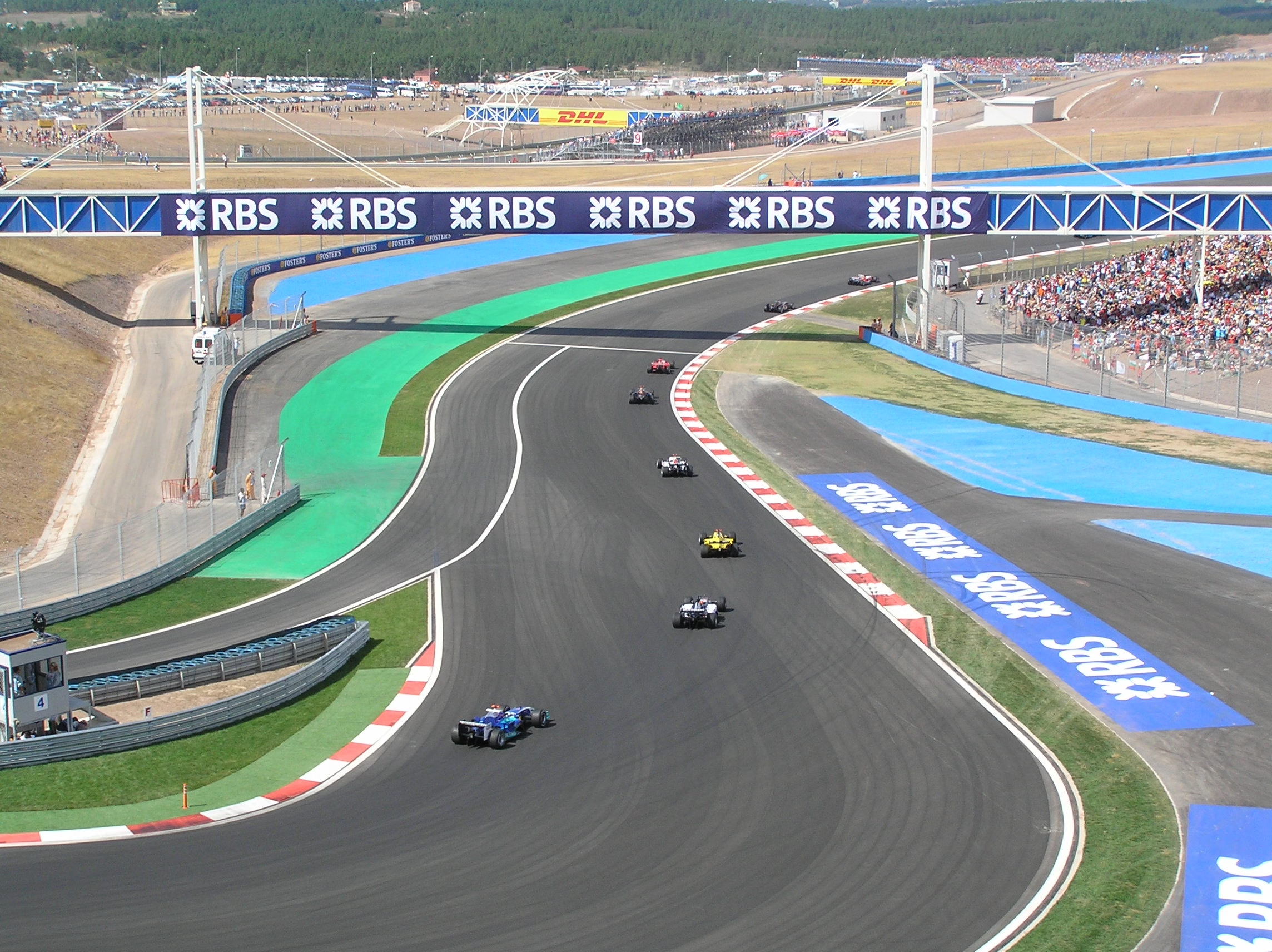
Turn 1 on the inaugural Turkish Grand Prix weekend, 2005 — Photo: Postmortem / public domain via Wikimedia Commons
Turn 8 — four apexes, one long breath
Turn 8 is Istanbul Park’s signature. It is a flat-out, four-apex left-hand complex taken at speeds that load the tyres continuously for several seconds. Drivers must balance minimum steering input against lateral g-force while the car slides subtly across the asphalt.
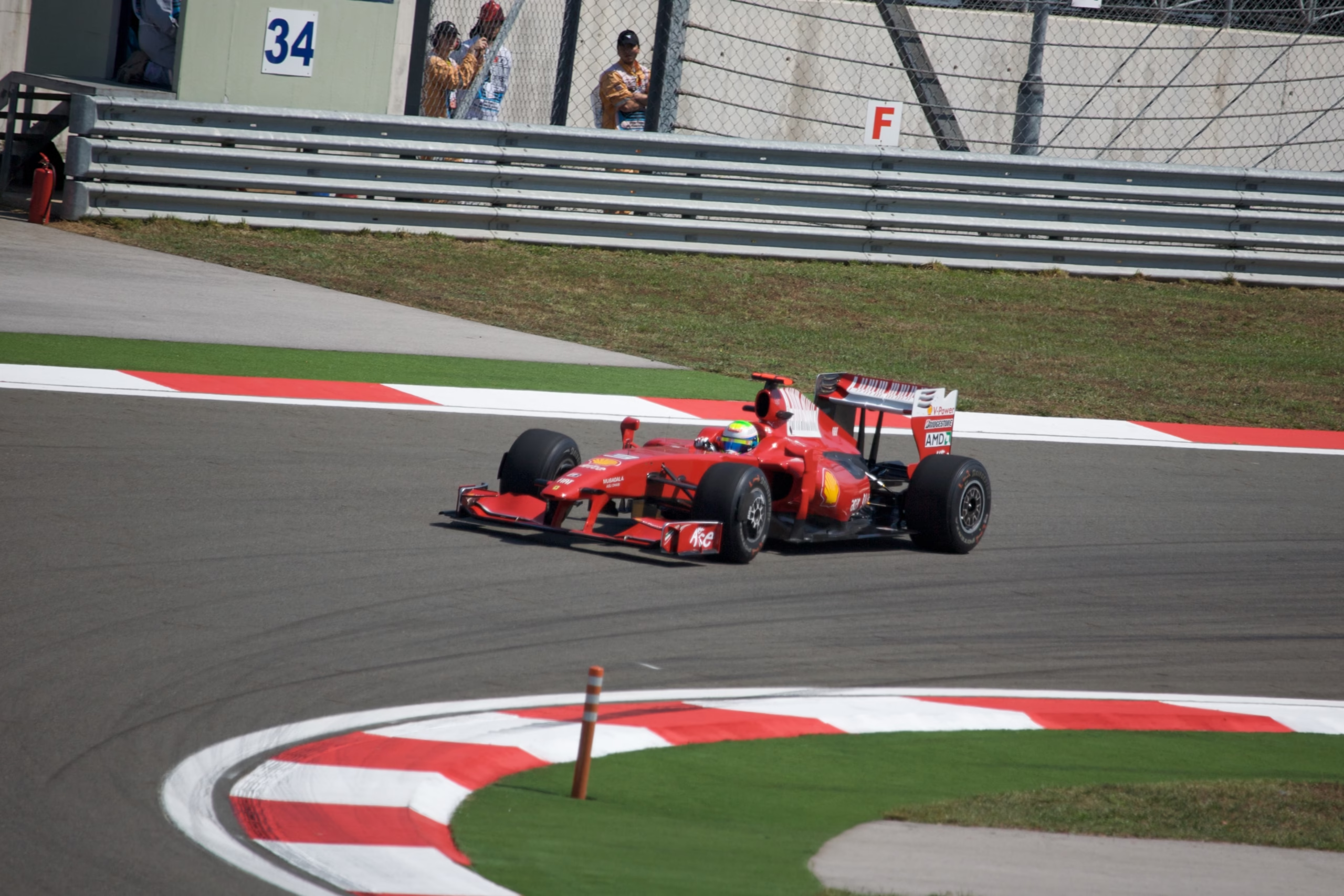
Felipe Massa at Istanbul Park in 2009 — Photo: Mark McArdle / CC BY-SA 2.0
Engineers talk about Turn 8 in terms of tyre energy and downforce efficiency; fans remember it as the place where a car either looks planted or visibly wrestles its driver. In the refuelling era it could be run flat out only when fuel load and tyre compound aligned. Later, with heavier cars and different tyre rules, the corner remained fast but less forgiving on rubber that had already worked hard through the preceding sector.
Because the corner is so long, small differences in car balance show clearly on television. That made Istanbul Park a useful benchmark for comparing chassis performance during its first stint on the calendar.
Technical corners and traction zones
After Turn 8, the lap mixes slower hairpins and traction-sensitive exits that link back to the main straight. Track position matters: time lost fighting another car through the infield can be difficult to recover without a strong run to Turn 1.
The surface and layout reward a stable rear end and precise braking. Like other Tilke circuits of the period, run-off is wide, but gravel traps and penalties for exceeding track limits still shape race strategy — particularly when wind off the Marmara subtly changes grip on the straights.
Formula One and the Turkish Grand Prix
Formula One raced at Istanbul Park from 2005 to 2011, then returned for two seasons disrupted by the COVID-19 pandemic in 2020 and 2021. Across those years the Turkish Grand Prix produced several races that mattered beyond the winner’s trophy.
The first era (2005–2011)
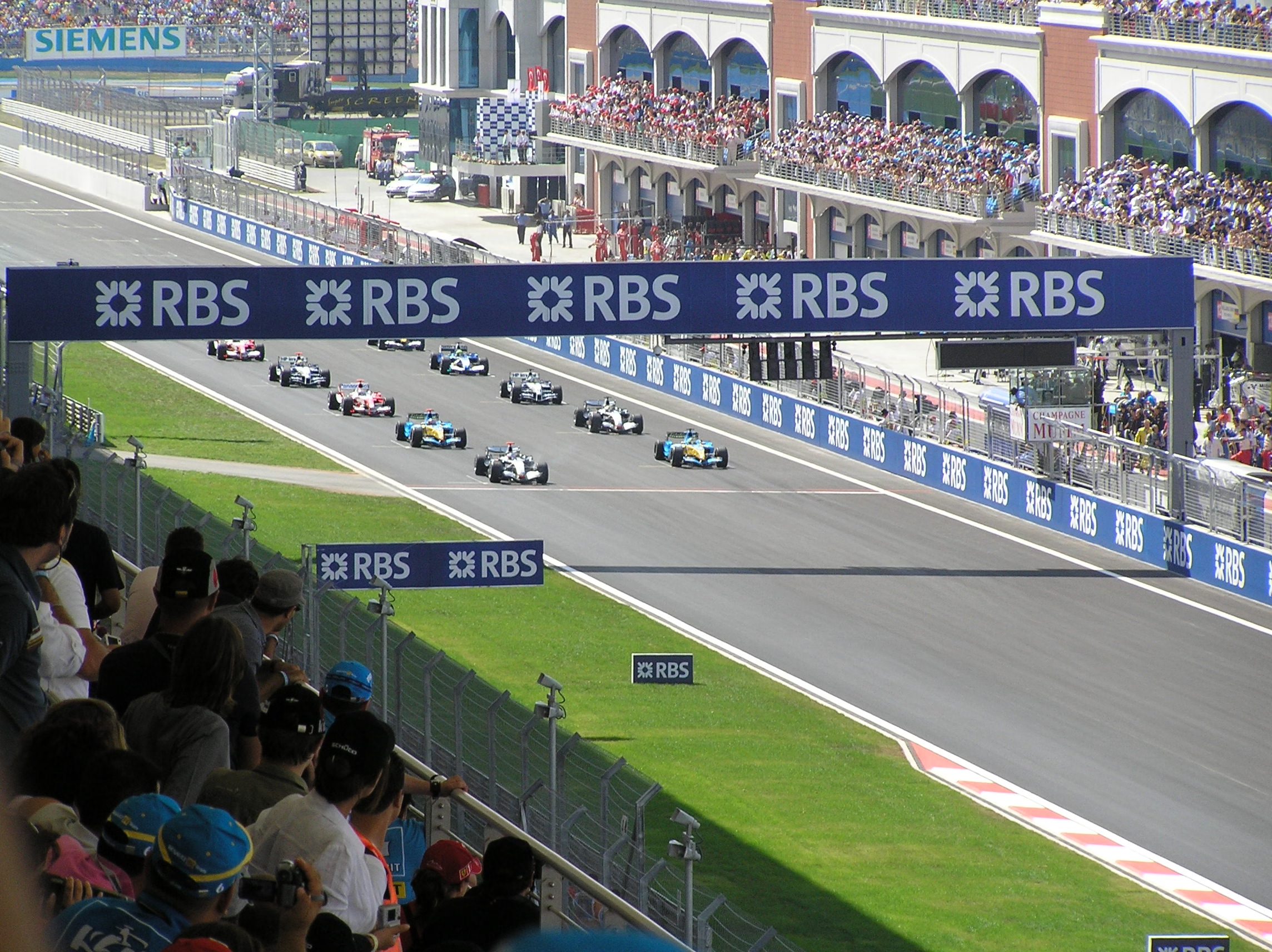
Start of the first Turkish Grand Prix, 21 August 2005 — Photo: Postmortem / public domain via Wikimedia Commons
2005: Räikkönen’s victory announced the circuit as a venue where racecraft counted. The weekend also fed into a tight title fight that season, giving Istanbul immediate sporting relevance.
2006–2007: Felipe Massa won twice for Ferrari, including the 2007 race where championship rivals Lewis Hamilton and Fernando Alonso were still in the same team. Tension in the garage often translated into pressure on track, and Istanbul’s traction zones were unforgiving of wheelspin.
2008: Hamilton’s win kept his title hopes alive in a season that would be decided by a single point. Massa finished second, a result that still echoes in discussions of that championship’s final round in Brazil.
2009–2010: Jenson Button and Hamilton won for Brawn GP and McLaren respectively, showing how Istanbul could suit different car philosophies as aerodynamic rules changed.
2011: Vettel’s Red Bull dominated, and his race lap record from that weekend remains the official F1 benchmark at the circuit. The event also produced sharp team-radio headlines involving Mark Webber, a reminder that Istanbul weekends often carried storylines beyond pure lap time.
The brief return (2020–2021)
When the pandemic forced calendar reshuffles, Istanbul Park reappeared on short notice. The 2020 race was run on a partially wet surface that turned tyre choice into a lottery and handed Hamilton another victory in a season already defined by uncertainty.
In 2021, Valtteri Bottas took pole with a lap time far below the old race record, underlining how much F1 machinery had changed. The race itself became famous for a late championship collision involving Hamilton and Max Verstappen — not at Turn 8, but in a venue that once again found itself at the centre of a title narrative.
After 2021, Formula One did not keep Turkey on the schedule. Promoter fees, regional calendar priorities, and competition from newer races all play a role in such decisions, and Istanbul’s intermittent presence is a case study in how quickly a modern circuit can move from “essential” to “reserve option.”
Other racing at Istanbul Park
Formula One was the headline act, but Istanbul Park was never a single-series venue.
The World Superbike Championship raced there in the mid-2000s and returned later in the 2010s, using a layout that stressed braking and mid-corner stability on production-based machinery. Motorcycle riders praised visibility and the flow through the faster sections, while still naming Turn 8 as the place that separated confidence from caution.
The FIA World Rallycross Championship also used the facility, bringing short-format door-to-door racing to a site built for grand prix cars. That combination of categories helped justify operating costs on years when Formula One was absent.
Support categories — including Formula 2 and GP2 during the Turkish Grand Prix weekends — gave younger drivers their first experience of Turn 8’s tyre loads. For many, Istanbul was an early lesson in managing degradation before reaching Formula One.
On and off the F1 calendar
Istanbul Park’s relationship with Formula One has been intermittent rather than continuous. The circuit hosted seven consecutive Turkish Grands Prix from 2005 to 2011, then left the calendar while negotiations over race fees and government support stalled.
During the gap, the track did not disappear. Testing visits, national events, and international series kept the asphalt busy, but without F1 the global spotlight moved elsewhere — notably to newer Middle Eastern rounds such as the Bahrain International Circuit and to established European staples including the Hungaroring.
The 2020 and 2021 returns proved the circuit still met F1’s safety and operational standards, yet they did not automatically secure a long-term contract. As of the mid-2020s, Istanbul Park remains a credible grand prix venue waiting for the right commercial and sporting package rather than a guaranteed annual stop.
Records and famous races
Statistics only capture part of Istanbul Park’s story, but they help anchor memory.
- First F1 winner: Kimi Räikkönen (2005).
- Most F1 wins at the circuit: Lewis Hamilton (three).
- Official F1 race lap record: Sebastian Vettel, 1:24.770 (2011).
- Signature corner: Turn 8 — sustained flat-out load unique on the calendars of its era.
Among non-winners, Juan Pablo Montoya’s battles with Räikkönen in 2005 showed how Istanbul rewarded brave braking into Turn 1. Later, Michael Schumacher’s final competitive seasons included Turkish weekends where experience partly offset car disadvantage.
When comparing Istanbul with classic European venues such as Spa-Francorchamps or the Monaco Grand Prix street circuit, the Turkish track belongs to a different generation: purpose-built, television-friendly, and shaped by tyre technology. Its legend rests less on century-old myth than on a single corner and on championship maths played out in August heat.
Visiting Istanbul Park
Istanbul Park lies east of central Istanbul in the Tuzla/Akfırat area. It is not integrated into city streets like a temporary course; access is by road, and journey times from tourist districts can be long when traffic is heavy.
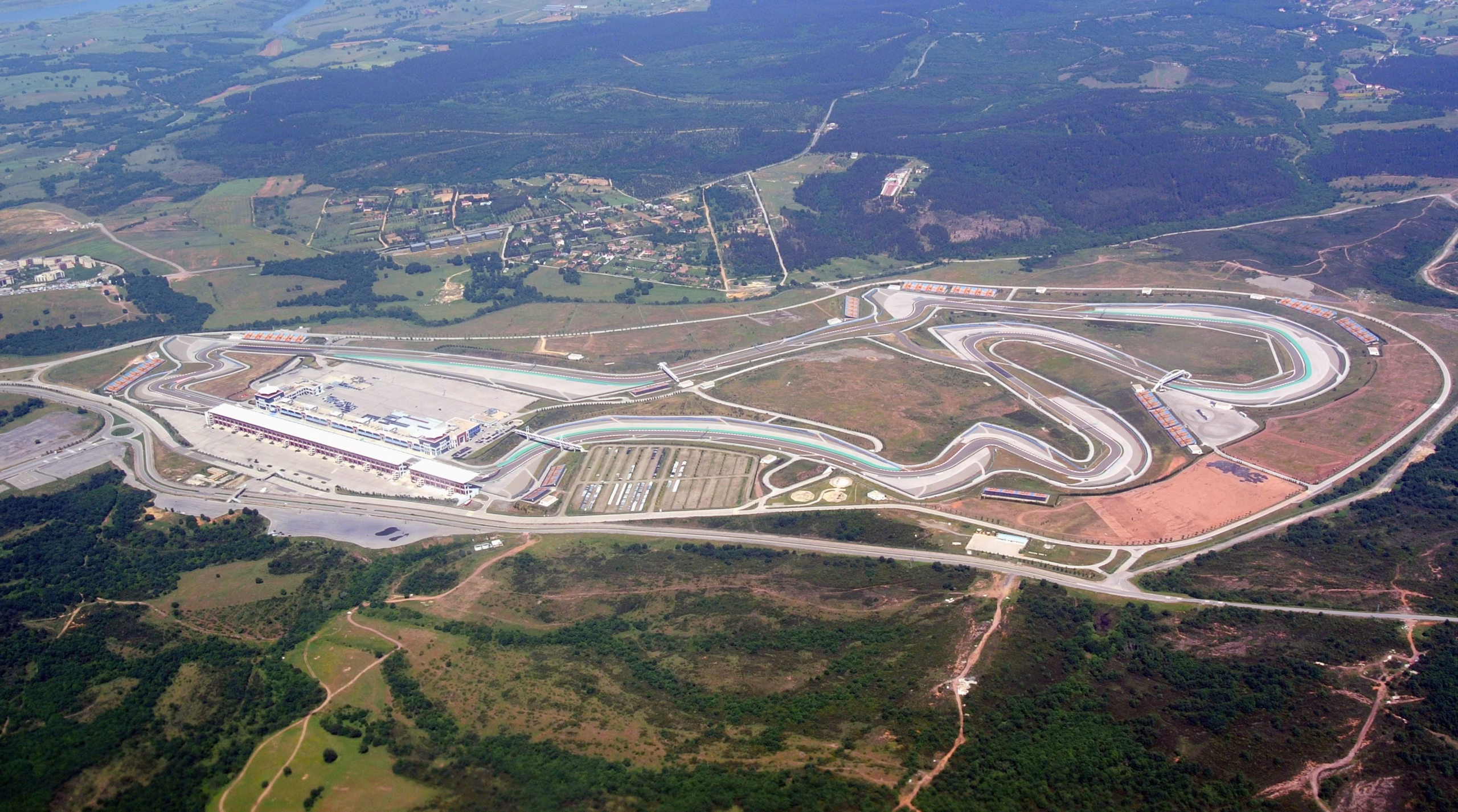
Istanbul Park sits on rolling land east of central Istanbul, near the Sea of Marmara — Photo: Adbar / CC BY-SA 3.0
During race events
When international or national meetings are scheduled, organisers usually publish transport, parking, and ticket information through the circuit operator or promoter. Grandstand locations along the main straight offer the classic view; sectors around Turn 1 and Turn 8 reward visitors who want to see braking and high-speed commitment up close.
Outside major weekends
Operating hours for track days, driving experiences, and corporate events change from year to year. Unlike the Nürburgring, Istanbul Park does not market a daily public toll road; visitors should confirm availability on official channels before travelling.
If no event is running, the site is a working facility rather than an open museum. Planning a motorsport-themed trip to Istanbul still makes sense — the city’s history, ferry crossings, and intercontinental geography are unlike any other grand prix host — but the circuit itself should be treated as a destination only when an activity is confirmed.
Practical tips
Summer race dates can be hot and humid. Sun protection, water, and ear protection for children are sensible. Currency, mobile data, and ride-hailing apps work in Istanbul as in other major cities, but allow extra time on event mornings when shuttle buses and road closures funnel traffic towards the circuit gates.
Fast facts about Istanbul Park
- The circuit opened in 2005 for the first Turkish Grand Prix.
- It was designed by Hermann Tilke and runs anti-clockwise.
- The F1 layout measures 5.338 km with 14 turns.
- Turn 8 is a four-apex left-hander taken at very high speed.
- Kimi Räikkönen won the inaugural Formula One race.
- Sebastian Vettel holds the official F1 race lap record (1:24.770, 2011).
- Formula One raced there from 2005 to 2011 and again in 2020 and 2021.
- World Superbike and World Rallycross have also used the venue.
Frequently asked questions about Istanbul Park
Where is Istanbul Park?
Istanbul Park is a permanent circuit in Akfırat, Tuzla, on the eastern side of Istanbul, Turkey, close to the Sea of Marmara. It lies outside the historic city centre and is reached by road rather than as a street circuit through urban districts.
How long is Istanbul Park?
The Formula One layout is 5.338 km long with 14 turns. The circuit runs anti-clockwise.
When did Formula One first race at Istanbul Park?
The first Turkish Grand Prix was held on 21 August 2005, the year the circuit opened. Kimi Räikkönen won that inaugural race for McLaren.
What is Turn 8 at Istanbul Park?
Turn 8 is a long, flat-out four-apex left-hand complex that loads the tyres continuously at very high speed. It is widely regarded as the circuit’s defining corner and one of the most demanding sustained turns from Formula One’s 2005–2011 era on the calendar.
Who holds the Formula One lap record at Istanbul Park?
The official F1 race lap record is 1:24.770, set by Sebastian Vettel during the 2011 Turkish Grand Prix. Faster laps may appear in qualifying or with different technical regulations; compare like with like.
Is Istanbul Park still on the Formula One calendar?
Not as a regular round in the mid-2020s. Formula One raced there from 2005 to 2011, then returned for the 2020 and 2021 seasons during calendar changes linked to the COVID-19 pandemic. A future return depends on promoter agreements and calendar planning.
Who designed Istanbul Park?
The circuit was designed by Hermann Tilke, the architect behind many new Formula One venues built in the 1990s and 2000s, including the Bahrain International Circuit.
Can you drive on Istanbul Park as a tourist?
Public access is event-dependent. Unlike some European circuits that offer daily tourist laps, Istanbul Park is primarily a closed facility that opens for race meetings, track days, or booked experiences when the operator schedules them. Check official information before travelling.
Which other championships have raced at Istanbul Park?
Besides Formula One, the venue has hosted categories such as World Superbike and the FIA World Rallycross Championship, along with support series during grand prix weekends.
How does Istanbul Park compare with the Hungaroring?
Both are permanent circuits that joined the Formula One calendar as national showcase projects. The Hungaroring near Budapest is tighter and generally slower, while Istanbul Park emphasises long straights, a steep Turn 1, and the high-speed Turn 8 complex.
Istanbul Park in modern motorsport
Istanbul Park arrived at the peak of Formula One’s global expansion and earned its place through Turn 8, close racing, and championship consequences. Its absence from later calendars does not erase those races; it simply shows how quickly promoter economics can sideline a capable circuit.
Whether Formula One returns or not, the track remains a reference point for drivers who learned to trust high-speed lateral load — and for fans who associate Turkey with a grand prix that always felt slightly different from the next Tilke venue on the list.
Related reading
Location: Intercity Istanbul Park, Akfırat Mahallesi, 34947 Tuzla / Istanbul, Turkey
Operator website: confirm the current official site before travel; promoter branding has used Intercity Istanbul Park in recent years.