

Baku City Circuit – Azerbaijan Grand Prix Street Track Guide

Originally published June 2016. Last updated September 2026: expanded Tier B circuit guide, facts table, table of contents, internal links, FAQ schema, and editorial refresh while preserving legacy narrative and images.
Baku City Circuit is a 6.006-kilometre anti-clockwise street track through Azerbaijan’s capital — Hermann Tilke’s blend of medieval walls, seaside boulevards, and a 2.2-kilometre flat-out straight that makes it one of Formula One’s longest and fastest temporary venues. The circuit hosted the 2016 European Grand Prix and became the Azerbaijan Grand Prix from 2017, turning a Caspian showcase project into a regular championship round.
Compare Tilke street templates with Monaco Grand Prix, Marina Bay Street Circuit, and Detroit Grand Prix; for permanent Middle Eastern neighbours see Bahrain International Circuit.
Contents
Baku City Circuit facts
| Location | Baku, Azerbaijan (Caspian Sea capital) |
|---|---|
| Circuit type | Temporary street course (anti-clockwise) |
| Designer | Hermann Tilke |
| Grand Prix length | 6.006 km, 20 turns |
| F1 calendar name | European GP (2016); Azerbaijan GP (2017–present) |
| Main straight | About 2.2 km along Baku Boulevard |
| F1 length ranking | Second longest on the calendar after Spa-Francorchamps |
| Notable 2016 winner | Nico Rosberg (Mercedes, European GP) |
| Operator | Baku City Circuit Operations Company |
Lap record note: Qualifying and race tyres, track evolution, and safety-car periods change lap times year to year. Compare records within the same session type only.
From Blancpain GT plans to Formula One
Racing in Baku began as a promotional idea rather than a motorsport tradition. In 2012, during the 24 Hours of Spa weekend, organisers floated a GT race in the city centre. Early layouts caused traffic chaos; a revised seaside route improved sightlines but early asphalt work proved slippery for cars.
The 2013 Blancpain GT Sprint Series finale still ran on a temporary course while lessons were learned. When Formula One signed a contract, GT dates moved — including a shift of Blancpain action to Zandvoort — and Tilke was commissioned to draw a world-championship layout.

Part of the circuit passes through Baku’s old city
Tilke, landmarks, and the longest straight
Tilke had to balance FIA run-off requirements with Azerbaijan’s wish to showcase architecture. The counter-clockwise lap mixes a 2.2 km full-throttle section on Baku Boulevard with tight castle-sector corners near the Old City, the Presidential Palace, and the Government House start-finish complex.
At 6.006 km the track is only shorter than Spa on the Formula One calendar. Paddock and pit buildings sit opposite the Government House, while temporary grandstands — roughly 30,000 seats for the inaugural F1 weekend — frame both racing and skyline views.

Map: Baku City Circuit layout through the capital
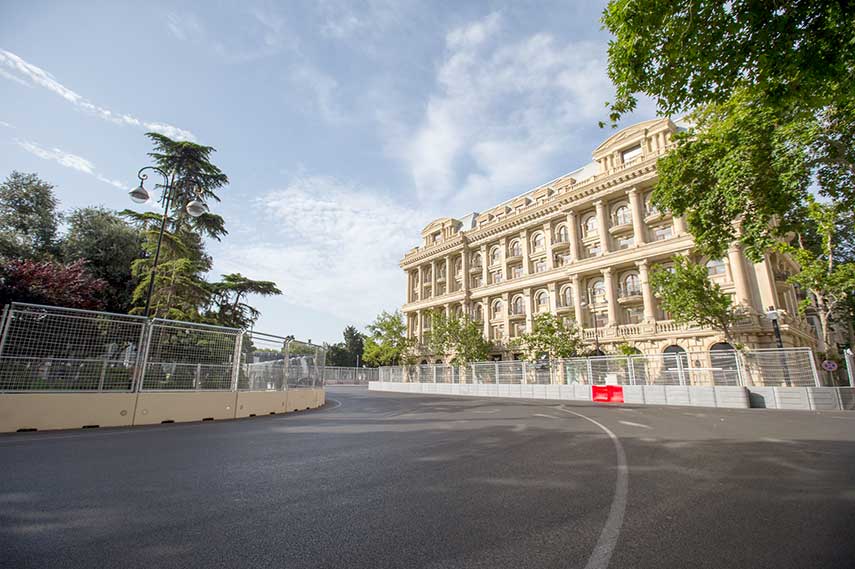
Modern boulevards and historic streets share the same lap
2016 European Grand Prix debut
Organisers resurfaced the entire course in early 2016 ahead of Azerbaijan’s first Formula One race. Pre-event rumours about cancellation proved unfounded; the European Grand Prix title highlighted Baku’s geographic bridge between Europe and Asia.
Nico Rosberg won from pole for Mercedes. Qualifying fame went to Valtteri Bottas, whose Williams team claimed an unofficial top speed above 370 km/h on the main straight — a figure that underlined Baku’s slipstream potential.
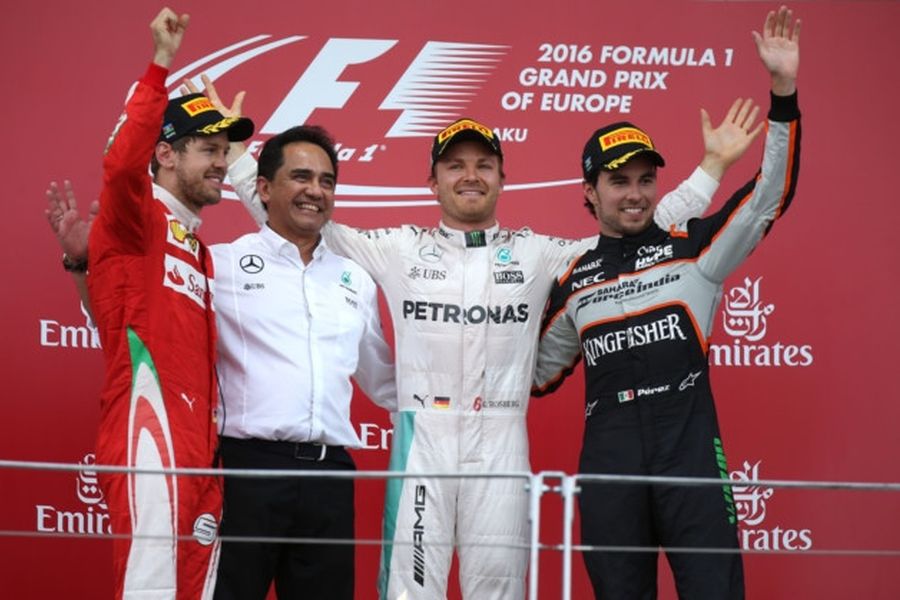
Nico Rosberg won the inaugural Formula One race in Baku
Azerbaijan Grand Prix era
From 2017 the event became the Azerbaijan Grand Prix. Daniel Ricciardo won the first race under that name after a chaotic grand prix; later seasons delivered late-race drama, safety cars, and mixed-tyre strategy on a track where walls are never far away.
Baku lacks Monaco’s yacht-lined harbour, but promoters pitched the round as a bold alternative street venue — faster, longer, and deliberately cinematic for television.
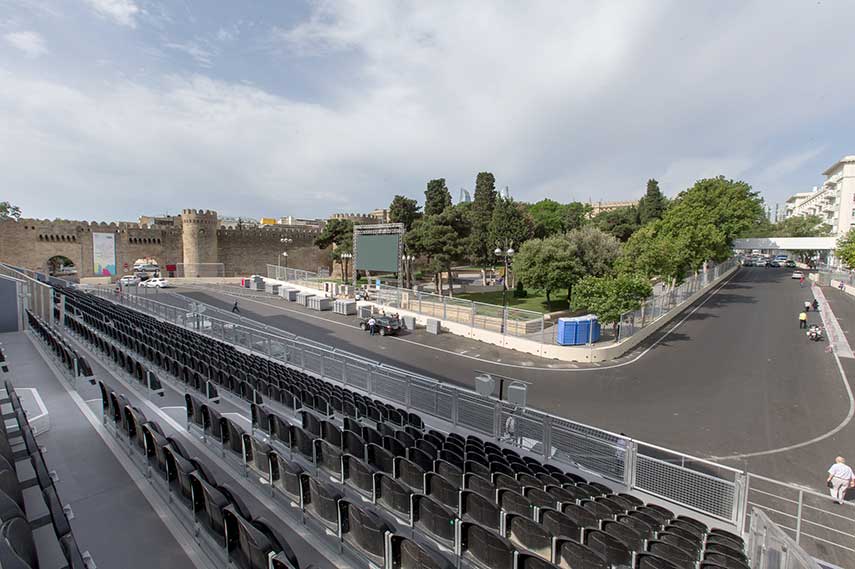
Grandstands for the 2016 European Grand Prix

Aerial view of the seaside section
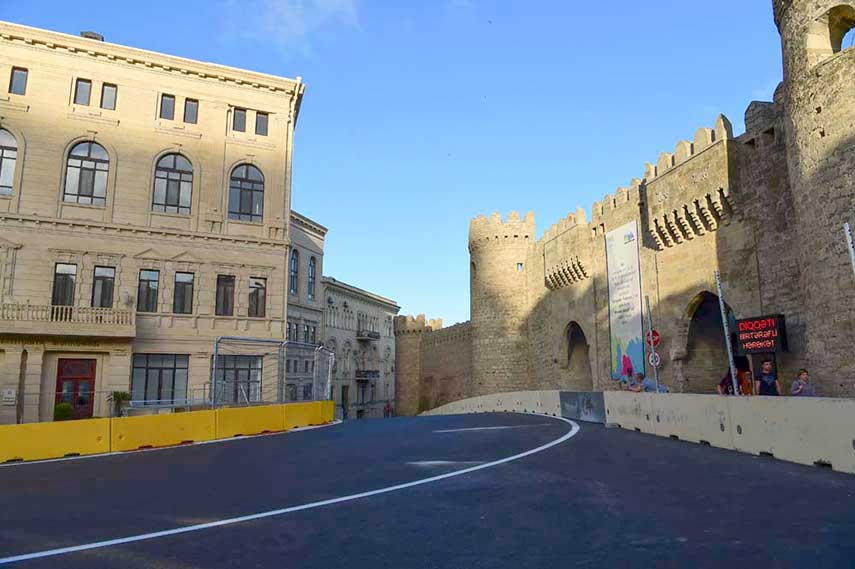
Street sections make Baku an unusual F1 venue
Getting there and accommodation
Heydar Aliyev International Airport lies about 30 minutes from the city centre. Hotels range from mid-range business properties to five-star waterfront towers within walking distance or a short taxi ride of the circuit.
Address: Zarifa Aliyeva 93, Baku, Azerbaijan
Phone: +994 12 404 13 90
Website: bakucitycircuit.com
Frequently asked questions about Baku City Circuit
Where is Baku City Circuit?
Baku City Circuit winds through Azerbaijan’s capital on the Caspian Sea, with pit and paddock facilities near the Government House on the city’s main boulevard.
How long is the Baku F1 track?
The Formula One layout is 6.006 km with 20 turns, run anti-clockwise. It is typically the second longest circuit on the F1 calendar after Spa-Francorchamps.
Who designed Baku City Circuit?
German architect Hermann Tilke designed the world-championship layout, balancing FIA safety standards with Azerbaijan’s request to include landmarks such as the Old City and seaside promenade.
When did Formula One first race in Baku?
The first Formula One race was the 2016 European Grand Prix. Nico Rosberg won for Mercedes after starting from pole position.
What is the Azerbaijan Grand Prix?
From 2017 the event was renamed the Azerbaijan Grand Prix while keeping the same Baku City Circuit layout. It replaced the one-off European Grand Prix title used in 2016.
Is Baku a street circuit or permanent track?
It is a temporary street circuit. Public roads and boulevards are closed and barriers installed for the race weekend, similar in concept to Monaco or Singapore, though Baku emphasises long straights and flat-out sections.
Why is Baku famous for top speed?
The main straight along Baku Boulevard runs for about 2.2 km, allowing slipstreaming and very high trap speeds. Qualifying in 2016 produced widely reported speed readings above 370 km/h for some cars.
How does Baku compare to Monaco?
Monaco is shorter, slower, and harbour-focused. Baku is longer, includes a much faster straight, and mixes medieval streets with modern waterfront sections — a different kind of street-racing challenge.
How do you get to Baku City Circuit?
Fly to Heydar Aliyev International Airport (about 30 minutes from the city centre), then use taxis, hotels, or event shuttles to reach grandstands around the Government House and castle sector.
What other SnapLap guides cover Tilke F1 tracks?
See Bahrain International Circuit, Istanbul Park, and Yas Marina Circuit for other Hermann Tilke designs.